Archive

Monthly Archives: December 2023

Here is the letter I have just sent

“Dear Mrs Bevis,

A decision has been made by the multi-disciplinary team (MDT)  the RC in charge of Elizabeth’s care to suspend your visits to Elizabeth for a further 4 weeks.

It had explained verbally at ward round that my ban will be indefinite on Thursday 28th December 2023 and this meeting was witnessed, the reasons being of very serious nature.

I have been verbally accused of inciting violence in the form of attack on member/s of staff on Castle ward on Xmas Day.  I now do not feel safe visiting my own daughter ever again because of their bullying and this is what they have wanted to achieve. Not once have they offered an alternative place to visit my daughter who has been held like a restricted prisoner for 2.5 years. There is no accountability and noone cares under LINCOLNSHIRE PARTNERSHIP TRUST.

There was no attack though Elizabeth had raised her voice on those supervising my visit then next thing 5 stood outside the visitor’s room and when she came out to confront the staff they grabbed her leading to self defence not that she could have stood a chance against so many. She was then thrown into the seclusion room for 6 hours and injected when she came out without any checks on her blood oxygen levels being taken. The allegations are of a criminal nature towards me in that I caused this upset and once again Police were called by a nurse and I obtained the ref no and Police numbers of those who attended who I did not see as I would have liked to have done a Section 9 Statement as I had a witness with me who refutes the very serious allegations.

This follows the initial decision to suspend your visits which was made on 28th November 2023 and will be reviewed again on Thursday 25th January 2024.

The decision was made by the MDT/Dr K on 28th December 2023 was based on a review of your visit on 25th December 2023, the need to protect the safety and wellbeing of staff and other patients himself on the ward, and their his continued concerns about the impact of your my contact with Elizabeth on her wellbeing and presentation

The restriction on visiting will continue to be reviewed while police investigations and clinical reviews take place; we will be in contact in due course.

Kind Regards, The Mental Health Act Team. 

Chair: Kevin Lockyer Chief Executive: Sarah Connery http://www.lpft.nhs.uk

In Confidence Mrs Susan Bevis Mental Health Act Administration Office Trust Headquarters St Georges Long Leys Road Lincoln LN1 1FS

29th December 2023

This letter above ends another year of hell under a Trust rife with bullying whose doctors hide behind MDT when it is one person’s power/decision to indefinitely ban me from visiting. I have been told that such a ban can only be done through the Court of Protection with very good reason.

This is the fourth time staff have called Police but not once has a Section 9 statement been taken yet the ban is said to be indefinite by the doctor and goes completely against Government Guidelines. I have also got quite a few threatening letters from the Trust trying to make out I am hostile, aggressive ect but when it comes to providing the proof which would have been recorded on CCTV there is nothing to show but certain members of staff are writing nasty things behind my back right now and although the letter states 4 further weeks it was crystal clear from the Dr’s verbal statement that this would be indefinite. On Xmas my daughter said she did not want to live and yet NOTHING is being done by LPFT - I have therefore written to Helen Whately and Will Quince to find out when the new law will come into effect.

I would not be writing here openly if I had something to hide.

Government to legally make visiting a part of care

Department of Health and Social Care, Helen Whately MP, and Will Quince MP

Published

21 June 2023

People in care homes and hospitals will be able to have visitors in all circumstances under law amendment.

Government announces proposed legislation on visiting in health and care settings

New regulations will make visiting a legal requirement for hospitals, care homes, mental health units and other health and care settings

Care regulator will have new powers to make sure providers are allowing families to visit loved ones

People in care homes and hospitals will be able to have visitors in all circumstances, thanks to the government’s plans to bring forward new legislation.

Health and care settings should be allowing visits, according to the guidance from the government and NHS England currently in place, but there are reported cases where visiting access is being unfairly denied.

As a result, the government is seeking views from patients, care home residents, their families, professionals and providers on the introduction of secondary legislation on visiting restrictions.

The new legislation will strengthen rules around visiting, providing the Care Quality Commission (CQC) with a clearer basis for identifying where hospitals and care homes are not meeting the required standard.

The government recognises the contribution that visiting makes to the wellbeing and care of patients attending hospitals, and residents of care homes, as well as the emotional wellbeing of their families and so is seeking views on what the new rules will look like.

For health settings, regulations will be reviewed in both inpatient and outpatient settings, emergency departments and diagnostic services in hospitals, to allow patients to be accompanied by someone to appointments.

Minister for Care, Helen Whately said:

I know how important visiting is for someone in hospital or living in a care home, and for their families. I know from my own experience too – I know what it feels like to be told you can’t see your mum in hospital. That’s why I’m so determined to make sure we change the law on visiting.

Many care homes and hospitals have made huge progress on visiting and recognising carers since the pandemic. But I don’t want anyone to have to worry about visiting any more, or to face unnecessary restrictions or even bans.

I have listened to campaigners who have been so courageous in telling their stories. I encourage everyone who cares about visiting to take this opportunity to have your say on our plans to legislate for visiting.

Minister of Health, Will Quince said:

Most hospitals and care homes facilitate visiting in line with guidance, but we still hear about settings that aren’t letting friends and families visit loved ones who are receiving treatment or care.

We want everyone to have peace of mind that they won’t face unfair restrictions like this, so we want to make it easier for the CQC to identify when disproportionate restrictions and bans are put in place and strengthen the rules around visiting.

It’s important that people feedback on the consultation, we want to make sure the legislation is right for everyone. If you’ve experienced unjust visiting bans, please share your experience.

Challenges around visiting were exacerbated during the COVID pandemic, with many health and care settings restricting and banning visits to stop the spread of the virus, ease pressure on the NHS and reduce the risk of transmission. Since restrictions were eased and there was a return to normality, many health and care settings have made efforts to return to pre-pandemic visiting. There are however still instances where, families and friends continue to face issues with visiting across the health and care sector.

The CQC does currently have powers to clamp down on unethical visiting restrictions, but the expected standard of visiting is not specifically outlined in regulations. Current guidance from government and the NHS is clear that all care homes and hospitals in England respectively are expected to facilitate visits in a risk-managed way, such as through the use of face coverings in the event of an outbreak or in the reduction of the number of visitors at one time.

Patricia Mecinska, Assistant Director of Patient Experience at King’s College Hospital NHS Foundation Trust said:

At King’s, our teams recognise the invaluable contribution that friends, carers and loved ones make to the patients under our care, including supporting us to provide care that’s respectful of our patients’ needs, so enabling them to make a positive recovery. Plans to involve care supporters in a more formalised way will be welcomed by many patients and will aid us in delivering our vision of providing outstanding care to patients and communities.

The hospital visiting guidance also includes an expectation that patients can be accompanied to hospital appointments when needed.

With the new legislation, the CQC will be able to enforce the standards by issuing requirement or warning notices, imposing conditions, suspending a registration or cancelling a registration.

Background information. See the visiting in care homes, hospitals and hospices consultation.

How Medicine Works and When It Doesn’t: Learning Who to Trust to Get and Stay Healthy Hardcover – 24 Jan. 2023 
by  F Perry Wilson  (Author)
4.5  4.5 out of 5 stars       33 ratings
See all formats and editions
Blending personal anecdotes with hard science, an accomplished physician, researcher, and science communicator gives you the tools to avoid medical misinformation and take control of your health​ “A brilliant step toward patients and physicians alike reclaiming a sense of confidence in a system that often feels overwhelming and mismanaged” (Gabby Bernstein, #1 New York Times bestselling author of The Universe Has Your Back).

We live in an age of medical miracles. Never in the history of humankind has so much talent and energy been harnessed to cure disease. So why does it feel like it’s getting harder to live our healthiest lives? Why does it seem like “experts” can’t agree on anything, and why do our interactions with medical professionals feel less personal, less honest, and less impactful than ever? 

Through stories from his own practice and historical case studies, Dr. F. Perry Wilson, a physician and researcher from the Yale School of Medicine, explains how and why the doctor-patient relationship has eroded in recent years and illuminates how profit-driven companies–from big Pharma to healthcare corporations–have corrupted what should have been medicine’s golden age. By clarifying the realities of the medical field today, Dr. Wilson gives readers the tools they need to make informed decisions, from evaluating the validity of medical information online to helping caregivers advocate for their loved ones, in the doctor’s office and with the insurance company. 

Dr. Wilson wants readers to understand medicine and medical science the way he does: as an imperfect and often frustrating field, but still the best option for getting well. To restore trust between patients, doctors, medicine, and science, we need to be honest, we need to know how to spot misinformation, and we need to avoid letting skepticism ferment into cynicism. For it is only by redefining what “good.

Maria Cristina Patru1 and David H. Reser 2*
1Department of Psychiatry, Hôpitaux Universitaires de Genève, Geneve Switzerland, 2 Department of Physiology, Monash
University, Melbourne, Australia
Edited by:
Bernat Kocsis,
Harvard Medical School, USA
Reviewed by:
Sabina Berretta,
McLean Hospital, USA
Ami Citri,
The Hebrew University, Israel
*Correspondence:
David Reser
david.reser@monash.edu
Specialty section:
This article was submitted to
Schizophrenia,
a section of the journal
Frontiers in Psychiatry
Received: 23 July 2015
Accepted: 26 October 2015
Published: 09 November 2015
Citation:
Patru MC and Reser DH (2015)
A New Perspective on Delusional
States – Evidence for
Claustrum Involvement.

Front. Psychiatry 6:158.
doi: 10.3389/fpsyt.2015.00158

“Delusions are a hallmark positive symptom of schizophrenia, although they are also
associated with a wide variety of other psychiatric and neurological disorders.

The heterogeneity of clinical presentation and underlying disease, along with a lack of experimental
animal models, make delusions exceptionally difficult to study in isolation, either in
schizophrenia or other diseases. To date, no detailed studies have focused specifically on
the neural mechanisms of delusion, although some studies have reported characteristic
activation of specific brain areas or networks associated with them. Here, we present a
novel hypothesis and extant supporting evidence implicating the claustrum, a relatively
poorly understood forebrain nucleus, as a potential common center for delusional states.”

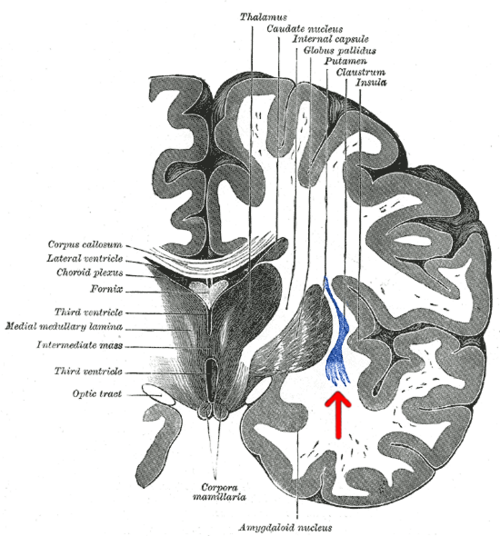
Elizabeth’s scan shows a lesion in precisely that area of the brain (marked in blue with red arrow) which needs to be properly identified.  See also page three of the PDF paper.

This is directly in the meso-limbic pathway and is associated with delusional behaviour in what some people are still calling schizophrenia.   

If you look at page 3 of this paper you will see the brain pictured in coronal, sagittal and horizontal view and the arrows triangulate to where the image/lesion appears in the right hemisphere of her brain on the scan at position 7/24 of the coronal image from the MRI.   

This urgently needs looking at by a neurologist and reference needs to be made to this paper.

Whilst commencing to write this blog Elizabeth has just called. She said yesterday that she spent six hours in seclusion whilst being rapidly tranquilised on Xmas Day.

Despite this, Elizabeth did not sound too bad during her supervised phone call. She spoke of escape. By this she clearly said that she escapes in her mind ie dissociation - this is a sign of PTSD for which Elizabeth has never had any treatment for under NHS. Also she has never had underlying pathological tests until I have had to point out the results of the private scan and observations by independent specialists and experts.

With an appointment on the 3 January with a Neurologist that had previously been flatly refused I really do hope that once and for all her whole treatment will be reviewed based upon the findings which clearly indicate the above.

It has been a nightmare to even try to get certain doctors to acknowledge let alone look into something that has been clearly stated in the files going back to 2009. This could all indicate why the treatment has not worked for so many years.

I am very unhappy at the current punishment of having the phone taken away for a trial period. This has already been tried before. I see this as bullying aimed directly at me because I am the one being blamed for the ‘episodes’ that look like fits never seen before even though many of these take place when I am not around. The necessity the MDT believes to be right is completely wrong and has not achieved anything before at Ash Villa except mistrust and upset and nothing is being done in line with the law and correct procedures and now these same restrictions incorporating Xmas is yet again being “tried”.

I hope to put an end to this bullying once and for all as that is how we see it. I am not going to sit back and do nothing whilst this punishment continues for years and years on end as I believe the whole environment of a noisy acute ward to be completely wrong and the whole approach of punishment also.

This is punishment not care. Punishment to stop my daughter from going out to the shop in the hospital grounds, punishment from stopping her listening to her music on her phone by keeping it locked away. What is this achieving?  NOTHING but resentment an mistrust and this has been ongoing for one month now with no end in sight.  

“Treat people as individuals and uphold their dignity and to do this you must treat people with kindness, respect and compassion and respect and uphold people’s human rights, challenge poor practice and discriminatory attitudes and behaviour relating to their care.

“Act with honesty and integrity at all times, treating people fairly without discrimination, bullying or harassment.  Keep to the laws of the country in which you are practising. Never allow someone’s complaint to affect the care that is provided to them.”

First of all Iike to wish all my readers a very Happy Xmas and New Year.

Elizabeth’s cat who she misses so much and adores. If only she could have come home. It was requested I bring the cat to see Elizabeth but it would not have been fair as he was suffering last time so much when we travelled from London to Lincolnshire to what we thought would be a wonderful area that would aid Elizabeth’s recovery. I was totally wrong about this as even in Enfield before at least we did not have the restrictions and appalling treatment as we have encountered under this Trust below.

“We are taking your complaint seriously”

I travelled from where I live to Lincoln to visit Elizabeth. It is about an hour’s journey. I did not know what to expect as the rest of the family said she was “not good”. I brought with me presents, chocolate and crisps. It was lunch time and Elizabeth had just eaten Xmas dinner. There did not seem to be that many patients on the ward and the atmosphere was more peaceful as usually alarms are going off every second.

I was led to a visitor’s room and came with a friend. They usually put HCA’s to sit there and take notes as I am clearly being targeted supposedly by an entire team of people ie the MDT or that is what they would like us to believe. The rest of the family visited yesterday (Xmas Eve). Their visit was not supervised. I did not know what to expect as the rest of the family had said she was “not good”. 

A female member of staff was in the small visitor’s room watching our every move in order to report back to Responsible Clinician Dr Waqqas Khokhar. Whilst God knows what could be written behind my back I make my own notes and records. Elizabeth was pleased to see me. She had been asleep earlier close to lunch time and I suggested someone woke her up as I was just half an hour away and she would miss out on her Xmas Dinner.

Anyway I proceeded to pass Elizabeth the presents, not all from me but friends. I bought nice sets of pyjamas, I left money so she has plenty of money to have her hair done but have no idea whether the ban on even going out in the grounds had been lifted. Elizabeth’s hair is now really long and needs cutting. I would always ensure that she was taken to the hairdressers and it was quite relaxing for her. I hope that additional ban has now been lifted so Elizabeth can have her hair done.

I then said to the HCA that as Elizabeth missed her cat perhaps LPFT could arrange for her to be brought back home to see her cat like Cambian did when she was sent from London to Wales some time ago.

Elizabeth was pleased with the presents. We only had one hour to visit. Another lady came to take over to watch our every move. I noticed that Elizabeth’s mood was changing. She seemed to resent the fact that staff were taking notes and supervising and who could blame her. She started to react as she thought this lady was looking at her and smiling and she started to say about her autism which I pointed out was something that Elizabeth considered she had and that these were not my words.  She started to get upset with this other lady supervising and there was a changeover – someone else sat there supervising and then Elizabeth became upset again and spotted a man outside – one of the team who she shouted to get away from the door. By this time there was about 5 members of staff outside the door and it was all too much for Elizabeth she got up and I followed and started to react to everyone around her. About 5 members of staff grabbed her and told me to leave the ward. 

I left the ward but said that I wanted to know exactly what change there had been in Elizabeth’s medication. I made a point of waiting until I got a list of the medication she was on as Elizabeth had told me about the change. I then made a point of saying that I hoped that I once again would not be blamed as being a “bad impact” and when you think anything could be written behind your backs. I am well aware that any changes in medication could cause instability and also I felt that if Elizabeth was left to see her visitors alone, none of this reaction would have occurred. Whilst I was with Elizabeth I wanted her to know that I was not going to sit back and do nothing this but I also tried to say not to react to the staff but unfortunately on Xmas Day, supposed to be a time for families to get together this is not respected by Lincolnshire Partnership Trust.  Elizabeth read the letter that I wrote earlier and approved it. I then openly showed Elizabeth two more letters which were only short letters. She was quite calm at this point and of course had a right to know as what they are doing is treating Elizabeth as though she has no capacity. That is totally wrong.

I sat downstairs waiting for the list of medication. I did not argue about leaving the ward but was heartbroken. This is no place to get better with such restrictions worse that you see in a prison. The treatment my daughter is getting is inhumane, undignified and I feel that this is bullying aimed at me with all the allegations of my “behaviour” being threatening, hostile you name it I have just been turned down for my request to see the files.  It is really important that records are correct and not full of inaccuracies and staff need to be aware that their comments could end up in the public arena. It is not nice to say things that are not true and then someone else looks at what is being written and forms an opinion. I am putting a stop to all this bullying now.

If Elizabeth was home today she would have been calm and happy to be with her cat. Even at times where she was previously unstable she would come home and the cat would be better than any amount of drugs given.

I have decided here and now that I am not prepared to stand for any bullying and any comments in the files that are defamatory will need to be altered. There was nothing to indicate me being “hostile, threatening” at Trust HQ when all I did was sit to one side and write a letter. That was confirmed by the CCTV footage i viewed last week.

Who is making these comments???

Who is really behind the banning and acting ultra vires???

The drugs have been reduced by 50mg but what they should have done was not inject her but leave her alone to settle down in her room. Luckily Elizabeth has her very own home which is much more suitable that a noisy ward where to this day not a scrap of therapy has been given.

I was upset at leaving Elizabeth with 5 members of staff who had grabbed hold of her on Xmas Day of all days. It most certainly was not my doing that she reacted.

The unsigned letter from the MHA and Legal Office state that a review of my month’s ban would take place on 28 December. I wonder what the outcome of this will be but hopefully my letter will have been submitted by then. I will keep you all informed of everything.

Having seen the reduction that has taken place without warning I am going to seek the advice of experts because I personally think that the reduction was too steep.  I do not intend to be blamed for my visit on Xmas Day and that I am responsible when I know about the reduction. It is really bad that the ‘episodes’ Elizabeth has had has also been blamed on me even partially in that I am said to be a contributory factor. 

I hope that the Neurologist will look into the private scans and explain exactly what has been noticed on the private scans which could be the cause of everything ie brain injury that was evident in the files going back to 2009. How can “anterior region medial temporal compromise just disappear into thin air.

There are “fundamental flaws” in how the Mental Capacity Act is understood and applied in practice, a report on findings from safeguarding adults reviews (SARs) has concluded.

The analysis of 27 SARs completed by authorities in London found mental capacity was the area of practice where lessons most commonly needed to be learned.

Mental capacity was mentioned in 21 of the 27 reports, the analysis found, and much of the learning was around missing or poorly-performed capacity assessments, an absence of best interests decision-making, and a lack of scepticism and respectful challenge of decisions.

Four of the reviews commented on the difficulties practitioners experienced in reaching a “confident or agreed decision” in a mental capacity assessment, the report said.

Another two mentioned the use of advocacy services as a significant area of learning. In both cases, a referral for an independent advocate was made too late to be effective in supporting the individuals, who had no other source of support to take part in decisions.

There was an “occasional comment” in one case where mental capacity had been well addressed, the report said, but the majority of the evidence pointed to “fundamental flaws” in how the Mental Capacity Act 2005 was being understood and applied in practice.

Other common practice issues included:

  • Inadequate or absent risk assessments, or the failure to recognise escalating risks.
  • A lack of personalised care.
  • A failure to involve carers and recognise their needs.
  • A lack of understanding or curiosity about people’s history and behaviours.
  • A failure to be persistent and flexible when working with people who are reluctant to engage with services, and to take the time to build trust.

All of the above apply to Elizabeth under Lincolnshire Partnership Trust.

‘Lack of resources’ 

The report was produced by the London branch of the Association of Directors of Adult Social Services, and all the SARs were completed since the Care Act came into force in April 2015.

It also looked at organisational factors that influenced how practitioners worked, which included recording, resources, supervision and support, staffing levels, and legal literacy.

The analysis found 19 of the 27 reviews identified issues with how staff recorded information, or with the recording systems and processes provided by their organisation.

In some cases, records were missing, the report said, and in others too little information had been recorded or it was not up-to-date. This meant that concerns were not always picked up.

In 13 of the 27 cases, a lack of resources had also had an impact. The report pointed to one case where adult social care had refused to fund a care package for a person, even though the current level of support they were receiving was not meeting their needs.

Safeguarding Adults Reviews

Under the Care Act 2014, safeguarding adults boards (SABs) are responsible for safeguarding adults reviews.

A SAB must arrange a review when an adult in its area dies as a result of abuse or neglect, whether known or suspected, and where there is concern that agencies could have worked more effectively to protect the adult.

A review must also be arranged if an adult has not died, but the safeguarding board knows or suspects that the individual experienced serious abuse or neglect.

The statutory guidance states that something can be considered serious abuse or neglect, where, for example, the individual “would have been likely to have died but for an intervention, or has suffered permanent harm or has reduced capacity or quality of life” as a result of the abuse or neglect.

A SAB can also arrange reviews in any other situations involving an adult in its area with care and support needs.

In another case, “the impact of austerity measures” on the care home had limited the opportunities available to a man, which had in turn affected his quality of life.

Almost all the SARs identified concerns about how agencies had worked together.

‘Organisational abuse’ 

The report also analysed the nature and characteristics of the SARs.

It found that more cases involved men and just under half of the reviews related to people who were living in a group setting, mainly residential care.

It also found that organisational abuse was the most common form of abuse present in the reviews. This is defined by the Care Act statutory guidance as including neglect and poor practice within a care setting, or in relation to care provided within a person’s home.

The second most common form of abuse was self-neglect, which the report said reinforced recent research findings about the complexities and challenges of this aspect of safeguarding.

The report concluded that learning from safeguarding adults reviews is “rarely confined to isolated poor practice on the part of the practitioners involved”. Instead, findings from the 27 reports showed that weaknesses existed in all parts of the system and there are structural, legal, economic and policy challenges that affect staff across all agencies and boroughs.

With heavy restrictions still in place extended incorporating Xmas, Lincolnshire Partnership Trust clearly are not up to date with the law – see below:

Visiting Report December 2023

https://www.gov.uk/government/consultations/visiting-in-care-homes-hospitals-and-hospices/outcome/government-response-to-the-consultation-on-visiting-in-care-homes-hospitals-and-hospices

It is all very well and good to go down the legal route and ban visitors but in the event of this, what should be in place is an alternative.Yes LPFT or any other Trust should provide alternative arrangements/somewhere else where Elizabeth can meet myself or any other family members if they are not allowed onto ward premises .

I am now banned for a further two weeks, given only 1 hour supervised only on Xmas Day, total breach of Art 8 and even Xmas Day and religion is not respected under LPFT. Another unsigned letter came via email attachment stating the restrictions would be continued agreed by the MDT and I would say to LPFT they need to rewrite their whole policy as they are clearly out of date with everything. I am sure the law has changed in this respect and I will write about this another time. No longer can the Bolam test be applied.  

I am actually now thinking more and more that I myself am a victim of ultra vires acts and therefore I would be justified to take out a Judicial Review.

I reassured Elizabeth I would go to any lengths to do what is necessary to bring about accountability and look at the way staff are acting ultra vires whilst the Trust do nothing to intervene. They have done nothing but completely abuse the law and in particular MHA, MCA and HRA law.

Important Case Law on Denying Patients the right to order food and have food parcels externally

The other day Elizabeth told me that she was refused ordering food by Elizabeth, a nurse on the ward. She was starving hungry as she has once again been missing meals on Castle Ward and a ban was in place as punishment for being hostile, meaning she could not go out at all.  It is important for members of staff to know about the law and that the following is all about denying patients the right to have food parcels and to order food from outside. If Elizabeth is allowed to miss meals she is not going to feel her best what do they expect! On the first occasion it became evident I was banned I had brought a meal for Elizabeth to make up for not being allowed out to the Carlton Centre with myself and a friend. I was told quite clearly that there was no way food could be allowed onto the ward as staff did not know where it ha come from and this could have been proven of course. Not only did ill-informed nursing staff turn away the meal I brought as a consolation for missing her s17 leave, they did not have a clue about the law and here it is below –  Here is another interesting piece for LPFT to study and to review their whole policy in line with the latest or they could have to bear the consequences.

L v Board of State Hospital (2011) CSOH 21; 2011 SLT 233 - the hospital had been ultra vires in denying patients the right to have food parcels and to order food from outside.

A consultation argument succeeded in the unusual case of L v Board of State Hospital [2011] CSOH 21; 2011 SLT 233 where a decision of the board of the state hospital placing restrictions on patients’ food and drink fell to be reduced as the board had failed to consult the patients as required in terms of the Mental Health (Care and Treatment) (Scotland) Act 2003 s.1. Limitations arose from the nature of the hospital, but only did so because they were justified in terms of the European Convention on Human Rights 1950 Art.8(2): the loss of control over those aspects of life which would otherwise be under a person’s sole and direct control were all concominants of the justifiable deprivation of liberty which followed on imprisonment or detention in the state hospital. 

The board decided that visitors would no longer be allowed to bring food parcels for patients, and patients would no longer be allowed to order food from outside sources, other than one take away meal a month. The ultimate reason for recommending the changes related to patients’ health, and issues with obesity. L sought reduction of the decision on the basis that the board had failed to consult the patients as required in terms of the Mental Health (Care and Treatment) (Scotland) Act 2003 s.1, and, it being a public authority for the purposes of the Human Rights Act 1998, the decision constituted a breach of L’s rights under the European Convention on Human Rights 1950 Art.8. The board relied on the notification of changes to the availability of snacks and refreshments at a single meeting of the Patient Partnership Group (PPG), attended by 12 patients, and an email from the hospital’s lead dietician (D) referring to the response of patients when asked about the nature of items they purchased from the hospital shop, and the reason for their purchase. 

L submitted, inter alia, that interference with his right to choose what to eat and to restrict what had otherwise generally been available to him was an interference with his right to respect for his private life and home, and the exception based on the protection of health and morals did not entitle the board to act as it had, as that referred to action necessary for protection of public health in general. 

Lady Dorrian decided that the board had not been entitled to reach the decision.

(1) From such consultation as had taken place, it appeared that patients had been opposed to restrictions on external purchasing but their views had not been recorded or presented to the board prior to its decision. Moreover, it had been recorded that patients felt that visitors should continue to be able to bring in parcels.

(2) There was no indication that D had advised patients of the proposals which were being considered, or that she had asked them to give their views thereon. 

(3) The PPG meeting had failed to have an opportunity to consider the actual proposals made to the board in relation to visitors. The recommendation put to the meeting was simply that visitors should not be allowed to bring food into the hospital, and the rationale for that was said to be infection control and storage space, which was an explanation that played no part in the board’s decision. Further, it appeared that the issues discussed on external purchasing related to limits on spending rather than an outright ban. 

(4) It was highly questionable whether even such feedback as was obtained was properly put before the board and, in any event, such consultation did not enable patients to consider and to comment on the three options eventually put to the board regarding visitors. The option selected by the board in relation to purchasing did not appear to have been put before patients at all. Accordingly, the board had failed to consult as required by the legislation, and its decision fell to be reduced. 

(5) The opinion was expressed, that (a) although the state hospital was L’s home, it was not and could not be treated as equivalent in all respects to a private home, and while limitations did arise from the nature of the place, they only did so because they were justified in terms of Art.8(2). The loss of control over those aspects of life which would otherwise be under a person’s sole and direct control were all concominants of the justifiable deprivation of liberty which followed on imprisonment or detention in the state hospital, R. (on the application of G) v Nottinghamshire Healthcare NHS Trust [2009] EWCA Civ 795, [2010] P.T.S.R. 674 considered; (b) a person’s right to choose what they ate and drank was a matter in respect of which Art.8 was engaged, and the general restrictions which applied in the state hospital prior to the board’s decision were justified.

Thus, the additional restrictions which the board sought to impose had also to be justified, but it was unnecessary to pass further comment on the matter with regard to the views expressed by the court on the lack of consultation, except to say that a health reservation under Art.8 did not have to refer to public health. In general, it was perfectly capable of applying where one particular section of the community which required protection had been identified. 

MISSING MEALS

I complained about this two weeks ago and still it continues on a regular basis. Tonight Elizabeth told me she had not had either breakfast or lunch. She suffers extreme tiredness and has no quality of life thanks to LPFT. She also told me about the prone restraint and this is life threatening by either 3 or four men. I am quite disgusted. She then spoke about the CTR and that there were two ladies who concluded there and then she is in the right place in hospital. I asked Elizabeth to find out who these two ladies were as it would appear that the CTR has not been carried out correctly as it was finally done in Enfield and that is the reason why no-one in the family was invited. Her advocate from Voiceability was there but how comes they could put words in my daughter’s head and say “Castle Ward is the right place for her to be” or words to this effect. In my opinion it is the wrong place for anyone to be as there is nothing done correctly in terms of procedures, in terms of law, guidance and even their own Policy.

Research on Missing Meals:

“The researchers continued to fast mice for up to 24 hours, and then reintroduced food. The cells hiding in the bone marrow surged back into the bloodstream within a few hours. This surge led to heightened level of inflammation. Instead of protecting against infection, these altered monocytes were more inflammatory, making the body less resistant to fighting infection”

This should tell the clinicians at the PHC that missing meals is very bad for people with psychiatric disorders, however they were originally induced. Not that they listen!

Note heightened levels of inflammation again:

We already know that inflammation in the brain not only causes psychotic symptoms by interfering with neurotransmitter pathways but that it can block the receptors targeted by neuroleptic medication.

Missing meals also causes blood sugar fluctuations that can also cause psychotic symptoms. This, along with Elizabeth’s already established P450 deficiencies will create havoc with her state of health and with the ability of the drugs to work at target sites.

“The researchers continued to fast mice for up to 24 hours, and then reintroduced food. The cells hiding in the bone marrow surged back into the

bloodstream within a few hours. This surge led to heightened level of inflammation. Instead of protecting against infection, these altered monocytes were more inflammatory, making the body less resistant to fighting infection”

Clinicians at the PHC need to be aware that missing meals is very bad for people with psychiatric disorders, however they were originally induced.

Note heightened levels of inflammation again. We already know that inflammation in the brain not only causes psychotic symptoms by interfering with neurotransmitter pathways but that it can block the receptors targeted by neuroleptic medication. Missing meals also causes blood sugar fluctuations that can also cause psychotic symptoms. This, along with Elizabeth’s already established P450 deficiencies will create havoc with her state of health and with the ability of the drugs to work at target sites.

The practice of constantly giving her prn medication while allowing her to miss meals is ridiculous. If she was properly fed and hydrated this would probably not be necessary at all. Any nutritionist will tell you that missing meals interferes with the body’s ability to function and any pharmacist who is aware that the patient is not properly nourished will take that into account when advising on medication. They presumably are not bothering to tell the pharmacist that she is not eating.

The P450 cytochromes are activated or induced by food. A patient who is not eating will become a poor metaboliser. Elizabeth already is a poor metaboliser of the medications they are giving her, missing food can make that worse. Then in their usual ‘style’ instead of tackling the problem the attack the symptom with more prn. It is beyond foolish to allow a psychiatric patient to go under nourished. They should ensure that she consumes food at sufficient levels in every 24 hour period.

Cytochrome P450 induction properties of food and herbal-derived compounds using a novel multiplex RT-qPCR in vitro assay, a drug–food interaction prediction tool

Xue Fen Koe,1 Tengku Sifzizul Tengku Muhammad,2 Alexander Shu-Chien Chong,1,3 Habibah Abdul Wahab,1,4 and Mei Lan Tan1,5

Drug–food interactions or drug–nutrient interactions are gaining much attention recently as such interactions have the ability to influence patient outcome. These interactions need to be recognized, understood, predicted, and then managed as necessary as drug–drug interactions (Boullata ). Drug–food or drug–nutrient interaction is considered clinically significant if it alters therapeutic drug response and/or compromises nutrition status (Boullata and Hudson ; Boullata ). The severity of drug–food interactions can vary the same manner as drug–drug interactions. Specific food and nutrients are known to elicit changes in drug absorption, distribution, metabolism, and elimination (ADME) properties, often through specific mechanisms, and affecting the components of drug metabolism enzymes is common. For example, furanocoumarins from grapefruit juice such as bergamottin can cause irreversible inhibition of the cytochrome P450 enzyme, CYP3A4, mainly in the small intestine (Lown et al. ; Pirmohamed ).

Fasting-Induced Changes in Hepatic P450 Mediated Drug Metabolism Are Largely Independent of the Constitutive Androstane Receptor CAR

· E. M. de Vries ,L. A. Lammers,R. Achterbergh,H-J Klümpen,R. A. A. Mathot,A. Boelen,J. A. Romijn

Hepatic drug metabolism by cytochrome P450 enzymes is altered by the nutritional status of patients. The expression of P450 enzymes is partly regulated by the constitutive androstane receptor (CAR). Fasting regulates the expression of both P450 enzymes and CAR and affects hepatic drug clearance. We hypothesized that the fasting-induced alterations in P450 mediated drug clearance are mediated by CAR.

Impact of fasting followed by short-term exposure to interleukin-6 on cytochrome P450 mRNA in mice

Martin Krøyer Rasmussen a, Lærke Bertholdt b, Anders Gudiksen b,

Henriette Pilegaard b

, Jakob G. Knudsen b

The gene expression of the cytochrome P450 (CYP) enzyme family is regulated by numerous factors. Fasting has been shown to induce increased hepatic CYP mRNA in both humans and animals. However, the coordinated regulation of CYP, CYP-regulating transcription factors, and transcriptional co-factors in the liver linking energy metabolism to detoxification has never been investigated. Interleukin-6 (IL-6) has been suggested to be released during fasting* and has been shown to regulate CYP expression

Prone Restraint given by several Men 15.12.2023

Apparently Elizabeth refused the Clopixol depot today so 3-4 men pinned her face down to inject her. This is supposed to be her “treatment” under the MHA but what about the rest? Only a fraction of the quantity of drugs were prescribed under previous area and therefore no need to forcibly inject other drugs on top such as Procyclidine. Then on top of this are frequent rapid tranquilisations. Take a look at the article below. I have specifically asked CQC to check on the RT CP11 log. Also I do not think proper monitoring is going on.

A Questionable CTR

Elizabeth told me she had a CTR a couple of days ago but it sounded nothing whatsoever like a CTR. It was supposed to have an independent Chair and Elizabeth was supposed to have independent support. None of this was given. A nurse from the MDT was involved in supporting Elizabeth but at one point she told me she was just given a piece of paper to write on. Not one single member of the family were included and that would be my replacement NR who happens to be my younger daughter. Why wasn’t she invited at least. The conclusion of the CTR was that it was concluded that the best place for Elizabeth was on Castle Ward however this is even more questionable when every law has been abused by them and nothing has been followed correctly. Elizabeth told me CQC were on the ward but what are they doing about all of this – you never get to hear the outcome unless an institution is closed down because of total malpractice but this is what I see is going on under LPFT and it is all well and good the message being given “we take your complaint seriously”. Well how comes then this dreadful situation has gone on for over two years now under this DREADFUL area.

Whatever they think of me there is still such a thing as Duty of Care:

Here are just some of the NMC’s (Nursing Midwifery Council) guidelines/code of practice:

  1. Treat people as individuals and uphold their dignity. To achieve this you must Supervised calls/visits/banning visits??? (even when instructed why isnt this questioned?)

1.1 Treat people with kindness, respect and compassion.   (Not kindness to punish someone by telling them you can no longer go to the shop in the grounds)

1.5  Respect and uphold people’s human rights (no-one has a clue about human rights yet continue to carry out their “duties” of a very questionable nature but for not wanting to challenge and no doubt the consequences under an area where there is no accountability.

3.4  Act as an advocate for the vulnerable, challenging poor practice and discriminatory attitudes and behaviour relating to their care. Poor practice is rife under LPFT and discrimination also rife and yet this has been going on for over two years now without any question.

4.4  Tell colleagues, your manager and person receiving care if you have a conscientious objection to a particular procedure and arrange for a suitably qualified colleague to take over responsibility for that person’s care How many would dare to do that under LPFT where I have received nothing but bullying but I suppose this may be an explanation as to why several male nurses stepped in to forcibly give the depot today under prone restraint.I very much doubt they even bothered to check for blood oxygen levels or vital signs.This was the clopixol depot and Elizabeth had refused it on this occasion.Why though are other drugs being administered on practically a daily basis with several “nurses” pushing her up against a wall. The other drugs are not part of the treatment under the MHA. To think CQC SOAD agreed all of this well if the effect is that Elizabeth is too tired to move to get out of bed for breakfast and for lunch something needs to be done and the CQC SOAD need to look at the whole picture and come back and do something about this as this SOAD is clearly not taking into account Elizabeth’s physical health.

5.5 Share with people, their families and their carers as far as the law allows the information they want or need to know about their health, care and ongoing treatment sensitively and in a way they can understand. A CTR should have included family members or at least the NR but not under LPFT.The Tribunal also went on in secret.It is the worst experience of my life and I have seen at first hand how carers are treated if you dare to raise concerns which I did not do for a very long time.

16  Act without delay if you believe that there is a risk to patient safety or public protection to achieve this you must: 

16.1 raise and if necessary escalate any concerns you may have about patient or public safety or the level of care people are receiving in your workplace or any other health and carte setting an use the channels available to you in line with our guidance and your local working practices. Not sure whether anyone bothers to raise concerns apart from me and several other patients at the former hospital of Ash Villa. If things go wrong I can visualise staff sticking together to protect one another.

16.3 tell someone in authority at the first reasonable opportunity if you experience problems that may prevent you working within the Code or other national standards, taking prompt action to tackle the causes of concern if you can 

17.1 take all reasonable steps to protect people who are vulnerable or at risk from harm, neglect or abuse. I have not seen anything other than supporting each other to protect one another as in MDT where over 30 people are invited.

20.2 Act with honesty and integrity at all times, treating people fairly and without discrimination, bullying or harassment  this must be difficult to implement in an area where I myself have experienced ruthlessness and if you say or do something they do not like they use punishment.

24.1 Keep to the laws of the country in which you are practising

Treat people in a way that does not take advantage of their vulnerability or cause them upset or distress to take away a vulnerable’s person’s phone so they can no longer listen to their music, to deprive her from seeing photos of her cat and two weeks punishment for supposedly being hostile - it has caused distress without any doubt.

never allow someone’s complaint to affect the care that is provided to them. Now this is an interesting point as I feel that the punishment dished out is aimed at me inflicting upon Elizabeth – how on earth can it be good for any vulnerable person to be cooped up on a ward 24/7 that is noisy, no psychological input and no encouragement to venture outside of what I can only call a prison.

Below is an interesting piece about Nursing staff mistreating vulnerable people – this seems to go on a lot and especially under the MH where a vulnerable patient can be drugged for no reason other than the convenience of nursing staff and when inspectors go onto the ward the first thing they should check is the CP11 RT log and go and speak to the patient instead of listen to a group of professionals who will stick together in the event of any adverse occurrence no matter what.

https://www.nursingtimes.net/news/hospital/nurse-on-trial-for-mistreating-and-drugging-stroke-patients-07-09-2023/

There has been substantial abuse to my vulnerable daughter over a period of over two years now and nothing whatsoever has been done about it. It makes you wonder how the current section can possibly be lawful by the way my daughter has/is being held. With such heavy restrictions it is no wonder patients ask to go to prison. If Responsible Clinicians do not know the law and decide that they will go down the legal route and use this as a form of punishment then this is impacting on a vulnerable person’s wellbeing and this is what I wish to contest. It also has a knock-on effect on the physical health of the family involved who have trouble getting through on the ward.

Unless very bad reasons for banning the person who has ultimate responsibility should know the law and be aware of human rights law and weigh up the benefits of such restrictions. 

The Responsible Clinician in this case states that Elizabeth is a free thinking person so from that they secretly recognise that Elizabeth has capacity but in order to control her and make decisions they have to rely on three completely flawed not fit for purpose capacity assessments done for another court case that was not even relevant. These were all done dishonestly so as to take control of Elizabeth’s life and try and send her the other side of the country so they can sever contact as I suppose this is a stepping stone in the severance of contact and completely unlawful.

There are so many other cases like mine where Xmas this year will be a very sad occasion and this is why I want to get the word out there to everyone affected that a few days ago this paper has come into effect:

Visiting Report December 2023

https://www.gov.uk/government/consultations/visiting-in-care-homes-hospitals-and-hospices/outcome/government-response-to-the-consultation-on-visiting-in-care-homes-hospitals-and-hospices

Just to reflect this has been the “appropriate care” provided under LPFT of practically daily injections and prone restraint by several men and missing meals evident at Ash Villa too, as well as banning visits and taking away the phone. It is not just the Oliver McGowan training they need but also on the MHA, the MCA and HRA and also medical ethics.

5 institutions – one out of area: namely Charlesworth Ward, Ash Villa, Cygnet Durham, Ward 12 and now Castle Ward.

Here are the Doctors employed/were employed under LPFT:

Dr Ismail

Dr Shahpasandy

Dr Ismail again

Dr Kumar

Dr Islam

Dr Suleman

Dr Greenall

Dr Memons This Doctor employed by Cygnet spoke nicely to me and seemed concerned for physical  health

Dr Khokhar

https://www.economist.com/britain/2023/12/07/britains-mental-health-crisis-is-a-tale-of-unintended-consequences

Having looked at more papers now and I am sure that Merck would have seen the problem that this drug could have caused in a minority of patients.  The knowledge of genomics was in its infancy when the drug was developed but the association with prostatic hyperplasia was noted in the pre-clinical stages, i.e. the clinical trial stage.  Some of the sexual dysfunctions and associated psychiatric problems will find significant potential hormonal and endocrine disruptions that could provide a key. 

If this is looked at from the perspective of Vioxx, a drug licensed in 1999 (Isotretinoin was licensed in the UK in 2001) then it is easy to see why they hid the potentially severe ADRs.  Vioxx was held responsible for 185,000 cardiovascular accidents (heart attacks and strokes) and killed more Americans than the Vietnam War did.  Merck did not admit that they had hid vital negative results from the clinical trials and effectively blamed the patients lifestyles for their misfortune.  A bit like blaming the PFS victims as being mentally unstable in the first place. Not that in law that is a defence, pre-existing mental health conditions are an added risk in prescribing since Page v. Smith (1996) UKHL 7 and not an escape clause. 

Vioxx is a Cox2 inhibitor and they prolong the QT interval.  The clinical trial group were all in an age group where that would not be so critical, the target patient group were predominantly elderly and taking polypharmacy regimens likely to involve other QT prolonging drugs.  They must have known that the clinical trial cohort would not show that as a major risk factor and the trial cohort were definitely not matched with the patient target group.

The Americans call this wilful blindness and drug companies were notorious for it in the 1980’s and 1990’s.  I have found trial data in data sheets that indicate adverse effects that never got into the formularies.  I suspect that it would not take long if the Isotretinoin clinical trial data was scrutinised before a significant marker was discovered.  There is every good reason to think that a rare effect associated with metabolism could have caused a very rapid toxic effect not unlike that experienced by those with anaphylactic reactions to nuts and wasp stings for instance.  Not everyone is killed by a peanut and a wasp sting but some most certainly are.  

Having studied how anti-cholinesterase inhibitors at extraordinarily low doses can kill, while these agents will kill indiscriminately it is quite feasible that some other agents will only severely injure those with particular rare genotypes.  Anti-cholinergic drugs, the properties of which are found in many psychopharmaceuticals cause slowing of mental & physical functions, dizziness, disorientation and hallucinations along with skin flushing, increased heart rate urinary retention and constipation.  In some patients these cause severe ADRs while not in all.  It is hardly acceptable however to suggest that because that does not happen in all that is is not a serious risk.

The psychiatric profession love to refer to treatment resistant (refractive) patients, almost as if in some way they are doing this deliberately.    Patients are treatment resistant because the cytochromes necessary for drug metabolism are poorly expressed.  If they cannot metabolise the drug it is hardly surprising that they don’t get better when taking it.  What is remarkable about this is that they want it both ways. They are happy to accept that a patients is resistant, necessitating a move to another drug (usually Clozapine) but stubbornly resist any further inquiry into other potential difficulties presented by P450 metabolism.

This dog-in-the-manger resistance to a proper investigation into rare ADRs, in many cases simply to protect drug company profits and prissy clinical reputations is a disgrace and an insult to medical science.

This is what we have experienced when it comes to the above as highlighted. It actually states in the files that Elizabeth is treatment resistant and a long list of the drugs, including Clozapine.

Now that there is the P450 liver enzyme tests available to everyone via the NHS, this needs to be widely known and further investigations into other potential difficulties presented by P450 metabolism should be thoroughly carried out.

For anyone who like me are being treated like criminals in respect of having massive restrictions imposed on them by their Trust or Council affecting contact with your relative you might want to exercise your rights under the GDPR 2018 to obtain from the NHS/Council all records of what they have been saying about you over the last few years.  

You have a right to see all records and a right to correct errors in any of them.

You need to make a formal Data Subject Access Request to your Trust/Council and any other Trust you believe has any records where you are the subject.  If you are on 2 on 1 supervision like I am there must be records of this from discussions between the medical and social services teams.  Other material will undoubtedly be making very adverse observations about you and you are entitled to set the record straight under GDPR

They will struggle to find any legitimate reason why you cannot have any material in which you are discussed as it is your legal right.  Of course they will resist but if they do you go to the ICO’s office. It is every bit possible that a ruling can be obtained declaring a that a local authority/trust breached the Data Protection Act ordering them to hand over the material if you are refused.  I would suggest to anyone affected that they use GDPR to get comments about them disclosed. 

I have had no choice but to do this following this response: “The Right of Access can entitle an individual to a copy of their personal data, however, on this occasion, Lincolnshire Partnership Foundation Trust (LPFT) will be applying an exemption as set out below. This is because we consider this to be “manifestly unfounded or excessive” as detailed in Article 12 (5) of the GDPR”.“You have not been in receipt of care from LPFT and therefore do not have any personal health records with LPFT that would be considered under this Data Subject Access Request.”However, with several letters alleging threatening behaviour on my part and notes written during phone calls and on visits (now banned) surely it is my right to be given anything relating to me personally, some of which has been redacted in the flawed capacity assessments done whilst under Ash Villa relating to me personally. No way has there been anywhere near the amount of alleged correspondence from myself. This is all very worrying that so many are writing and recording and backing one another hence the current restrictions visiting and phone restrictions against me. It is not only intimidating but amounts to bullying, especially when you read some of the comments said behind your back. I visited offices in Skegness last week to view CCTV footage of my visit to Trust HQ.  The only person present during this visit was the receptionist and for the most part I sat writing a letter as I was told no-one could see me. There was nothing in the CCTV footage to indicate any threatening hostile intimidation on my part having viewed this. However I received correspondence accusing me of presenting as hostile, aggressive, demanding immediate access to a senior manager and abuse. The contents of this unsigned letter dated 20 October 2023 was both intimidating and even mentioned “any incident where an employee is abused, threatened or assaulted in cirumstances relating to their work is unacceptable and not tolerated. This includes the serious or persistent use of verbal abuse, aggressive tone or language and swearing.  My visit was not only witnessed but there was nothing to indicate any of this which is most disturbing that things like this are being recorded behind my back which is why I am asking for the records.

Another Unsigned letter from MHA Office:

The letter dated 28 October was sent to me via post and email.

“A decision has been made by the multi-disciplinary team (MDT) in charge of Elizabeth’s care to suspend your visits to Elizabeth for an initial period of 2 weeks. This is because of concerns about the impact of your visits on Elizabeth’s wellbeing and presentation.

The decision has been made in line with the Mental Health Act Code of Practice 2015, paragraph 11.14 which states that from time to time, the patient’s responsible clinician may decide, after assessment and discussion with the MDT, that some visits may be detrimental to the safety or wellbeing of the patient, the visitor or other patients or staff on the ward. In these circumstances, the responsibility clinician may restrict or exclude the visitor for a period of time.

Restrictions on visiting will be reviewed every 2 weeks and a decision will be made to either renew the restriction for a further period of 2 weeks or to allow visits to resume in line with the previous plan for scheduled supervised visits.

If you wish to speak to a member of the MDT either on teams or in person about this decision please contact lpft.careconcerns@nhs.net to advise us of your availability for a 45 minute appointment between 1 pm-3pm on Friday 1st December 2023.

Kind regards

The Mental Health Act Team

Chair Kevin Lockyer

CEO Sarah Connery

Another letter exactly the same as above has been sent on the 14th December extending my ban for another two weeks with threat of continuing ban by the MDT with the exception of one day supervised visit on Xmas Day. Rest of family visited Xmas Eve and had unsupervised visit so this is clearly aimed personally at me.   All this is conducive to her wellbeing and she has expressed her upset at staff sitting there writing notes during phone calls and past visits that were supervised. On Xmas Eve rest of the family stated that Elizabeth was “not too good”. Not one impact assessment has been done on myself or Lynsey to see what damage they are doing. 

A meeting took place on 1st December from which we gathered that it is clearly a one person decision and that is the Responsible Clinician who has overall power and they are acting ultra vires by going beyond their duties when there are Code of Conducts that are breached in addition to Guidelines but most of all the law in terms of MHA and MCA plus HRA.

I would state that exactly the same thing was done at Ash Villa, a previous hospital under LPFT rated good by CQC. All this time treated worse than any prisoner by LPFT and nothing done about it.

In the middle of all of this is my vulnerable daughter who is extremely unhappy on the ward which is unbearably noisy just like all the other facilities provided by the ICB in this area (Lincolnshire). She wanted to come home. She is also unhappy about staff writing notes at all times. This is degrading and undignified. She phoned at the weekend and said “why are you writing on a notepad”. LPFT have deprived escorted leave to the hospital shop, which was all she has to look forward by way of punishment by a nurse on the ward because it was claimed she was hostile. I am not allowed to take my daughter out let alone to the hairdressers on hospital grounds. They are detrimentally depriving my daughter of any tiny bit of enjoyment in her life which is non-existent thanks to LPFT who have not got a clue about the law, especially human rights law. On this doctor’s decision he is using the MDT to back him and it is very harmful what is being done right now and against the law but noone under LPFT seems to care less. I would describe what is going on right now as Organisational abuse and bullying.

The MHA Code of Practice is what has been mentioned in the letter I received.

Only half of s11.14 is mentioned. Here is the rest – why not include it all?

11.14From time to time, a patient’s Responsible Clinician may decide, after assessment and discussion with the MDT, that some visits could be detrimental to the safety or wellbeing of the patient, the visitor, other patients or staff on the ward.   In these circumstances, the Responsible Clinician may make special arrangements for the visit, impose reasonable conditions or, if necessary, exclude the visitor.   In any of these cases, the reasons for the restriction should be recorded and explained to the patient and the visitor, both orally and in writing (subject to the normal considerations of patient confidentiality). Wherever possible 24 hour notice should be given of this decision.     
Restriction Or Exclusion on Security Grounds
11.15The behaviour of a particular visitor may be disruptive in the past, to the degree that exclusion from the hospital is necessary as a last resort.  Examples of such behaviour include:   Incitement to abscond   Smuggling of illicit drugs or alcohol into the hospital or unit   Transfer of potential weapons   Unacceptable aggression   Attempts by members of the media to gain unauthorised access  
  11.16A decision to exclude a visitor on the grounds of their behaviour should be fully documented and explained to the patient orally and in writing.    Where possible and appropriate the reason for the decision should be communicated to the person being excluded (subject to the normal considerations of patient confidentiality and any overriding security concerns.  
In terms of 11.16, the visiting rooms are in the corridor leading to the ward itself and so I suppose disruptive means that they are short staffed and cannot spare the staff to give 2-1 escorted visits and this had been mentioned on one occasion where only the guest could visit and I had to sit outside alone on the floor for two hours. I would also mention that LPFT have no consideration for anyone with disability if they are banned and disallow someone to sit on the chairs just inside the foyer.

All I will say on this is the letter dated 28 October is very vague “because of concerns about the impact of visits on Elizabeth’s wellbeing and presentation.

My daughter is extremely unhappy at her treatment and who can blame her and absolutely hates being on the ward and has not benefitted in the slightest bit. She is being injected on virtually a daily basis and this is over and above her treatment approved by a CQC SOAD at high dosage – much much higher than in former area. In over two years she has deteriorated extensively. She has been allowed to miss countless meals. She has not been treated the same as everyone else – in fact it is as though she is on DoLs. She is held a virtual prisoner as you would expect someone to be held under S37/41. She is being punished right now by a nurse on the ward who is not allowing her any fresh air or exercise to walk to the hospital shop. How cruel is that. Even if ordered there is no way on earth I could work for an organisation such as LPFT who act as absolute bullies towards a vulnerable patient and have not once provided any psychological input for a trauma victim.

So, they are supposed to give a thorough description both orally and in writing of the ban and reasons for it and the reasons have to be very bad such as in S11.15. I do not come into any of these categories, bringing weapons, drugs, alcohol and press onto the wards but the route they are going down is to make me out to be aggressive, hostile and threatening when in actual fact is is LPFT who are threatening. They are using my vulnerable daughter as a tool in breach of Art 8, Art 2, Art 5 S6 HRA . They are in breach of the MHA Code of Conduct for not giving a thorough written description and going ahead with the ban in the most degrading manner witnessed by accompanying friends – it is a total threat to say that it can be renewed time and time again every 2 weeks especially with Xmas coming up. It also impacts on others who might wish to phone her directly on her phone which is kept in the locker at all times.

We know Elizabeth wants to come home at Xmas as she has told us many times. There is nothing now to look forward to re Xmas with an ongoing ban in place that can last forever. I cannot plan anything and it is absolutely horrible what they are doing and others in the MDT going along backing the person in charge who is using legal precedence to impose these restrictions that were in place at Ash Villa previously for weeks on end and did absolutely nothing in terms of make things better for my daughter. Whether or not the RC dislikes me should not come into decision making of this manner and then to try and use the Bolam test no longer applicable.

By taking away my daughter’s phone which is her property we as a family pay for this team of about 34 strangers think they are doing the right thing or is it to go along with things simply to protect their jobs under this dreadful area. Depriving her phone and putting it in the locker for a start is breach of Art 8 and Art 2. They are also depriving her of listening to her music, they are depriving her to readily contact the rest of the family so if they are looking to sever contact with me as it looks like, really they should be going down the legal route to do this via Court of Protection – instead they choose to go about their aims in a secretive manner by breaching the human acts act and leaving my vulnerable daughter at their cruel mercy. She was told by a nurse she could no longer go out into the grounds to the shop because she was hostile. Well who wouldn’t be! Their cruelty is unbelievable. How would they feel if they have been held a virtual prisoner for 2 years, denied fresh air and exercise to the point a physical health doctor commented she had muscle weakness to the entire body.

Noone from the family was invited to the Tribunal recently held. Elizabeth was deprived of attending the Manager’s Hearing recently and cut out completely “I am waiting in my room for the meeting but noone is coming”. How awful is that – to make out they are doing things fairly when everything is going on behind everyone’s backs and assessments taking place for care homes before the CTR and that is another thing. There is noone helping Elizabeth with the CTR. Who can trust anyone in an MDT who all stick together and back and protect one another. Instead of a nurse from the MDT Elizabeth should have someone independent backing her for the CTR and this is again not being done correctly.

Also countless meals were being missed at Ash Villa – breakfast, lunch and leaving her starving hungry. TOTAL NEGLIGENCE! Here at Castle Ward she has also been missing meals and not feeling at all well. “it is up to her if she wants meals or not. It is her decision” yet when they feel like it they will say she has no capacity for other decisions.

“I will never get better in here”

“I Miss you greatly, Mum” “I miss my cat please look after him for me”

“I would like to come home and live in the annex via the court of protection”

There is only one person in charge and that is the Responsible Clinician. He is using legal principles to obtain decisions referring to the fact that it is not his decision but that of the MDT. An MDT is clearly most detrimental as even if there are a few out of the 34 who disagree in this area rife with bullying it is more than their job is worth to speak up. They all stick together and this is seen in serious cases where someone dies. It is all about protecting their jobs. I have even heard it said in one dreadful care home “It is more than my job is worth” by an RMN.

The reasons for banning under s11.15 MHA Code of Practice are quite justifiable.

Incitement to abscond   Smuggling of illicit drugs or alcohol into the hospital or unit   Transfer of potential weapons   Unacceptable aggression   Attempts by members of the media to gain unauthorised access  

None of the above apply but a team of 34 would say anything about you behind your back as I have witnessed many times before. These comments are used in courts against you and are making out you are a very nasty person, who is threatening, abusive, incapable as a mother/carer to look after the vulnerable person properly and all this is being done to influence a Judge in their decision they make in courts that are held in secret and should be open and honest but to be fair to the Judge they can only go by what is written which is often a pack of lies and who is going to believe you as a parent/ carer / relative.

I have asked many times for a section 42 meeting but this has never been granted under LPFT. I was subject to a Section 42 meeting in the former area where 9 people sat around a table including the GP discussing me behind my back and my vulnerable daughter was prompted to tick boxes but noone was watching at the end because they were too busy otherwise to notice. Noone saw Elizabeth pick up the minutes and then she gave them to me. I also witnessed the note she had written that she wished the social worker would leave her alone and that she did not want to attend the meetings she was being forced to attend.

It was all about the same thing that is happening now but even worse in Lincolnshire. I receive an apology for the safeguarding that went on behind my back in Enfield by both Council and Trust via the Ombudsman. This just goes to show what goes on and how someone’s life can be destroyed by these people.

So if anyone else is going through similar to me my advice is to get everything on you under GDPR Rules for a start then take a look at the warranted list of justified reasons for banning you from visiting and ask for a thorough detailed description of why if, as I have encountered vague response that does not tie in with anything mentioned under s11.15.

IMPACT ASSESSMENTS

Under NHS Guidelines an Impact assessment should be done on you as to how the ban is affecting you and how the ban is affecting the vulnerable person. A copy of this should be sent to the Nearest Relative which of course is not me as I was totally bullied out of my role as being “unsuitable”. To think these people act as though they are God and are supposed to be kind and caring. Not under the MH that is for sure – it is all about getting rid of the Nearest Relative, control and bullying and in this case they are holding on to my daughter because a team of 34 strangers have judged me as being “unsuitable” have got one goal and that is to put her in a care home and send her hundreds and hundreds of miles away from home and family and most certainly out of area.

Sending a vulnerable person out of area can hardly be nice for the vulnerable person or their families and then to have phone and visits restricted with staff listening to every single word. Have they ever thought how they would feel if they had this treatment. So it is about punishment and control, not kind, compassionate treatment under LPFT – anything to achieve their ultimate aim to sever contact and to send far away out of area to private all for profit supported living or care homes that have all been tried and failed before where the abuse continues and neglect in the community. I am not saying all the places are like this but every single place Elizabeth has been to has not been right for her needs.

I will end with these final comments that many other parents and carers may have come across.

“Have you ever wondered why noone likes you and everyone has concluded the same thing. I am happy with the outcome”