
Archive

Monthly Archives: January 2025

Held at:County Offices, Newland, Lincoln, LN1 1YL Extract from Minutes of the Adults and Community Wellbeing Scrutiny Committee Lincolnshire County Council
A meeting of the Adults and Community Wellbeing Scrutiny Committee took place on Wednesday, 4 September 2024 at 10.00 am in the Council Chamber, County Offices, Newland, Lincoln LN1 1YL.
Debbie Barnes OBE Chief Executive
.

The Minutes stated:
Many older adults may have been misdiagnosed with mental health issues for decades, often leading to a misunderstanding of their true cognitive and emotional needs. Data was being gathered on these individuals, especially those with learning disabilities, who tend to be identified earlier in their lives, allowing for potentially more effective interventions. However, despite this positive trend, there were significant challenges in the system???? The Integrated Care Board (ICB) recognized the need for immediate action and funded various services for 16-18 year olds, aiming to create a streamlined pathway for young individuals needing support. Unfortunately, there is a national issue with excessively long waiting lists for neurodevelopmental services, which further complicated access to necessary care. Waiting times for diagnosis were reported to be up to a year (4 IN ELIZABETH’S CASE) locally for those seeking help; in some regions, it could extend to an alarming seven years elsewhere, exacerbating the situation and leaving many individuals without the support (AND CORRECT TREATMENT) they desperately needed. This stark discrepancy highlights not only the urgent need for improvements in service delivery but also the importance of re-evaluating how mental health and developmental disorders are diagnosed across different age groups.”

In Elizabeth’s case, Developmental was mentioned in the first instance and as far back as 2007 scans were not normal. Being denied pathological tests goes well beyond a year – over a lifetime combined with former area, well before moving but now detention under the MHA is in its fourth year and there should therefore be no excuses for any further delays for essential neurological tests. What is the point in a CTR that does not review treatment effectively, excluding physical health and family for a vulnerable person held long term under MH for following reasons:

When is Referral for Neurological Testing Necessary?

Referral for neurological testing may be clinically indicated in several situations, including but not limited to:

Neurological symptoms such as persistent headaches, dizziness, weakness, visual disturbances, or cognitive changes.

Manifestations of seizures or fits or neurological reactions to stimuli or potential allergens. 

Red flag symptoms indicating serious underlying conditions like a brain tumour, stroke, or multiple sclerosis.

Unexplained neurological signs after an injury or trauma, particularly head injuries, where a clinician might suspect a neurological disorder.

If a responsible clinician fails to refer a patient when such symptoms or red flags are present, and that failure leads to harm (e.g., delayed diagnosis of a serious neurological condition), there may be grounds for a negligence claim. 

A clinician might be at risk of a negligence claim if they fail to refer a patient for neurological testing when clinically indicated, especially if such a failure leads to harm that could have been avoided with appropriate testing and treatment. 

It is every bit possible that Elizabeth has been subjected to many years of inappropriate treatment due to faulty diagnosis and huge amounts of endocrine disrupting drugs, not to mention many years deprivation of liberty that could have been avoided with a more thorough medical examination. 

Case law, such as A v East of England Ambulance Service NHS Trust, emphasizes that clinical decisions must align with accepted medical practices. If a clinician’s actions are within the range of what a responsible body of medical professionals would consider reasonable, they are less likely to be found negligent. However, if their failure to refer deviates from such standards and causes harm, they could be held liable.

A v East of England Ambulance Service NHS Trust [2017] UKSC 19:

This case concerned whether a medical professional breached their duty by failing to appropriately investigate or respond to a patient’s symptoms. Although it was about a failure in emergency care, it emphasizes the importance of considering the duty to investigate symptoms properly and the risks of failing to do so. A clinician failing to refer a patient for neurological testing might be considered negligent if it can be shown that such an investigation was warranted by the patient’s presentation.

The Bolitho v City and Hackney Health Authority[1997] 3 WLR 1151 case is a key ruling in clinical negligence law, refining the Bolam test (from Bolam v Friern Hospital Management Committee [1957]).

Ruling in Bolitho:

In this case, the House of Lords considered whether a doctor was negligent for failing to attend a child in respiratory distress, despite being called to do so by nursing staff. The doctor’s absence allegedly led to the child’s death.

The central issue was whether the doctor’s decision not to attend could be justified by the standard of practice accepted by a responsible body of medical opinion (the Bolam test). In other words, was the failure to attend a reasonable decision, according to the practices of a responsible group of doctors?

The House of Lords held that the Bolam test is not an absolute shield for professionals. Although medical practice is determined by the opinion of a responsible body of medical professionals, this does not mean that any opinion, however unreasonable, will be accepted. Courts have a role in ensuring that the medical opinion is “logical and defensible”. In essence, the court can reject a medical opinion if it is deemed illogical or irrational.

Summary of the Key Points:

The Bolitho ruling clarifies that medical professionals’ practices must be reasonable and defensible. Courts will scrutinize the validity of medical opinions in negligence cases.

It made clear that even if a practice is accepted by a body of medical professionals, if that practice is not supported by a logical or reasonable explanation, it cannot be relied upon to defend against a negligence claim.

The decision to not attend the patient in Bolitho was deemed negligent because the medical practice relied upon did not have a logical basis.

So what is the ‘logical basis’ for not sending Elizabeth for tests when they are clearly needed?

The Bolitho decision thus refined the Bolam test, adding an element of judicial oversight to ensure medical opinions are reasonable and coherent, not merely accepted by a group of professionals.

Diagnostic error in mental health: a review Bradford A, et al. BMJ Qual Saf 2024;33:663–672. doi:10.1136/bmjqs-2023-016996

There is sufficient evidence here already to link the lesions and resultant inflammation with what they misdiagnose as schizophrenia and this is even evident in Elizabeth’s former doctor’ s work: Dr Shahpesandy.
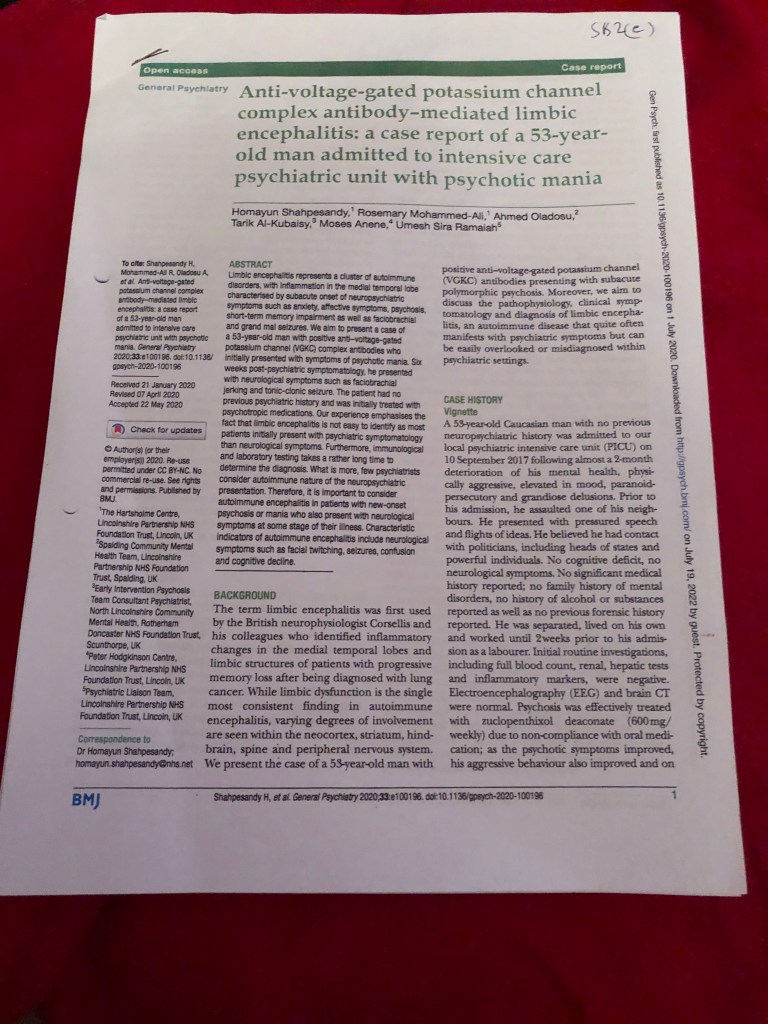
It is scandalous that with the number of patients known to be misdiagnosed that there is not a root and branch re-examining of mental health assessments. It is not psychiatrists and AMPHs who should have exclusive domaine here.  The examination is nowhere near complete without a thorough neurological and immunological/endocrinological examination.  Our national mental health policy is entirely in the sway of psychiatrists and drug companies.   

A failure in pathophysiological testing for organic contributions can significantly contribute to the prevalence of misdiagnosis in schizophrenia. Reports and studies have indicated that the prevalence of misdiagnosis in schizophrenia can be significant, with estimates often cited in the range of 10% to 40%, depending on the specific context, population, and research methodology. 

Given the complexities of diagnosing schizophrenia, it is crucial for mental health professionals to use comprehensive assessment approaches to enhance diagnostic accuracy and reduce the likelihood of misdiagnosis.

Lack of Comprehensive Assessment

Many clinicians do not conduct thorough pathophysiological assessments, such as neurological evaluations and laboratory tests, which can lead to missing underlying medical conditions that mimic or contribute to psychiatric symptoms.  Some clinicians over emphasise the subjective nature of psychotic disorders and actively discourage proper pathophysiological assessments. 

Overlapping Symptoms

Certain medical conditions (e.g., infections, autoimmune disorders, endocrine abnormalities) can present symptoms similar to those of schizophrenia. Without appropriate testing, these conditions may be misidentified as primary psychiatric disorders.

Neuroimaging and Biomarkers

Advances in neuroimaging (like MRI or CT scans) and the discovery of potential biomarkers for various conditions are important for identifying organic contributions to psychosis. If these tools are not utilized, it can result in misdiagnosis.

Co-Occurring Disorders

When an underlying medical condition is present alongside schizophrenia, it may complicate the clinical picture and lead to misunderstanding or misattribution of symptoms, resulting in a misdiagnosis.

Education and Awareness

Clinicians may not always consider organic causes when diagnosing schizophrenia, especially if they lack training or awareness about how medical issues can manifest as psychiatric symptoms.

Stigma and Assumptions

There may be an inclination to diagnose psychiatric conditions like schizophrenia without sufficiently exploring organic causes, particularly in patients with risk factors for mental illness, leading to overlooking potential medical diagnoses.

Case Reports

Numerous case studies and reports highlight instances where patients initially diagnosed with schizophrenia were later found to have organic pathologies, emphasizing the necessity of pathophysiological testing in uncertain cases.

Inadequate pathophysiological testing increases the likelihood that clinicians may overlook organic contributions to a patient’s symptoms, leading to a higher prevalence of misdiagnosis of schizophrenia. Comprehensive evaluation approaches that integrate both psychiatric and medical assessments are essential for accurate diagnosis and effective treatment.

The misdiagnosis of schizophrenia can occur for several reasons, but the following are some of the main contributing factors:

Symptom Overlap

Schizophrenia shares symptoms with various other mental health disorders, such as bipolar disorder, major depressive disorder, and personality disorders. This overlap can lead to confusion and misdiagnosis.

Incomplete Clinical History

A thorough assessment requires a detailed clinical history, including past medical and psychiatric treatments. When this information is lacking or overlooked, it frequently leads to inaccuracies in diagnosis.

Subjective Assessment

Psychiatric diagnoses often rely on subjective assessments of symptoms and behaviours. Variability in how clinicians interpret and diagnose these symptoms can result in inconsistencies and misdiagnosis.

Lack of Awareness or Training:

Some clinicians may not be adequately trained to recognize the nuances of schizophrenia or the range of conditions that can mimic its symptoms, leading to incorrect diagnoses.

Stigma and Assumptions

Societal stigma surrounding mental illness may lead to hasty or biased conclusions, particularly in emergency settings where rapid assessments are made under stress.

Co-occurring Disorders

Many individuals with schizophrenia may have co-occurring disorders (e.g., substance use disorders, anxiety disorders), complicating the clinical picture and leading to misdiagnosis.

Cultural Factors

Cultural differences in the expression and interpretation of symptoms can affect diagnosis. Clinicians may misinterpret culturally specific symptoms as pathological.

Insufficient Diagnostic Tools

While there are diagnostic criteria (like DSM-5 or ICD-10), there are no objective tests (e.g., blood tests or imaging) to confirm a schizophrenia diagnosis, leading to a over-reliance on observed behaviours and self-reported symptoms.

These factors highlight the need for comprehensive assessments and clinical awareness to reduce the rates of misdiagnosis in schizophrenia.

Failing to conduct thorough pathophysiological tests when diagnosing schizophrenia can have several significant serious consequences:

Misdiagnosis: 

Schizophrenia shares symptoms with other mental health disorders such as bipolar disorder, depression, and schizoaffective disorder. Without comprehensive testing, there’s a risk of misdiagnosing the condition, leading to inappropriate treatment plans.

Inappropriate Treatment: 

Inaccurate diagnosis can result in prescribing incorrect medications, which might not alleviate symptoms and could cause adverse side effects. Patients might also miss out on the benefits of effective therapeutic interventions tailored to their actual needs.

Delayed Treatment: 

Insufficient testing might delay the correct diagnosis, postponing necessary interventions. Early and accurate diagnosis is crucial for effective treatment, and any delay can worsen prognosis and lead to more significant deterioration in quality of life.

Poor Prognosis: 

Without targeted interventions, patients may experience worsened symptoms and a decline in functioning. More comprehensive evaluations can help identify specific needs and comorbid conditions, which are integral in planning effective management strategies.

Increased Healthcare Costs: 

Misdiagnosis or delayed diagnosis can lead to increased healthcare costs due to unnecessary treatments, potential hospitalizations, and more extensive long-term care due to unmanaged symptoms.

Impact on Quality of Life: 

The individual may suffer from ongoing symptoms that could affect their daily life, social relationships, and occupational functioning. Effective treatment hinges on an accurate diagnosis, allowing patients to manage symptoms and improve their overall quality of life.

CAVERNOMAS

A thorough diagnostic process, including pathophysiological tests are necessary and help ensure that patients receive the right diagnosis and appropriate treatment, improving outcomes and reducing the burden of the disease.

A cavernoma, which is a type of vascular malformation in the brain, can potentially interfere with neurotransmission and lead to symptoms that might be misinterpreted as psychosis. Cavernomas are clusters of abnormally formed blood vessels that can disrupt normal brain function by causing bleeding, inflammation, or other structural changes.

Cavernomas, especially in areas like the temporal lobe, can cause seizures. Seizures can sometimes present with confusion, disorientation, or altered perceptions, which could be mistaken for psychotic symptoms. For example, if the cavernoma causes focal seizures, these could manifest as hallucinations, paranoia, or delusions, which are all features of psychosis.

Cavernomas, depending on their location, can affect areas of the brain responsible for cognition and emotion regulation. If a cavernoma leads to functional changes in these regions, it could cause alterations in behaviour or mood, potentially resembling symptoms of a psychiatric disorder.

A cavernoma can disrupt the normal flow of neurotransmitters in the brain, especially if it causes local damage to nerve cells or interferes with blood supply. Neurotransmitter imbalances can contribute to mood swings, hallucinations, or altered perceptions, which may be mistaken for psychotic episodes.

In some cases, the physical stress and changes caused by a cavernoma, such as chronic headaches, seizures, or neurological deficits, can also lead to psychiatric symptoms, such as anxiety, depression, or even psychotic-like symptoms. These may be misdiagnosed as primary mental health issues.

Given these possibilities, a thorough neurological evaluation, including imaging studies like an MRI, is crucial for distinguishing between a primary psychiatric disorder and a neurological condition like a cavernoma. If psychosis-like symptoms are present, a neurologist or psychiatrist should look at a range of factors to rule out any underlying brain pathology, including vascular malformations like cavernomas.

The misdiagnosis of schizophrenia due to underlying brain lesions or cerebral inflammation is a known but relatively underreported phenomenon. Although schizophrenia is primarily considered a psychiatric disorder, its symptoms can overlap with neurological conditions that cause similar cognitive and behavioural disturbances, like brain lesions, inflammation, or other structural abnormalities.

Cerebral inflammation and brain lesions, such as those caused by vascular malformations (like cavernomas), brain tumours, endocrine disorders and autoimmune diseases, can lead to cognitive impairments, mood disturbances, hallucinations, or delusions, which are also hallmark symptoms of schizophrenia. When these neurological issues are undiagnosed, individuals may be misdiagnosed with a primary psychiatric condition like schizophrenia, especially if there’s a lack of awareness about the neurological possibility.

As for the estimated incidence of misdiagnosis, studies suggest that it’s not uncommon for neurological disorders to be misdiagnosed as psychiatric conditions. A few estimates suggest that about 15-25% of individuals initially diagnosed with schizophrenia may actually have an underlying neurological condition, though this figure can vary widely depending on the specifics of the study and the healthcare setting. In some cases, lesions or inflammation are only discovered after further neurological and pathophysiological testing (e.g., brain imaging, MEG, EEG and inflammatory marker evaluation), which can shift the diagnosis.

However, it’s worth noting that schizophrenia has a distinctive clinical picture, and misdiagnosis tends to occur more often in cases where symptoms are atypical or the neurological signs are subtle. When there is clear evidence of brain lesions, seizures, or other neurological symptoms, a more comprehensive diagnostic approach (including imaging) usually helps differentiate between psychiatric disorders and neurological conditions.

Cerebral inflammation can indeed cause symptoms that may be misdiagnosed for psychotic disorders, especially when the inflammation affects areas of the brain responsible for cognition, mood, or perception.

Conditions that cause inflammation in the brain—such as autoimmune disorders, infections (e.g., encephalitis), neurodegenerative diseases, endocrine disorders or even conditions like multiple sclerosis—can lead to psychiatric symptoms such as delusions, hallucinations, mood swings, and confusion. These symptoms can overlap with those seen in psychotic disorders like schizophrenia or bipolar disorder with psychotic features.

Misdiagnosis and how it can be avoided:

Overlap of Symptoms

Inflammation in the brain can cause hallucinations, delusions, agitation, and paranoia, which are core symptoms of psychotic disorders.

Disorders like autoimmune encephalitis can cause severe mood swings, depression, or mania, which can sometimes be mistaken for mood disorders with psychotic features.

Problems with memory, concentration, and thinking (often seen in inflammation-related brain conditions) can be confused with cognitive symptoms seen in psychotic disorders.

Differentiating Between the Two

To avoid a misdiagnosis, it’s crucial to conduct a comprehensive medical evaluation. This should include a detailed history (e.g., recent infections, autoimmune history, or neurological symptoms), a physical exam, and neuroimaging (like MRI, MEG, EEG or CT scans) to look for signs of brain inflammation or structural abnormalities.

Certain blood tests or cerebrospinal fluid (CSF) tests may help identify markers of inflammation or infection in the brain. Elevated levels of certain proteins or antibodies can be suggestive of neuroinflammatory conditions. In some cases, cognitive testing can help distinguish between psychosis due to a psychiatric disorder versus cognitive dysfunction related to brain inflammation.

Sometimes, clinicians will assess how the patient responds to treatments. If psychosis is related to inflammation, it may improve with steroids, immunotherapy, or antiviral medications, which are typically ineffective for primary psychiatric disorders.

Specific Conditions to Consider

One condition that commonly mimics psychiatric disorders is autoimmune encephalitis, which can cause rapid onset psychosis, mood disturbances, and confusion. Testing for autoantibodies (like anti-NMDA receptor antibodies) can help in diagnosing this condition.

Infections such as encephalitis, meningitis, or even HIV/AIDS-related encephalopathy can cause psychiatric symptoms and should be ruled out.

MS can sometimes cause psychiatric symptoms like depression, anxiety, and psychosis due to demyelination in certain brain areas. This can be distinguished from primary psychotic disorders through MRI scans showing characteristic lesions.

Minimizing Misdiagnosis

A team approach involving both neurologists and psychiatrists can help ensure a more accurate diagnosis when symptoms overlap.

A careful review of a patient’s medical history, including autoimmune conditions, infections, or a history of trauma, can help guide clinicians toward the right diagnosis.

If symptoms of psychosis arise suddenly or change in an unusual manner, it can raise suspicion for a medical cause rather than a primary psychiatric disorder. The timeline of symptom onset, course, and any precipitating factors (like infections or medications) should be taken into account.

Ultimately, a comprehensive diagnostic workup is essential to distinguish between cerebral inflammation and psychotic disorders. Early recognition and treatment of conditions causing brain inflammation can prevent further complications and ensure that patients receive the most appropriate care.

Link to Endocrine Disorders:

If a cavernoma is located near or within areas of the brain involved in endocrine regulation, it could theoretically contribute to endocrine dysfunction. These areas include:

  1. Hypothalamus: The hypothalamus plays a central role in regulating the endocrine system via its control over the pituitary gland. A cavernoma in this region could disrupt hormone regulation and lead to a variety of endocrine disorders, such as:
    • Hypothalamic dysfunction (e.g., issues with temperature regulation, hunger, or thirst).
    • Dysregulation of pituitary hormone release (e.g., corticotropin, growth hormone, gonadotropins).
  2. Pituitary Gland: Cavernomas affecting or compressing the pituitary gland could lead to:
    • Hypopituitarism (reduced secretion of pituitary hormones).
    • Hyperprolactinemia (if pressure disrupts the inhibition of prolactin secretion).
    • Other imbalances depending on the specific hormones affected.
  3. Other Brain Regions with Secondary Effects:
    • Cavernomas causing significant intracranial pressure, hemorrhage, or secondary damage might indirectly affect endocrine function by impairing brain structures or pathways.

Rare but Documented Cases:

Although cavernomas are not commonly associated with endocrine disorders, there are reported cases of cavernomas near the hypothalamic-pituitary axis causing endocrine dysfunction. These cases emphasize the importance of the cavernoma’s sizelocation, and potential for bleeding or compression.

Symptoms to Monitor:

If an individual with a cavernoma develops symptoms suggestive of endocrine dysfunction, such as fatigue, unexplained weight changes, menstrual irregularities, or growth abnormalities, a detailed evaluation is warranted. This may include:

  • Hormonal blood tests.
  • High resolution imaging studies like MRI to assess the cavernoma’s location and size.

Conclusion:

While cavernomas do not inherently cause endocrine disorders, those located in or near endocrine-regulating brain regions (like the hypothalamus or pituitary gland) have the potential to disrupt hormonal function. It’s essential to work with a neurologist and endocrinologist to address these concerns.

Elizabeth has a recognised endocrine disorder which can lead to the effects below.  The two hormones (neurosteroids) allopregnanolone and pregnenolone may be affected by the disrupted endocrine function and the levels of these should be tested.  I consider it unlikely they have even considered this just like they have ignored the inflammatory markers that can cause limbic encephalitis.  

They ignore all of these studies even when they are written by their own people like Dr Shahpesandy.  Lots of people are detained on wards who would be able to be discharged if they were given hormonal supplements and anti-inflammatories.  Even Shahpesandy acknowledges that.   

Idiotic prescribing of anti-psychotics will in some cases make endocrine dysfunctions worse and benzos given as prnrapid tranquillisation can cause limbic inflammation. 

Low levels of allopregnanolone and pregnenolone can contribute to psychiatric symptoms, including mood disturbances and, in some cases, psychotic symptoms. These neurosteroids play essential roles in stabilizing mood, reducing anxiety, and modulating stress responses, and they can be impacted by certain endocrine disorders. Here’s a closer look at how these neurosteroids interact with mental health and endocrine function:

Allopregnanolone and Pregnenolone in Mental Health

Allopregnanolone is a potent positive modulator of GABA-A receptors, which are central to calming neural activity and reducing anxiety. It helps create a sense of stability in brain signaling, counteracting overstimulation and stress. Low allopregnanolone levels have been associated with anxiety disorders, depression, and increased stress sensitivity.

Pregnenolone serves as a precursor to other neurosteroids, including allopregnanolone, and has its own neuroprotective effects, including modulating NMDA receptors and potentially balancing dopamine and GABA neurotransmission. It has been studied in relation to schizophrenia and other psychotic disorders, as low pregnenolone levels may contribute to cognitive impairment and psychosis.

Potential for Psychotic Symptoms

While low allopregnanolone and pregnenolone levels alone aren’t generally thought to cause psychosis directly, a deficiency in these neurosteroids can create vulnerability to psychotic symptoms, especially in those with predispositions or other stressors.

Neurosteroids like pregnenolone have been linked to dopamine modulation. Dopamine dysregulation is a hallmark of psychosis, particularly in conditions like schizophrenia. Reduced pregnenolone levels may therefore impact dopamine balance and contribute to hallucinations, delusions, and thought disorders.

Some research also suggests that allopregnanolone may have a stabilizing effect on mood and perception; reduced levels might leave individuals more susceptible to stress, which in extreme cases could precipitate psychotic-like symptoms in vulnerable individuals.

Low Neurosteroid Levels and Endocrine Disorders

Adrenal insufficiency (e.g., Addison’s disease) and other endocrine disorders affecting adrenal or gonadal hormones can reduce the availability of precursors needed for neurosteroid synthesis. This can lead to low levels of allopregnanolone and pregnenolone.

Disorders of the hypothalamic-pituitary-adrenal (HPA) axis, including chronic stress and HPA axis dysregulation, can also result in altered neurosteroid production. Chronic stress suppresses the production of pregnenolone and can shift steroid synthesis toward stress hormones like cortisol rather than neurosteroids.

Polycystic Ovary Syndrome (PCOS) and other hormonal imbalances involving estrogen progesterone may disrupt neurosteroid synthesis, as these hormones are involved in the pathways that produce pregnenolone and allopregnanolone. Individuals with PCOS, for example, have an increased risk of mood disorders, which may be partly related to altered neurosteroid levels.

Clinical Implications and Potential Treatments

Understanding low neurosteroid levels as part of a broader endocrine issue can help target treatments more effectively. Hormone replacement therapy (HRT) or neurosteroid analogs are sometimes used to restore balance in individuals with chronic deficiencies.

Pregnenolone supplementation has shown potential as an adjunctive treatment for schizophrenia and mood disorders, with some studies suggesting it can help reduce symptoms of anxiety, cognitive deficits, and even mild psychosis.

Similarly, allopregnanolone analogs, like brexanolone (approved for postpartum depression), are being explored for their potential to help with other mood and anxiety disorders, offering a novel approach to neurosteroid-based therapy.

Summary

In conclusion, low levels of allopregnanolone and pregnenolone can contribute to psychiatric symptoms, including psychosis, especially in individuals with underlying vulnerability. These deficiencies are indeed symptomatic of certain endocrine disorders, especially those affecting adrenal or sex hormones. Addressing neurosteroid imbalances through hormone therapy, neurosteroid analogs, or other supportive measures can be beneficial in managing symptoms linked to these deficits.

It is appalling that when you as a carer ask for pathological tests you are up against huge bullying and then safeguarding against you. There is no safeguarding towards the vulnerable person who needs the extensive pathological tests or for anyone whose diagnosis is in doubt denied such tests for many years. I know I am not alone in this matter and in the Scrutiny Meeting Minutes it actually highlights a national problem that needs urgent changes as if ignoring the necessity for such tests as so many lives are put at risk.

There has been a Community -‘style’ review organised, a second one, the first held last year excluding everyone in the family. This time I have written to Ms Amanda Pritchard of NHS England out of concern as it would appear nothing has been arranged fairly and I see this as a safeguarding concern.

What is a CTR?

I printed off the Care and Treatment Review Code and Toolkit (A Guide for commissioners, panel members and people who provide support). I then read carefully through each Standard and Principle. I would recommend every parent and carer print off this guide and check that the CTR is being arranged correctly and that they are included.

The purpose of a CTR Code and Toolkit is to provide a solid framework for CTRs in order for them to be delivered to a consistently high standard across England. Unfortunately, I am critical in respect of the way the CTRs have been arranged. I feel what is the point of them if they are not arranged properly and inclusive of the family/carers. The CTR is focussed on people who have been, or may be about to be admitted to a specialist mental health/learning disability hospital either under the NHS or independent sector and the ‘spirit’ in which they are carried out is paramount and rooted in principles of human rights, person-centeredness and co-production.

KLOE

Does person need to be in hospital?

Is person receiving right care

Is person involved in their care and treatment?

Are the person’s health needs known and met?

Is the use of any medicine appropriate and safe?

Is there a clear, safe and proportionate approach to the way risk is assessed or managed?

Are any autism needs known and met?

Is there active planning for the future?

Are family and carers being listed to and involved?

Are person’s rights and freedoms being protected and upheld?

It is the fourth year of detention and prior to moving she was living peacefully in the community compliant with treatment. I cannot see any of these questions, standards of principles being included in a CTR style review which I think is a complete and utter waste of time and none of the panel appear to be completely independent as I have checked.

It is supposed to be Person Centred but instead of this it would appear that institutional plans overall everything. There is no communication and with family excluded it gives me no hope that this CTR will result in fairness towards Elizabeth taking her wishes into account which is why I have turned to NHS England – Amanda Pritchard to scrutinise what is going on. Elizabeth’s wish is to come home to her independent bungalow next to family home.

The Standards are really interesting:

1.1 – Person and their family will be given information about the CTR in advance. Oh no they haven’t!

1.5 – Panel will make time available to meet separately with person and their family carer. Nothing properly arranged here.

3.1 – Where concern person’s human rights may not be being upheld. This is most certainly the case all along.

3.2 – Advocacy – provision of independent advocacy. There is no trustworthy independent advocate whatsoever as the advocates employed by the Trust have breached confidentiality in a capacity assessment on “Whether or not to have any Contact with Mother”.

3.3 – CTR will ask about legal framework for purpose eg at tribunal. THERE IS NO LEGAL REPRESENTATIVE EVEN THOUGH ELIZABETH HAS TRIED SEVERAL TIMES TO PHONE SOLICITORS – HER PHONE TAKEN AWAY AND HELD SECURELY, IN BREACH OF ART 8 HRA AND ALL CALLS SUPERVISED AND RECEPTION OF HER PHONE IS NOT GOOD. IT WOULD SEEM HER RIGHTS TO LEGAL PRIVILEGE ARE BEING OBSTRUCTED AS CALLS ARE SUPERVISED AND NO PRIVACY ACCORDING TO ELIZABETH.

4.1 CTR should take a day to complete. So in that case why have I just been invited for half an hr?

4.3 People supporting person should be at the CTR inc LA So could that be why I am only invited for just half an hour I wonder?

4.4 Physical health and general wellbeing. Private scans I paid for have indicated an anomaly (possible lesion) in the right hemisphere of the brain in an area where the meso-limbic pathway is located.

This lesion could be seen using the NHS approved DICOM (Digital Imaging and Communications in Medicine) an internationally recognized standard for storing, transmitting, and viewing medical imaging data, including MRI brain scans. The NHS and many healthcare systems worldwide rely on DICOM-compliant software to ensure interoperability between imaging devices and systems.

In Elizabeth’s scan the apparent lesion could be observed in three planes and triangulated to an exact position in the brain. The anomaly (lesion) appeared in the Axial Plane (Top to Bottom):

Also called the transverse plane, this section runs horizontally through the body, dividing it into superior (top) and inferior (bottom) sections.

The image was also visible in the Coronal Plane (Front to Back). This plane runs vertically, dividing the body into anterior (front) and posterior (back) sections.

And in the Sagittal Plane (Side to Side) This vertical plane divides the body into left and right sections.

A mid-sagittal plane runs exactly in the middle, splitting the body into equal left and right halves. A para-sagittal plane is offset from the midline.

The potential lesion is found at the right of the interhemispheric fissure in the sagittal plane, and of the superior in the axial plane and slightly to the anterior on the coronal plane

DICOM ensures that imaging data from MRI, CT, X-rays, and other modalities can be stored, transmitted, and viewed across various systems and software platforms.

It is widely adopted in healthcare, including within the NHS, for handling medical images.

The NHS uses a range of DICOM-compliant software and systems for viewing and analysing MRI scans. These include Picture Archiving and Communication Systems (PACS) and specialized imaging software.

Examples of DICOM-compliant software used in the NHS might include systems like GE Healthcare’s Centricity, Siemens Syngo.via, or Philips IntelliSpace Portal, among others. These are integrated with hospital IT infrastructure for seamless operation.

Under the circumstances it is necessary to re-examine this lesion under a higher resolution scanner such as the TESLA 3 or better still NEG TESLA 7 Phillips wide aperture scanner as this will improve acuity of image and reduce stress induced artifacts on the scan.

A brain lesion in the limbic pathway can potentially contribute to the development of psychotic symptoms. The limbic system, which includes structures such as the hippocampus, amygdala, thalamus, hypothalamus, and parts of the prefrontal cortex, plays a critical role in regulating emotions, memory, and behaviour. Damage or dysfunction in this system can disrupt these processes and lead to symptoms often associated with psychosis, such as hallucinations, delusions, or significant disturbances in thought and emotion.

There are a number of mechanisms linking limbic lesions and psychosis

Disrupted Emotional Regulation:

Damage to the amygdala or its connections can lead to abnormalities in emotional processing, potentially contributing to the paranoia or heightened emotional responses often seen in psychosis.

Impaired Memory and Cognitive Integration:

Lesions in the hippocampus or associated structures may interfere with the proper integration of memories and reality, possibly leading to delusional thinking.

Altered Dopaminergic Pathways:

The limbic system is closely connected with dopaminergic pathways, particularly the mesolimbic pathway. Lesions could dysregulate dopamine activity, which is strongly implicated in psychotic disorders like schizophrenia.

Disconnection Syndromes:

Lesions disrupting connectivity between the limbic system and prefrontal cortex could impair judgment and reality testing, leading to psychotic symptoms.

Neuroinflammation or Secondary Effects:

Lesions causing neuroinflammation or altering the surrounding brain environment can affect nearby circuits and neurotransmitter systems involved in psychosis.

Clinical Considerations:

Location of Lesion: The specific area and extent of the damage are critical in determining the likelihood and type of symptoms.

Co-occurring Factors: Pre-existing vulnerabilities, such as genetic predisposition, previous psychiatric history, or concurrent neurochemical imbalances, may increase the risk of psychosis.

Symptom Presentation: Depending on the nature of the lesion, psychotic symptoms might manifest in ways distinct from primary psychiatric disorders like schizophrenia.

While not every lesion in the limbic pathway will result in psychotic symptoms, there is a clear neurobiological basis for how damage to this area could contribute to psychosis. Such cases would require multidisciplinary management, combining neurology, psychiatry, and possibly neuropsychology, to address both the underlying neurological damage and the resulting psychiatric symptoms

So how on earth can a CTR ‘style’ review properly take into account all of this in a short space of time? I will ask this question to Ms Pritchard as it is most important to do these tests properly under the correct scanner.

5.10 CTR to question whether person’s care and treatment could be delivered in a non hospital setting.

YES – HOME! – How comes it is so difficult for this area to provide what was previously given in the former area. In that case then it would be cheaper to offer the private physical healthcare in the community and I as mother and carer could ensure attendance at all appointments which will save a lot of money. So much has been unnecessarily spent on wrong environments of care so far. Home is the right environment and there is so much scope for care to be provided in the home environment too unlike before.

6.3 Commissioner to write a report that all involved can understand and to ensure FAMILY AND CARERS AND OTHERS WHO NEED A COPY GET THIS WITHIN TWO WEEKS.

I am still waiting for the last report from last year and minutes. Where are these documents?

I have been invited at Elizabeth’s request to attend the CTR so I should be invited at 9.00 am until 5.00 pm not just for half an hour. This is ludicrous.

The last CTR was held in a secretive manner excluding all family and therefore nothing was done correctly and then according to Elizabeth two women approached her to tell her she was to stay where she was on the ward. No way was this done properly.

I particularly wish to be included in SECTION 7.

Section 7 gives guidance on exactly how things should be organised. The time allocated is still not enough time from between 10.30 am – 3.00 pm when the actual meeting started at 9.30 am. It says very clearly “meet with person AND THEIR FAMILY”.

A new advocate needs appointing because the current firm of advocates have breached confidentiality and I have had to complain quite rightly so. I am still waiting for my response in this respect.

According to the example the CTR ends at 5.30 pm. Especially important are the following points:

Am I safe

What is my current care like

Is there a plan for my future

Do I need to be in hosplital for my care and treatment.

The Expert by Experience is NOT independent.

There should be someone independent of the Trust as the the advocate like there was in the former area where the CTR was done correctly.

There is no mention of the Neurologist or attendance by an Endocrinologist and this is extremely wrong. This means that a despite the Transforming Care Minutes no consideration is being given to physical healthcare.

To exclude a parent and carer is extremely wrong and there is no better Expert of Opinion than a parent and carer.

If parent and carer has serious concerns on physical health as well as health and safety on treatment and the way capacity assessments have undertaken as well as safeguarding and risk assessments, then these concerns should be taken on board and taken seriously instead of being ignored. This is why the CTR should be externally scrutinised as I see this as a safeguarding concern where person, their carers and parents are dismissed like rubbish when they have valid concerns and also when there are any doubts on physical health backed by scans going back to 2007. Nothing should be left to chance if there are seizures and other evident endocrine disorders. Every person should be allowed a second opinion under Martha’s Rule and just because they are held under the MHA is no excuse to ignore the urgency of such tests. The problem is that when you as a carer dare to question and ask for pathological tests then you get backlash and bullying.

In the former area Elizabeth was properly supported for the CTR and for the first time ever before we moved they were taking her physical health very seriously. All appointments were cancelled upon moving and instead, priority was to get rid of me as the NR and try and revoke the POA as they are trying to do right now. The CTR informer area was cancelled three times before it was finally arranged correctly but Elizabeth was fortunate to have the support of NAS and Access Charity who ensured there was no cheating with the CTR. Here in Lincolnshire she has no external trustworthy advocate and therefore nothing will be done fairly like last time – a waste of time and with family excluded and no legal representation I can see absolutely nothing good in this CTR ‘style’ Review. In my opinion it is a complete and utter waste of time and geared not towards the vulnerable person’s wishes but whatever Trust and Council have contrive. I do not like the way they have tried to take away her autonomy by so many capacity assessments done incorrectly. The CTR, if arranged properly, would have been a great opportunity to communicate and discuss and resolve concerns on both sides but I see this as an underhand exercise where decisions have already been made in advance and all I want to see as a mother and carer is for my daughter’s wishes to be heard and acted upon even if it is on a trial basis in terms of her coming home and that is her wish – TO COME HOME AND TO SEE HER CAT! and be close to her family. There are plenty of opportunities in the local community for her to do everything on offer under a hospital which is not a home!.

Section 9 is a tick box check list that the Chair should ensure is based on the principles and standards laid out in the CTR Policy which is clearly is not.

Section 10 is about Discharge steps and standards. It mentions “where people are assessed as lacking capacity” “Best Interest process”. That is what they have been doing all along with Lincolnshire County Council involved from the beginning and their BI assessors but today there was no doubt that Elizabeth had capacity and even when she was drugged to the hilt at a previous hospital her wishes are still the same and that is TO COME HOME.

I have not even had a carers assessment since coming to this area. In respect of the person concerned this CTR is to ensure “someone will look at my living arrangements and make sure I do not lose my housing or right to benefits while in hospital” That somebody is ME! as her Attorney “who I would like to live with? What I want from my life? She wants to come home but certain others are trying to make out I am a bad person, this is commonplace and experienced by many carers – they try to collectively say that the relationship is bad, put safeguarding in place again you and just gang up and ruin your life by trying to label you as a “perpetrator and abuser” which is why the safeguarding and risk assessments need proper external scrutinising and safeguarding works BOTH WAYS!

I remember the discharge from former area from Wales to Northampton to a care home where practically all money was taken leaving just £30 pw and no support on managing financially and I have proof that this care home run by social services, rated good allowed her to go without food at weekends. Absolutely appalling which is why I have tried to provide a home for life – an independent detached bungalow for her. None of the care institutions in the community have worked and the urban environment of London was not good so it is completely different here. Some residents in these care institutions can be loud and any noise is very triggering for Elizabeth so a bungalow in a peaceful location is what is needed and the location of home is extremely nice and suitable. I know she could settle down in this area and that there would be no problems.

TRANSFORMING CARE

I am looking at the minutes held in July 2024 of the ADULTS AND COMMUNITY WELLBEING SCRUTINY COMMITTEE and this meeting is attended by the commissioner of the CTR and same panel as the CTR. How interesting, it states:

“Many older adults MAY HAVE BEEN MISDIAGNOSED WITH MENTAL HEALTH ISSUES FOR DECADES. Data was being gathered on these individuals, especially those with learning disabilities who tend to be identified earlier.” This is a huge safeguarding issue yet I as Mother and carer who wishes for pathological tests done on abnormal findings on scans going back to 2007 am being bullied right now – that is how I see it. These minutes have identified huge nationwide safeguarding issues that NHS England need to address at each and every area. I have now identified further safeguarding issues on how CTRs are carried out incorrectly, not taking into account all the standards and principles and a CTR should be concerned with physical health and underlying conditions which are not catered for under the MHA. Properly arranged CTRs not CTR ‘style’ reviews are needed, with independent panels and properly arranged and organised like that in the former area was.

These minutes identify a serious national issue apart from this with long waiting lists for neurodevelopmental services. Waiting times for diagnosis were up to a year. Well in Elizabeth’s case it is coming up to 4 years under Lincolnshire and back to 2007 in former area who refused to look into matters properly so I as Attorney and Mother had to pay privately to confirm everything. When you advise the outcome of such private tests under the MH they are just ignored under the NHS.

“Diagnostic processes involved multiple professionals and efforts were being made to streamline this process to reduce waiting times. ” THIS IS NOT GOOD ENOUGH as lives are being put at risk.

NO autism respite provision. However Elizabeth is not being recognised as someone with autism. It is however recognised within these minutes that girls and women often masked their symptoms leading to late diagnosis.

Housing needed to be addressed. Well I have addressed that issue with a detached bungalow. All that would be needed is shared lives carers or young student professionals to knock on the door like I provided privately in a scheme in the community once. This community though is completely different to London and totally caring with lots going on and work opportunities etc.

This is so true: ONE MEASURE NOT ACHIEVING TARGET IS REGARDING CARERS SUPPORTED IN LAST 12 MONTHS. I can only go by how I have been treated and would regard this as bullying. To ban you from visiting for months on end, to take away the phone, to try to isolate and stop contact by way of capacity assessment backed by her so called advocates is very sad and that is because I am asking for pathological tests that are urgently needed but being ignored.

ADULTS AND COMMUNITY WELLBEING SCRUTINY COMMITTEE AGENDA WEDNESDAY, 4 SEPTEMBER 2024.

I have the previous minutes also but note nothing has really changed from the last minutes and now I am seeing the names of those involved and the attendees.

1
Apologies for Absence/Replacement Members
2
Declarations of Members’ Interests
3
Minutes of the meeting held on 24 July 2024
5 – 8
4
Announcements/Updates
5
Lincolnshire Safeguarding Adults Board Update
(To receive a report from Justin Hackney, Assistant Director – Adult Care and Community Wellbeing, and Richard Proctor, Independent Chair LSAB, which provides the Committee with an update on the current position of key areas of work being undertaken within the Lincolnshire Safeguarding Adults Board (LSAB))

9 – 14
6
Service Level Performance against the Corporate Performance Framework 2024-25 Quarter 1
(To recive a report from Caroline Jackson, Head of Corporate Performance, which summarises the Adult Care and Community Wellbeing Service Level Performance against the Success Framework 2024-25 for Quarter 1)
15 – 38
7
Adults and Community Wellbeing Scrutiny Committee Work Programme
(To receive a report by Simon Evans, Health Scrutiny Officer, which invites the Committee to consider its work programme)
39 – 46

Democratic Services Officer Contact Details
Name:
Tom Crofts
Direct Dial
01522 552334
E Mail Address
thomas.crofts@lincolnshire.gov.uk

Please note: for more information about any of the following please contact the Democratic Services Officer responsible for servicing this meeting

Business of the meeting

Any special arrangements
Contact details set out above.
Please note: This meeting will be broadcast live on the internet and access can be sought by accessing Agenda for Adults and Community Wellbeing Scrutiny Committee on Wednesday, 4th September, 2024, 10.00 am (moderngov.co.uk)
All papers for council meetings are available on: https://www.lincolnshire.gov.uk/council-business/search-committee-records

12 ALL AGE AUTISM STRATEGY
Consideration was given to a report and presentation introduced by Justin Hackney,
Assistant Director – Adult Care and Community Wellbeing, and presented by Catherine Keay,
Head of Commissioning for Mental Health, Learning Disabilities and Autism – NHS
Lincolnshire Integrated Care Board, which provided the Committee with an overview of
Lincolnshire’s All Age Autism Strategy. The Committee were fully guided through the
predation at appendix A of the report.
Consideration was given to the report and during the discussion the following points were
recorded:

Many older adults may have been misdiagnosed with mental health issues for
decades. Data was being gathered on these individuals, especially those with learning
disabilities, who tend to be identified earlier.

The Integrated Care Board (ICB) funded services for 16-18 year olds, but there was a
national issue with long waiting lists for neurodevelopmental services. Waiting times
for diagnosis were up to a year, locally, and up to seven years elsewhere.

Autism Champions were being rolled out across various sectors to promote reasonable
adjustments. The goal was to have these champions in every sector, including shops
and local authorities, to create autism-friendly environments.
 The Virtual Autism Hub, started in February 2024. It was involved in the children’s
diagnostic pathways and provided grants to support groups, especially in
underserved areas.

Diagnostic processes involved multiple professionals, and efforts were being made to
streamline this process to reduce waiting times.

Many autistic individuals were academically high achievers but struggled with stress
and anxiety. The Autism Hub aimed to provide support across Lincolnshire to help
these individuals develop everyday functional living skills.

There was no specialised autism respite provision. Most autistic individuals needing
social care support fell under mental health services. Creative solutions, like
organising hotel stays with care support, were being explored. The Council was also
working on gap analysis to identify needs for respite care and other services.

Increased awareness of autism had led to more referrals overall. However, girls and
women often masked their symptoms, leading to later diagnoses. Efforts were being
made to raise awareness about different presentations of autism.

Housing for autistic individuals, especially those without learning disabilities, needed
to be addressed. Ground floor accommodations were often required due to safety
concerns. The joint accommodation strategy group was working on specific needs
and bespoke tender processes for care providers.

Page 6
3
ADULTS AND COMMUNITY WELLBEING SCRUTINY COMMITTEE 24 JULY 2024
 Efforts were being made to improve data collection and understanding of prevalence
and future demand.
 There was a significant number of unemployed autistic adults. Efforts were being
made to support these individuals into employment, but there was also a need to
educate employers about hiring autistic individuals.
 There were disparities in the availability of support across different areas, with more
resources concentrated in Lincoln. Efforts were being made to address these
disparities and provide more equitable support.
RESOLVED

  1. That the report and presentation be noted, and the Committee’s support for the
    Lincolnshire All-Age Autism strategy 2023-28 be recorded.
  2. That an update on actions and improvements be reported to the Committee next year.
    13 SERVICE LEVEL PERFORMANCE AGAINST THE CORPORATE PERFORMANCE
    FRAMEWORK 2023-24 QUARTER 4
    Consideration was given to a report by Caroline Jackson, Head of Corporate Performance,
    which invited the Committee to consider the Service Level Performance against the
    Corporate Performance Framework 2023-24 Quarter 4. It was reported that 95% of
    measures were achieving or exceeding targets. One measure that was not achieving target –
    regarding carers supported in the last 12 months. It was recognised that this target was
    giving flawed indication and was scheduled needed to be reviewed in the 2024-25
    framework.
    Consideration was given to the report and during the discussion the following points were
    recorded:
     The Committee recognised that Lincolnshire was performing well when compared to
    statistical neighbours; however, improvements and progress should nonetheless
    continue to be made.
     Assurances from the Care Quality Commission were welcomed.
     It was understood that new standardised formatting for presenting data needed to be
    implemented so as to ensure effective benchmarking with other authorities.
     Client-level data was growing as a resource, which presented opportunities to inform
    and improve service delivery via a more sophisticated interrogation of data.
     The 2024-25 framework remained largely unchanged from the previous version. The
    following changes had been made:
    o PI31 – definitions had been revised.
    o PI111 – the target had been increased due to the expected expansion of the
    service.
    o PI59 – the target had been reset to give a better reflection of the service and
    meaningful intent.
    o Three additional contextual measures had been added:
    Page 7
    4
    ADULTS AND COMMUNITY WELLBEING SCRUTINY COMMITTEE
    24 JULY 2024
     PI194 – Personal wellbeing estimates – life satisfaction; happy;
    worthwhile.
     PI195 – Annual concentration of air pollution, fine particulate matter.
     PI196 – Percentage of households in an area that experience fuel
    poverty.
     Contextual measures were measured by questionnaires and survey but concerned
    subjective matters. Trends and trajectories could be garnered from these
    measurements to inform the direction of the service.
     Matters such as measuring air quality had an overlap between the two tiers of local
    government in Lincolnshire.
    RESOLVED
  3. That the report be noted, and the Committee’s satisfaction be recorded.
  4. That the 2024-25 Adult Care and Community Wellbeing Service Level Performance
    Indicators and Targets be supported.
    14 ADULTS AND COMMUNITY WELLBEING SCRUTINY COMMITTEE – WORK
    PROGRAMME

    Consideration was given to a report by Simon Evans, Health Scrutiny Officer, which invited
    the Committee to consider its planned work programme.
    No changes had been made since publication; however, it was suggested that the following
    two items be moved from the September meeting on to October:
     Day Services Update
     Director of Public Health Annual Report 2023: Follow Up
    RESOLVED
  5. That the report be noted.
  6. That the above changes be made to the work programme.
    The meeting closed at 11.30 am
    Page

Elizabeth has asked many times to work in the hospital cafe but still she has not been given the opportunity. In this area there are many opportunities with the local college and hub for autism although Elizabeth’s condition has not been identified as Autism and she is being treated as a MH patient. She is now being taken out on group leave which she enjoys however I would compare the Trust to like a religious cult who restrict and deny family contact to any parent who dares to challenge and it is not the right thing to do when that family member might have extremely valid concerns.

I do not see any members of the public invited to this scrutiny meeting but I remember once when I turned up at the former area’s scrutiny wellbeing meeting I was told it was not open to the public. I had even offered to do the minutes. Doing the minutes accurately is what is needed which is why I should be invited ALL DAY to the CTR. I wonder what the response will be if I turned up to this Council’s Scrutiny Meeting.

Now having read these minutes I think the best thing is to do the entire safeguarding openly and transparently especially as regards why I am supervised 2-1 after all this time which is putting a huge risk on the ward and their staffing levels. Safeguarding works both ways and should not just be done on a parent and carer in such an underhand manner.

The CTR is arranged for the 30th of January and I have written to NHS England about this and also asked for my invitation to be all day and for the whole thing to be rearranged properly with a completely independent panel.

The Commissioner/Chair along with another Safeguarding Professional based under the Primary Care Trust are giving the most interesting talks to Lawyers on “Challenging Families and Best Interests” How to manage challenging families!”

In answer to that – there would be no such a thing as a challenging parent and carer as if they were listened to, included and treated with respect then this would enable Trusts to work effectively in determining what is in the best interests because after all, a parent/carer is the only EXPERT BY EXPERIENCE.

I will never forget the comments of the Independent Chair of the CTR done correctly under former area. He said “The whole thing stinks!” How true! However the former area were going to send Elizabeth to the Priory in Hemel Hempstead but instead her wishes were listened to and she was allowed home. Unfortunately it is like going backwards in this area as there is no communication and families/carers are treated as though they are invisible – if this is how I am being treated there must be others. The minutes of these scrutiny meetings look like they contain same matters which have just been copied and pasted but these people are not properly safeguarding my daughter who urgently needs pathological tests after so many years of neglect from former area and current where we had hoped so much for a fresh start. Instead, it has been one hell of a nightmare and still ongoing after so very long but now disturbingly with all the attempts to revoke the POA yet again there is much going on behind everyone’s backs right now and no answer from the Public Guardian Office as yet. I will keep you all informed and these meeting should include parents and carers after all it is a scrutiny meeting.

Policy Critique: Form OPG130 and the Risk of Procedural Injustice in the Safeguarding Process

Executive Summary

Form OPG130, issued by the Office of the Public Guardian (OPG), is intended as a tool to report concerns about the conduct of an attorney or deputy acting under a Lasting Power of Attorney (LPA) or Enduring Power of Attorney (EPA). While the objective of safeguarding vulnerable donors is legitimate and necessary, the design and operational use of this form raise significant concerns about procedural fairness, the presumption of innocence, and the potential for reputational and legal harm to individuals accused of abuse without evidence.

This critique highlights key flaws in the current policy underpinning Form OPG130, particularly the use of pre-determined abuse categories and the ease with which an individual may be named as a perpetrator without recourse to immediate defence or redress. The form’s structure and implementation risk facilitating unsubstantiated allegations, undermining natural justice, and ultimately diminishing trust in the safeguarding framework.

Overview of Form OPG130

Form OPG130 allows any person to report concerns about a donor’s welfare or decision-making arrangements. The form includes:

  • A list of pre-defined abuse categories (e.g., financial, physical, emotional)
  • Fields for describing incidents or concerns
  • A section to name the person(s) alleged to be responsible

The OPG uses this information to determine whether further investigation or referral is warranted. However, the form’s design and handling processes merit critical examination.

Pre-Determined Abuse Categories: Oversimplification and Presumption

The form presents a tick-box list of abuse types without requiring the complainant to demonstrate a credible threshold of evidence. These categories—while reflective of genuine safeguarding concerns—are problematic in policy terms due to:

  • Subjectivity: Terms like “emotional abuse” or “neglect” lack clear, uniform definitions in lay usage and may be applied inconsistently.
  • Ease of allegation: The form allows serious allegations to be made without scrutiny, inadvertently lowering the bar for potentially harmful or false claims.
  • Implied validation: By embedding abuse categories in the form’s structure, the OPG may be seen to lend credence to claims at the point of receipt, regardless of merit.

From a policy design standpoint, this introduces a presumption that once an allegation is made, it holds sufficient weight to prompt intervention—even absent corroborating evidence.

Identification of ‘Perpetrator’: Accusation Without Defence

The form explicitly invites the complainant to name an individual they believe to be responsible for the alleged abuse. Critically:

  • No evidentiary threshold is required at the time of submission.
  • The accused is not notified at this early stage and therefore lacks the opportunity to respond in real time.
  • The allegation is effectively recorded in an official safeguarding process, potentially triggering investigations and reputational consequences.

This policy design runs counter to fundamental principles of fairness and accountability. It lacks procedural balance and undermines the presumption of innocence, creating a high risk of injustice to those accused.

Absence of Safeguards Against Malicious or Misguided Reporting

There is currently no clear mechanism within Form OPG130 to:

  • Vet the credibility or motivation of the complainant at the initial reporting stage;
  • Require declarations of truthfulness under penalty of law;
  • Penalise false or malicious reports.

This gap in policy fails to protect individuals from being targeted as part of family disputes, inheritance conflicts, or personal grievances unrelated to actual abuse. The absence of meaningful safeguards creates a significant risk of misuse.

Disproportionate Consequences and Asymmetric Rights

The policy framework surrounding Form OPG130 allows potentially severe consequences to flow from unsubstantiated allegations:

  • Suspension of powers of attorney
  • Disruption of care arrangements
  • Reputational and emotional harm
  • Referrals to safeguarding boards or police

In contrast, the accused has no structured pathway to rebut or contextualise the allegation at the outset. The process is asymmetrical, offering protections to the complainant but none to the accused. This undermines legal norms such as:

  • Audi alteram partem – the right to be heard
  • Equality of arms in quasi-judicial processes
  • Proportionality of state intervention

From a public policy perspective, this imbalance erodes trust in safeguarding systems and may deter capable attorneys from continuing in their roles.

Policy Recommendations

To ensure that safeguarding mechanisms remain fair, effective, and accountable, the following reforms to Form OPG130 and its associated procedures are recommended:

Evidentiary Threshold

Require complainants to provide specific supporting information and, where possible, documentary evidence to substantiate allegations.

Declaratory Statement

Include a formal declaration that allegations are true to the best of the complainant’s knowledge, with a warning about the legal consequences of false reporting.

Initial Credibility Screening

Introduce a triage mechanism within the OPG to assess the plausibility and seriousness of allegations before any formal investigative steps are taken.

Right of Reply

Establish a structured process for notifying accused individuals and offering a prompt opportunity to respond before further action is initiated, except in urgent risk cases.

Transparency and Record-Keeping

Ensure that accused individuals are informed of any allegations retained in official records and have access to a clear process for rectification or removal of unfounded accusations.

Guidance and Training

Provide clear public guidance on what constitutes different types of abuse and the threshold for reporting, to reduce misunderstanding and inappropriate referrals.

Form OPG130, as currently implemented, lacks adequate safeguards to prevent misuse and fails to uphold key principles of natural justice. While protecting vulnerable individuals is a core function of the Office of the Public Guardian, this must not come at the expense of procedural fairness or the rights of those accused.

A rebalancing of the policy framework is urgently required to preserve the integrity of the safeguarding process, protect all parties involved, and ensure public confidence in the operation of powers of attorney.

Critical Analysis of Form OPG130: Concerns About a Donor (LPA/EPA) – Focus on Pre-Determined Abuse Categories and Injustice Toward the Accused

Introduction

Form OPG130, issued by the Office of the Public Guardian (OPG) in the United Kingdom, is designed to allow concerned individuals to report suspicions of abuse regarding a donor under a Lasting Power of Attorney (LPA) or an Enduring Power of Attorney (EPA). While the safeguarding of vulnerable individuals is a crucial function of the OPG, the design and structure of OPG130—particularly the use of pre-determined abuse categories and the approach to identifying alleged perpetrators—raises significant concerns about procedural fairness, natural justice, and the rights of the accused.

Pre-Determined Categories: Presumption of Guilt

The form lists predefined categories of abuse such as:

  • Financial abuse
  • Physical abuse
  • Emotional or psychological abuse
  • Neglect
  • Sexual abuse

These categories, while reflecting real and serious types of harm, may lead to unintended consequences when placed on a reporting form without context or an evidentiary requirement. The issue lies not in their inclusion per se, but in how they are presented:

  • Tick-box simplicity: The form allows allegations to be made simply by ticking boxes. There is often no requirement for substantial evidence, corroboration, or detailed narrative beyond what the reporter chooses to provide.
  • Ambiguity and subjectivity: Terms like “emotional abuse” or “neglect” can be highly subjective and open to interpretation. In family or care contexts, particularly those involving complex dynamics or disagreements over care decisions, such labels can be misused or misunderstood.

By structuring the form this way, the OPG risks encouraging speculative or malicious allegations under the guise of safeguarding, with little scrutiny at the reporting stage.

Identification of the ‘Perpetrator’ Without Evidence

Perhaps the most troubling aspect of the form is the section that invites the reporter to name the “person responsible for the abuse”—effectively labelling an individual as a perpetrator before any investigation has taken place.

  • No burden of proof: The form does not ask the reporter to present evidence beyond their own account. There is no legal threshold to meet before someone’s name is recorded as a suspected abuser.
  • Impact on the accused: Once named, a person can be subjected to investigations, reputational damage, and distress—all before they are even notified of the allegation, let alone given a chance to respond.
  • No right to immediate response: The accused does not have automatic recourse to challenge the allegation at the point of submission. The OPG may begin inquiries or refer matters to social services or police without the accused having the opportunity to correct inaccuracies or defend themselves.

This dynamic can result in serious miscarriages of justice, particularly where allegations are made maliciously, based on misunderstandings, or as a result of personal disputes.

Injustice and the Erosion of Natural Justice

At the heart of the criticism is a fundamental lack of procedural fairness—commonly referred to as natural justice. The principles of natural justice include:

  • The right to a fair hearing
  • The right to be informed of allegations
  • The right to respond to and challenge those allegations
  • The right to an impartial investigation

Form OPG130, in its current structure, undermines these principles:

  • No balancing mechanism: There is no equivalent form or process for an accused person to formally respond at the same stage. The investigative process may not include or prioritize the perspective of the accused until later—if at all.
  • Risk of disproportionate responses: The mere presence of an allegation may trigger significant interventions, such as suspension of powers or referral to authorities, regardless of whether the claims are substantiated.
  • No penalties for false allegations: There appears to be no clear warning on the form about the consequences of making false or malicious accusations, which would serve as a deterrent to misuse.

Potential for Abuse of the Safeguarding Process

Ironically, a form intended to prevent abuse may itself be vulnerable to being used abusively. Disputes over finances, inheritance, family dynamics, or care decisions may prompt individuals to use the form as a weapon—especially when there is no immediate scrutiny of their motives or evidence.

This creates a paradoxical situation:

  • The vulnerable party may become more vulnerable: Disruption caused by false allegations can destabilize care arrangements or damage trust between the donor and attorney.
  • The accused may suffer irreversible harm: Reputational damage and emotional distress can occur even if the allegations are ultimately dismissed.

While the safeguarding of donors under LPAs and EPAs is undeniably important, Form OPG130 in its current form presents serious concerns about fairness and justice. The use of pre-determined categories of abuse and the ease with which an individual can be labelled a perpetrator without evidence or recourse undermines the principles of due process and opens the door to misuse.

To align better with principles of justice and the rights of all parties involved, the OPG should consider reforms such as:

  • Introducing a requirement for supporting evidence
  • Ensuring allegations are screened for credibility before action
  • Providing an immediate and equal opportunity for the accused to respond
  • Including clear warnings about the consequences of false reporting

Safeguarding systems must protect the vulnerable, but they must also guard against the abuse of the process itself. Without a balance, the very tools designed to uphold justice may become instruments of injustice.

Here is some very important case law:

If anyone is being threatened with an annulment of  Lasting Power of Attorney by local authority social services the case where the CoP refused such an application is as follows:

Re C (Attorney) [2018] EWCOP 42

  • The applicant must show that the patient lacked capacity at the time the power was granted.
  • The applicant must show with sufficient evidence that the holder of the power is using undue influence.

In the above case they failed.

YET ANOTHER INVESTIGATION BY THE PUBLIC GUARDIAN OFFICE COMMENCED 6 NOVEMBER 2024

On the 6th November 2024 I was contacted by the Public Guardian Office who had received serious allegations against myself and another Attorney that we were mismanaging the POA and I am assuming an OPG130 form had been submitted. This is the second time we have been under investigation but this time for everything including finances, whereas before it was just health and welfare.

Elizabeth was taken away in September 2021 in an ambulance when I had tried to get continuation of “medication” in the community and to this day she remains held on a ward. All sorts of allegations were levied that I had tried to stop treatment etc. For a good part of at least three years of hell, Elizabeth has been held like a restricted prisoner and my visits/phone calls very much restricted. The first Public Guardian Office investigation took place in 2022 and concluded in our favour. An investigation normally takes 14 weeks but in the current investigation so far no response. This impacts upon your life, your health and wellbeing and when done secretly behind your back in this way I have no doubt the advantage would go to the social services whoever is involved to give them full control of everything needed to finance a proposed care home and this is what has been going on since our move when the family have provided a bungalow to bring her close to everyone as per her wishes.

For anyone else up against this kind of malicious process that I can only describe as “bullying” and “intimidation” I would advise taking a close look at this OPG 130 form social services may use to report an Attorney in cases where they want to take control of everything. For some cases this may be justified however in others, it is simply used for the purposes of control and placing a vulnerable person into yet more restrictive care with false promises of “freedom” against their wishes. If found to have no capacity it is easy for this to happen however in other cases there might be “fluctuating capacity”. This I have no doubt is done when normal procedures cannot be applied. This would authorise full control of everything, family savings, Trust Funds, family property to be spent on a care home. The Public Guardian Office then has the duty to investigate based on those allegations made against you by so called “professionals” you have never even met. So the form itself is very simple on the second page capacity is mentioned. That has to be determined in a Public Guardian CoP case. Since the day we moved, the team have tried to allege Elizabeth has NO CAPACITY – her medication at one point was raised to double at the time of the 2022 assessment. Even in light of this, Elizabeth still maintained capacity. I believe the Public Guardian Office have sent an assessor to carry out the capacity assessment so Elizabeth has advised us. She said a man carrying out the assessment asked her where she wanted to live and she said “home”. Today during my heavily supervised 2-1 restricted visit, Elizabeth again showed her capacity to the full and great memory of the former area in front of the young supervisors. I have no idea of the outcome of this latest 9th capacity assessment. The most disturbing thing is on Page 3: “Date alleged abuse happened” and “names of alleged perpetrators”, Local Authority name and address and allocated social worker details.

All of this has been going on behind our backs instead of a section 42 meeting which I have asked for many times before to discuss MY CONCERNS. Elizabeth is now in a rehab unit where she moved from Castle Ward stating “anything is better than this place“. Prior to that Elizabeth was unsure because it appeared to be the same restrictive “care”. It has become clear that the safeguarding is solely against me but what is bad is that no-one will give you a reason and one that complies with the MHA Code of Conduct which is 11:14-16 and I do not come into any of the categories listed.

After all this time there is still no response from the Public Guardian Office and I have written to them tonight because I have decided I would like the entire investigation to be completely open and transparent. I thought that was the whole idea of safeguarding. The more open and transparent the better as you should have the right to reply BEFORE any such investigations take place that affect your whole life as in my case.

I then contacted the Public Guardian Office to ask the following questions and raise the following points but when I asked who was the social services team behind this I was told it was confidential and could not be disclosed just like an MDT where everyone backs one another but there is not room for 30 signatures on this form – there is one room for ONE SOCIAL WORKER to sign.

Why not disclose who is behind matters and what the concerns are and why should it be confidential when it is all about me in that case, that is assuming such form was even properly submitted to the CoP but here is what to do if any other parents and carers are affected:

A person who is referred to as a “perpetrator” or “abuser” on a form such as the OPG130 (which is typically used in the context of applications for a deputyship order under the Mental Capacity Act 2005) would generally have the legal right to challenge such a definition, particularly if it is inaccurate, defamatory, or unjust. Below is an explanation of the legal right to challenge such a definition, along with the relevant legal authorities.

Right to Challenge the Definition

  1. Right to Fairness and Accuracy (Article 6 ECHR)
    The right to a fair trial and due process is enshrined in Article 6 of the European Convention on Human Rights (ECHR), which applies in the UK. If someone is described as a “perpetrator” or “abuser” in any legal proceeding, that person has a right to challenge such an accusation or label if it is inaccurate, misleading, or detrimental to their legal standing or reputation. The right to a fair hearing includes the opportunity to challenge evidence or allegations made against you, especially when it involves potentially damaging labels or findings.
  2. Defamation and Reputation Protection
    If the term “perpetrator” or “abuser” is used in a way that can harm someone’s reputation, they may have a claim under defamation law. Under UK law, if an individual’s reputation is harmed by false or unjust accusations, they may seek redress through a claim of defamation. A person referred to as a “perpetrator” or “abuser” on the form may have grounds to challenge such a label, particularly if it is false, not substantiated by evidence, or not relevant to the application.
    • Defamation Act 2013: This law covers defamation claims and provides mechanisms for individuals to challenge defamatory statements. If someone is referred to as a “perpetrator” or “abuser” without evidence, they could potentially argue that such a statement is defamatory.
  3. Mental Capacity Act 2005 – Best Interests and Protection from Abuse
    The Mental Capacity Act 2005 (MCA) includes provisions to protect individuals who lack capacity from abuse. However, accusations of abuse must be substantiated and handled carefully. If a person is labeled as an “abuser” or “perpetrator” in a form or legal document, it’s crucial that such claims are supported by evidence and comply with the principles of the MCA.
    • Section 42 of the Care Act 2014: This section requires local authorities to make inquiries if there is a suspicion that an adult with care and support needs is at risk of abuse or neglect. If allegations are made, there is a legal framework for addressing and investigating abuse. However, individuals accused of abuse have the right to challenge those accusations in court.
  4. Court of Protection and Procedural Fairness
    If the application is before the Court of Protection (which deals with matters related to individuals who lack mental capacity), any allegations or labels used in the application (such as “perpetrator” or “abuser”) could be subject to scrutiny. The individual who is labeled as such has the right to contest these claims in the proceedings.
    • Court of Protection Rules 2017: These rules govern how cases are managed and how parties can challenge evidence. If someone is referred to as a perpetrator or abuser in an application, they can ask the court to clarify or remove such labels if they believe they are inaccurate, unfair, or unsupported by evidence.
    • Principles of Procedural Fairness: The Court of Protection must act in a way that is procedurally fair. If a person is unfairly labeled in a manner that impacts their legal rights or standing, they have the right to challenge the labeling or seek to have it removed.
  5. General Principles of Natural Justice
    The principle of natural justice, which ensures fairness in legal proceedings, applies in all public law matters, including deputyship applications under the MCA. This principle includes the right to know what evidence is being presented against you, the right to respond to it, and the right to challenge any findings that could be unfairly prejudicial. If an individual is labeled as a “perpetrator” or “abuser” on the OPG130 form, they would typically be entitled to challenge such a label if it is inaccurate or prejudicial.

What Legal Authority Supports This?

  • Article 6 of the ECHR (Right to a fair trial)
  • Defamation Act 2013
  • Mental Capacity Act 2005 (particularly Sections 1-3 regarding capacity and the best interests of the person)
  • Care Act 2014, Section 42 (Duty to investigate suspected abuse or neglect)
  • Court of Protection Rules 2017 (Procedural rules for managing applications and challenges)
  • Principles of Natural Justice (Fairness in legal procedures)

How to Challenge the Label?

If a person wishes to challenge the label of “perpetrator” or “abuser” in an OPG130 application:

  1. Raise the Issue in the Application Process: The individual (or their legal representative) can raise the issue in the initial stages of the application. They may file a response with the Court of Protection to dispute any allegations.
  2. Court of Protection Hearing: The issue could be raised during a hearing, and the individual has the right to argue that the label is incorrect or defamatory. This might involve providing evidence that contradicts the label.
  3. Request for Review or Appeal: If the individual believes that the decision to use such labels is prejudicial or unfair, they may seek a review or appeal of the decision.

In conclusion, a person referred to as a “perpetrator” or “abuser” in an OPG130 application has a legal right to challenge that definition, and they may do so through the mechanisms outlined above, including the right to fair treatment under Article 6 ECHR, the Defamation Act 2013, and principles of procedural fairness and natural justice.

RIGHT TO REPLY

Who raised the ‘concern’ regarding Elizabeth’s finances?

What is the nature of that concern? (in detail, not generality)

Failure to disclose this information is denying me the long established right of reply to my accuser and denying me my inalienable right to a fair hearing.

Withholding the information on the grounds of confidentiality is absurd. These concerns, as described are about me and therefore are not protected by third party confidentiality.

Being investigated as a “perpetrator and abuser” is not nice but it is very good to bring things out in the open because I am sure I am not alone. It impacts upon your life and I do not even know who this social worker is who has automatically made serious allegations to revoke the POA and that is another matter altogether and the reasons behind it. It is a pity that social services do not work together with families in an open decent and transparent manner.

I also pointed out to the Public Guardian Office the following:

“We are being denied justice under the following maxis.

Audi Alteram Partem. The right to reply.

Nemo Judex in Causa Sua. No person may be a judge in their own cause.

Unless there is a statutory exception (internal policy will not suffice)

If there is a statutory exception the burden of proof is on those claiming the benefit of it. I will require black letter law authority from Office of the Public Guardian if this position is being maintained”.

In the absence of any response from the Public Guardian Office I have been trying to locate the social worker behind all of this. I thought at first it might be the Local Authority so I wrote the following email and then to the Trust’s social work team and here are the responses, both in denial which is typical yet they must have some idea of who and where the team is located and their email address. Anyway this is the outcome of my investigations below:

MY INVESTIGATIONS INTO WHICH SOCIAL WORK TEAM IS INVOLVED

Email from “CARECONCERNS (LINCOLNSHIRE PARTNERSHIP NHS FOUNDATION TRUST)” lpft.careconcerns@nhs.net

LPFT’s Social Services department were not involved with Elizabeth’s care until 7th June 2024 and therefore did not contribute to this decision, or the OPG investigation. In addition, an Approved Mental Health Professional was also not involved in the decision-making process around phone use, therefore we are unable to provide a name to share with you.”

So the decision to take the phone away and hold it in the office and keep in place constant supervision 2-1 is so they say “an MDT decision! If things go wrong then it would be an “MDT fault”. In other words no accountability for anything. This is of course in breach of human rights not that they appear to even exist in this area.

So in that case who is involved???

Hi

Susan is not open to our team, if we could be removed from the email chain please.

Thankyou

Kind Regards

Sarah Duty social worker

LPFT Sec 75 social care west team.

OK let’s rule the section 75 west team out in that case. But now look at the email below and my comments in bold.

How very strange as the Council say they are not involved but somebody knows who is involved and I would like to know who is behind calling me a Perpetrator and Abuser??? I am sure anyone would want to know this.

From: Customer Relations Team <customerrelationsteam@icasework.lincolnshire.gov.uk>
Sent: 31 December 2024 10:29
To: susanb255@outlook.com <susanb255@outlook.com>
Subject: Enquiry (ref: 11294061)

Dear Susan Bevis

Ref: 11294061

The Customer Relations Team at Lincolnshire County Council have received a copy of your email that you sent to Debbie Barnes and Will Bell at Lincolnshire County Council in relation to the Lincolnshire Partnership Foundation Trust (LPFT) and your daughter, Elizabeth.

Please be advised that your concerns should be directed to the LPFT social work team. Elizabeth is open to LPFT and not LCC Adult Care. LCC Safeguarding have also advised that there is no remit for them with regards to Elizabeth case at this time.

Please find contact details for LPFT at the following link How to give feedback :: Lincolnshire Partnership NHS Trust

Kind regards,

James Taylor

Customer Relations Advisor

Customer Relations Team

Lincolnshire logo

I will further add to this blog once MY INVESTIGATIONS are concluded and the real reasons behind everything going on which is very disturbing for all families affected. I will add the points of law and everything other parents and carers need to know faced with these disturbing circumstances.