I have been regularly visiting my daughter on Sundays recently at around 2.30 pm. This week due to my error in typing April instead of May in my email and only realising this too late to rectify, sadly I am not allowed to see my daughter this Bank Holiday weekend. It is bad enough having heavy restrictions in place infringing on human rights on telephone and visiting than to be deprived of seeing her altogther as her only regular visitor this weekend. I had promised to bring some things that she requested to the ward and will still make the journey to bring her the shopping I would normally do even though I will not be allowed to see her.

I have just tried to ring the ward. I did not argue that it was protected meal-time but you cannot just ring her mobile phone number as the phone is clearly not with her and has been taken away and the team then have to organise someone to sit in and listen to all phone calls and make notes when it is me who makes contact. Others in the family not treated quite as bad but still cannot get through. It is normally a Healthcare Assistant who is put in charge of the supervision and note taking and God knows what they are writing behind my back. I am sure it is not nice.

This kind of treatment has been going on for a long time now with all staff loyally sticking together regardless of their own Code of Conduct which portrays a culture of bullying and one of non-accountability. There is only one person in charge overall imposing these rules as only a Responsible Clinician can, namely Dr W K.

From: susan bevis
Sent: Thursday, May 2, 2024 2:01:30 PM
To: CARECONCERNS (LINCOLNSHIRE PARTNERSHIP NHS FOUNDATION TRUST) lpft.careconcerns@nhs.net
Subject: Elizabeth BEVIS 12.02.1987 Visit to see Elizabeth
 

For the Attention of Ms A Munro

Is Sunday 5th April OK to visit Elizabeth?   Has there been any change in the restrictions on leave?

Please can you respond to the queries mentioned in my former email.

Yours sincerely

Susan A Bevis
Mother POA and Litigation Friend

No answer whatsoever to the above email from the Management.

So tonight I will ensure that I phone Elizabeth to let her know what is going on. I will reassure her that I will come all the way to Lincoln which is an hour there and back just for the purpose of dropping in a few bits of shopping as I would normally do and was doing throughout the many weeks I was banned completely from visiting.

It is sad the way patients under the MH in this area of Lincolnshire are treated but then again most are treated differently to Elizabeth who is being deprived of meaningful family contact and leave and this has been going on for quite some time by a Responsible Clinician who will not budge and says “I am concerned for my patient” Carers too can be subject to severe bullying also if they dare to complain and it is a waste of time complaining when they are all well-in with the CQC.

Elizabeth says she is autistic which they choose to ignore completely. They say they cannot assess her on a ward but how comes Huntercombe could? For all the criticism some of the private sector institutions get, the very worst experience I have ever encountered has to be the current and this is NHS not private. Even Huntercombe all diagnosed her with high functioning Aspergers but now all of this is in question with the MRI scan results done privately and the constant seizures that can be life threatening as well as frequent rapid tranquilisations with benzodiazepam which should never be given in respect of epileptic fits.

Elizabeth has definitely deteriorated under LPFT’s appalling treatment and her hands could not stop shaking when I visited last. I have been told there is no management on duty during the long weekend. The Manager of this ward is Kashmir Moon and not once have I ever spoken with her. I have only one point of contact now and that is the email address of care concerns and I have featured already what kind of response you get from them. Normally, it is either a wall of silence or else it is a heartless letter devoid of any compassion by a designated member of staff – mostly unsigned completely as no-one wishes to take the slightest bit of responsibility.

Here are extracts of an email I sent today to Care Concerns:

From: susan bevis
Sent: 03 May 2024 11:15
To: CARECONCERNS (LINCOLNSHIRE PARTNERSHIP NHS FOUNDATION TRUST) lpft.careconcerns@nhs.net

Subject: Paralegal’s Visit
 
For the Attention of Ms Ann Munro and LA Voiceability

 A paralegal came to see Elizabeth on 02.05.2024 accompanied by LA. Please explain.

The paralegal did all of the talking according to Elizabeth and it was all about her going into supported living.

Elizabeth was promised she could have her cat there in the supported living scheme but was not told where it is.

Please can you inform Nearest Relative C and S, other Attorney who need to know.

 Who arranged the paralegal?   How could Elizabeth have done this with her phone locked away still.

Elizabeth said very clearly she does not wish to go into supported living and that she wants to come home.

Elizabeth has made it very clear to all of us that she wishes to be close to her family not move out of area.

Elizabeth’s capacity is heavily disputed and as someone with capacity, Elizabeth’s wishes need to be heard.

Since LPFT rely on three “flawed” capacity assessments for displacement of me as NR a fresh capacity assessment is in need.

A fresh capacity assessment cannot be done unless the causative nexus is determined via Sheffield.

The cause of seizures is vital as Elizabeth’s life is at risk

What risk assessments are being done re supported living in regard to the seizures when full pathological tests not conducted

30th July has been arranged for MRI scan under Tesla 3 scanner.  Elizabeth needs to go for a few days to have proper EEG tests done.

If Elizabeth has epilepsy she should not be treated with prn benzos for rapid tranquilisation.

Prolonged and repeated use of benzodiaepines can increase the risk of rebound seizures or interictal epileptiform discharges (IEDs) in some individuals. Schizophrenia-like symptoms are observed in some patients and are associated with epileptiform discharges but not overt seizures. The good response to antiepileptic treatment could be interpreted in the context of a (para)epileptic pathomechanism.

“The EEG alterations might be due to a polygenetic effect due to different genes”.

This is why accurate diagnosis is so important. You will see in the case below that a patient with schizophrenia like symptoms had epilepsy and recovered when taken off antipsychotics and treated with anti-convulsants.

The idea that schizophrenia is ‘confirmed’ by daily observations conducted by unqualified staff is absurd. Care assistants cannot possibly know how to differentiate between IEDs and psychosis induced by other causes. This is why PANSS and associated physiological testing is crucial.  LPFT are in the dark ages when it comes to diagnosing and treating psychiatric patients. They neglect proper investigation of genetic markers in psychosis, they neglect EEG examination, they neglect genetic testing for treatment refractivity, they neglect investigation the potential inflammatory causes of brain disturbances and the ignore ADRs.

This indicates an ideological approach to diagnosing and treating psychosis rather than a medical one. Belief based medicine, not evidence based medicine.

Clozapine can actually induce epilepsy in some patients due to a genetic polymorphism. LPFT do not test for that either.

Schizophrenia Associated with Epileptiform Discharges without Seizures Successfully Treated with Levetiracetam

Dominique Endres1 Evgeniy Perlov1 Bernd Feige1 Dirk-Matthias Altenmüller2 Nils Venhoff3 Ludger Tebartz van Elst1*

1Section for Experimental Neuropsychiatry, Department of Psychiatry, Faculty of Medicine, University of Freiburg, Freiburg, Germany

2Freiburg Epilepsy Center, Department of Neurosurgery, Faculty of Medicine, University of Freiburg, Freiburg, Germany

3Department of Rheumatology and Clinical Immunology, Faculty of Medicine, University of Freiburg, Freiburg, Germany

Background: Schizophrenia-like disorders can be divided into endogenic or primary, idiopathic, polygenetic forms, and different secondary, organic subgroups [e.g., (para)epileptic, immunological, degenerative]. Epileptic and paraepileptic explanatory approaches have a long tradition due to the high rate of electroencephalography (EEG) alterations in patients with schizophrenia.

Case presentation: We present the case of a 23-year-old female patient suffering, since the age of 14 years, from a fluctuating paranoid hallucinatory syndrome with formal thought disorder, fear, delusions of persecution, auditory, visual, and tactile hallucinations, as well as negative and cognitive symptoms. Laboratory measurements showed increased titers of antinuclear antibodies (ANAs) in the context of ulcerative colitis. While there was no clear history or evidence of epileptic seizures, the EEG showed generalized 3 Hz polyspike wave complexes. Under treatment with levetiracetam, the symptoms disappeared and the patient was able to complete vocational training.

Conclusion: The schizophrenia-like symptoms associated with epileptiform discharges but not overt seizures and the good response to antiepileptic treatment could be interpreted in the context of a (para)epileptic pathomechanism. The EEG alterations might be due to a  polygenetic effect due to different genes. Mild immunological mechanisms in the framework of ulcerative colitis and increased ANA titers might have supported the network instability. This case report illustrates (1) the importance of EEG screenings in schizophrenia, (2) a potential pathogenetic role of epileptiform discharges in a subgroup of patients with schizophrenia-like symptoms, and (3) that antiepileptic medication with levetiracetam could be a successful treatment alternative in schizophrenia-like disorders with EEG alterations.

Background

Schizophrenia-like disorders are characterized by delusional perception and delusions of control, hallucinations (e.g., commenting or discussing voices), thought insertion or withdrawal, cognitive impairment, thought disorders, or social withdrawal.1 In addition to primary, endogenic or idiopathic, polygenetic forms, different secondary pathophysiological mechanisms [e.g., (para)epileptic, immunological, degenerative] can be assumed. Because of the high rates of electroencephalography (EEG) alterations, ranging from 7 to 60% in patients with schizophreniform syndromes, epileptic and paraepileptic explanatory approaches have a long tradition (1–3). In line with this assumption, we reported the first case of a young patient with a schizophrenia-like disorder, generalized spike-and-slow-wave complexes without epileptic seizures but with remission under treatment with valproate (4, 5). Immunological reasons might be due to autoantibody-associated autoimmune encephalitis, cerebral vasculitis, or collagenosis e.g., systemic lupus erythematosus (SLE). Immunological effects might lead to network instability and therefore cause (para)epileptic phenomena (7). The detection of a (para)epileptic or immunological mechanism opens new treatment perspectives, in that antiepileptics or immunomodulators may be helpful (4, 5, 7–10).

Case Presentation

Clinical Presentation

We present the case of a 23-year-old female office clerk suffering from fluctuating paranoid-hallucinatory symptoms since the age of 14 years (2007). Therefore, the diagnosis of paranoid schizophrenia was made by different psychiatrists. Although taking neuroleptics, in the course of the disease, the patient developed five episodes (for several weeks) with paranoid-hallucinatory exacerbation. In these episodes, the patient suffered from formal thought disorder, fear, delusions of persecution, auditory hallucinations with commenting, discussing, and commanding voices, visual hallucinations with seeing maggots in her room, and tactile hallucinations with the feeling of being touched from behind. In parallel to these exacerbations, the patient developed severe negative and cognitive symptoms including attention and memory deficits, fatigue, depressive mood, and sleep disturbances thus completing the psychopathological features of comprehensive schizophrenia. Neurological and medical examinations were normal.

Family History

There was a positive family history for unipolar depression, which was diagnosed earlier in two sisters, both parents, and both grandmothers. There was no history for schizophrenia-like psychopathology, bipolar disorder, or epilepsy.

Somatic and Developmental History

Symptoms started 6 weeks after pain of the large joints. Therefore, a rheumatological disease was discussed. During an external work-up of repeated diarrhea, a chronic inflammation gut disease (ulcerative colitis) was diagnosed in 2014 and treated with mesalazine. No birth complications or in utero abnormalities were remembered; the birth was performed by cesarean section. The early childhood development was normal. No febrile convulsions or inflammatory brain diseases were remembered. The patient suffered mild cerebral contusions at the age of 4 and 12 years.

Diagnostic Findings

The diagnostic findings are summarized in Table 1. Taken together, the immunological alterations were compatible with the previously known ulcerative colitis (11). The electrophysiological findings (Figure 1) would be compatible with primary (idiopathic) generalized epilepsy; however, the history for epileptic seizures including absences and myoclonic jerks was negative.

Table 1

On 08 February 2024 16:42 LPFT Mental Health Act Team sent an email regarding a question the NR (Elizabeth’s sister) put to them about Elizabeth’s PANSS score.

The PANSS score is a long established test approved by the Royal College of Psychiatrists and used by NHS Mental Health Teams in many of the trusts to determine the severity of the schizophrenia the patient is suffering from. Its purpose is to confirm diagnosis, to guide the treatment regimen and to determine suitability for matters such as section 17 leave, suitability of the patient for post-discharge accommodation and eventual discharge from mental health care.

This was the reply the NR received:

“LPFT does not use the PANSS scale for various reasons but does use the Glasgow Antipsychotic side effect scale (GASS). This measures the side effects of antipsychotics rather than the efficacy of antipsychotics”.

This is totally unsatisfactory for the following reasons. To begin with to quote their own words “for various reasons” gives no explanation at all why this scale is not used by LPFT and is a cursory and unhelpful excuse.

The PANSS scale as mentioned above is crucial in determining not only treatment but deprivation of liberty and the ability of Elizabeth to enjoy leave and to have quality time off the ward. Her stifling detention without hope of even the chance to have a day out or to spend time with her family on important occasions like Christmas and her birthday are a contribution to her state of mind and a detriment to her eventual recovery.

The scale is also used to determine an appropriate treatment regimen which goes beyond the simple use or rapid tranquillisation and isolation preferred by the staff of the hospital in which she is detained. The hospital has obstructed all attempts to have Elizabeth’s mental health condition based on a determination that their ‘diagnosis ‘ of schizophrenia would be the only option. Elizabeth is now seeing a neurologist but that has only happened because that intervention was sought by her mother and was indeed actively discouraged and obstructed by the Responsible Clinician and the Clinical Lead on the ward.

The Glasgow Antipsychotic Side effect (GASS) scale that they refer to in their email has an entirely different purpose to the PANSS scale and they are well aware of that. The GASS effect scale is for detecting adverse drug reactions and it has to be said if they are indeed using this they have ignored a number of these over the last two and a half years in spite of them being pointed out to them.

LPFT are fully aware that the GASS scale is not a substitute for PANSS but an entirely different test and the reply to the NR was disingenuous and unhelpful. To date no detailed explanation of why PANSS is not being used has been given and the Mental Health Act Team (notably the email does not identify its author) have failed to help once again.

In the absence of proper monitoring by the people entrusted with Elizabeth’s care is it hardly surprising that after two and a half years subjected to a deprivation of liberty regime more restrictive than a section 37/41 order and constant prn rapid tranquillisation that she has made no improvement and is as far away from discharge as she very has been.

The improvement and recovery of patients is higher with PANSS than with the informant based observation that LPFT use.

That, along with random selection of medication, failure to carry out tests and the ignoring of test results already established, failure to involve other healthcare professionals and even to obstruct Elizabeth from seeing them, oppressive deprivation of liberty including denial of her human rights and repeated use of rapid tranquillisation for their benefit and not hers has resulted in absolutely no improvement in 30 months of being held under the Mental Health Act in an acute admission setting.

LPFT have totally failed Elizabeth and tried to blame me for their failures. Dr K has even said I am contributive towards the seizures. Their admission that they don’t effectively observe patients but still continue oppressive deprivation of liberty just about sums up their failure.

Yours sincerely

Susan Bevis

Tonight I received a call from Elizabeth. The call was as usual supervised by a healthcare assistant. Elizabeth told me that today a lady came to see her claiming to be a Paralegal together with her Advocate from Voiceability. Elizabeth recognised her from Ash Villa. What was discussed was supported living yet they know full well that Elizabeth wants to come home.

Nothing surprises me but this is so very underhand. None of us in the family have been notified and only get to hear things from Elizabeth herself who is sharing information which is most probably the reason why they put staff there instructed to write notes. This has all been done behind our backs. No regard whatsoever has been given to Elizabeth who clearly has capacity or her family and I am sure you will all agree from reading her messages below she has capacity. She told me that she was not happy about the idea of supported living which has been tried before and was a disaster. The whole reason I moved was to provide a nice living environment away from a stressful city where people are rushing around. Here below I describe some of the disastrous places where Elizabeth has been sent by the former area of Enfield, none provided the right support in the community.

s.117(6) Mental Health Act 1983 as amended by s.75 Care Act 2014.

Accommodation can only be provided where it meets a need related to the person’s mental ill health, and reduces the risk of the person’s condition deteriorating.

The person has the right to express a preference for particular accommodation. 

Social services must meet this preference provided it is: 

·       of the same type that social services has decided to arrange

·       suitable for the adult’s needs

·       available

·       affordable, using a ‘top-up’ if necessary

MotiVilla – dreadfully abused therein – all possessions of value missing.  14 year old drug dealer on site.

Phoenix House Northampton no food at the weekend yet rated good by CQC

Premier Inn Enfield Island Village –  moved from room to room – had to keep paying

Mays Cottage – Priory Craegmoor group –  broken lock to door of room- told to sleep on settee all night.  Resident drug dealer, resident bringing prostitutes in.  No supervision or care overnight.  Faced eviction because of another resident staying over from a related scheme.

Reservoir House  –  total breach of H&S –  five fumigations failed to stop bed bug problem which spread to all other residents.  Had to sleep on floor with damp sheets because of constant washing of clothes to try to stop the problem which persisted.

Solway Road–  temporary scheme without even a proper kitchen or lounge or garden to sit out in

Purcell House – the very best accommodation and independent council flat on 3rd floor that Elizabeth was assessed for and was assessed as being able to manage however Enfield provided not a scrap of care in the community and left to go downhill.

Since moving to Lincolnshire nothing but acute wards for nearly 3 years now. Family have provided a nice bungalow but a team of around 30 strangers are against her coming home.

“SHE IS ON A DIFFERENT KIND OF SECTION”

The above was the response received when I questioned why Elizabeth was being treated so very differently to others at Ash Villa. The other response I received was in relation to her missing meals “If she chooses to miss meals it is up to her” however this is neglect on the part of LPFT especially when at the time, she was deemed to have no capacity. Elizabeth was held a virtual prisoner for so long without leave, phone taken away and 2-1 supervised visits for just half an hour sometimes at Ash Villa, just as she has been held at Castle Ward under Dr Waqqas Khokhar, who is the Responsible Clinician. There have been times when Elizabeth has said she feels like giving up and no longer wishes to live. All calls have been supervised, all visits supervised and this is the current position. My daughter’s treatment has been appalling. Now suddenly for reasons I cannot say they are keen to move Elizabeth and all this is going on behind our backs right now. Elizabeth wants everyone to know she does not wish to go into supported living and wants to come home. She has capacity to decide and I am now a BI assessor myself. No doubt they would want to put on DoLs or CTO in order to detain her in all for profit scheme owned by business people where it is unlikely they will have the expertise to cope with her seizures and provide the necessary care. Elizabeth has made it clear she does not wish to be sent away from her family and where we live overlooking beach and sea is the right environment, not a city or out of area placement. The way these “professionals” have gone about things is both under-hand in their dealings to think they can get away with saying “no capacity” this will backfire on all of them. Totally dishonesty to set about trying to take away a vulnerable person’s autonomy for their own convenience.

Each and every member of staff there has a Code of Conduct and so do the doctors but noone is acting accordingly and reliant on each other to back each other in the case where there may be challenges or things go wrong. The Bolam Principle thankfully is no longer accepted in law from what I can understand. Each and every one of these professionals are individually responsible for their actions. The doctor had apparently asked a nurse to film Elizabeth having a seizure for the purpose of passing this on to the Neurologist. Elizabeth did not agree to this and then I got a call from the Clinical Lead asking me if they can pass this on to the Neurologist so I said No. I could not believe the way I was asked this question as though Elizabeth was a vegetable when she has capacity and clearly said no. What is needed is for Elizabeth to go to Sheffield as they do not even have the correct scanners in Lincolnshire. A brain scan should be under under a Tesla 3. Elizabeth has agreed to go to Sheffield and have extensive tests done but the Neurologist is afraid that equipment may be broken which Elizabeth promised not to do. I am waiting to book my hotel for Sheffield and the only information I am getting is from my own daughter. There is a wall of silence from everyone else. She needs to go there for a few days to have extensive tests done properly with the correct equipment and not filmed by the MH team as how can this provide any accurate picture as to the reason for the seizures which incidentally I have been partially blamed for. Again Elizabeth who is said to have “no capacity” relayed to me the date of this appointment is on 30 July 2024 and I have asked her for the time of this appointment.

The seizures started whilst at Ash Villa. There was an accident where according to Elizabeth she lost her balance in the seclusion room and hit her head hard on the floor. I was concerned for my daughter’s wellbeing so I booked a private MRI scan in a small window of opportunity. The results were not normal and because of this dispute finally a scan and referral to a Neurologist has been allowed and I have checked that the MRI scan under Tesla 3 has been booked through Sheffield but what is needed and what Lincolnshire Partnership Trust is not wanting to do is refer her for a few days stay on the Neurological ward for proper observations instead taking it upon themselves to do the filming which is gross breach of medical ethics.

THESE ARE MY DAUGHTER’S WISHES NONE OF THEM WISH TO LISTEN TO:

FRIDAY 10th NOVEMBER 2023

“I want to eventually come home to live with my Mum in the Annex through the Court of Protection.

I miss my Mum greatly and want to go home to her.”

Rachel – HCA Castle Ward PHU, Lincoln County Hospital “Wish not allowed“.

28.09.2021                     19.21              –        I should not have been sectioned as I am a vulnerable person.  I have got the paperwork to appeal”

08.10.2021                     20.45                          –           “Can’t wait to come home”

22.10.2021                     21.34                          –           “I’m very unwell physically”

23.10.2021                                                         –           “I won’t get better”  

23.10.2021                     11.46              –                       “The consultant was very subtle when talking but vicious   –  He decided to put me on depot injections. 

                                                                                       I am hurting in my arms”.

27.10.2021                     23.51              –                       “I am suffering from an unknown illness which is making me tired”

30.10.2021                     09.28              –                       Shared S3 Detention papers under Dr Ismail on 30.10.2021 at 09.28”

27.11.2021                     16.21              –                       “I’m in trouble with this autism.  Try not to worr at this stage”

28.11.2021                     12.46                          –           “I’m now left mentally scarred by dreadful treatment.  I’m  not able to cope any more”

28.11.2021                     14.29              –                       “I can hardly walk coz i’m frightened of the floor.  Can you send me my walking sticks” 

28.11.2021                     18.18                          –           “I want to die”

30.11.2021                     18.53              –                       “I’m in the wars with this autism”

04.12.2021                     17.43              –                       “I don’t care any more these staff are abusive to me”.

05.12.2021                     12.26              –                       “They have been very unfair to me and do not understand where I’m coming from”

06.12.2021                     19.15              –                       “Caged van is not suitable for a patient like me.”

06.12.2021                     20.56                          –           “It’s really unnecessary to have held me for such a long time.”

06.12.2021                      22.54                         –           “so they believe I’m German”

07.12.2021                     15.51                          –           “I’m only able to talk to a female doctor”

07.12.2021                                                         –           “Look Mum they shd not be suggesting things me wait until I’ve had a diagnosis for autism.”

15.12.2021                                                         –           “Hi Mum I’m allowed home in few days”.

21.12.2021                     20.40              –                       “My medication is causing bad side effects shaking in hands.”

22.12.2021                                                         –           “they really think the drugs work”  “its weird I swear I have seen Dr Shapasandy before once on a video call.

22.12.2021                     12.25              –                       “Last night I was very ill with the drugs, they are toxic.  I need a toxicology test.

27.12.2021                     21.43                          –           refers to pain in her back with the injection.

28.12.2021                                                         –           “You’ve got to get me outta here.  One nurse that I know said don’t struggle on your own like I need any help from these people.”

28.12.2021                     15.08                          –           “Look this is no joke I’ve got to decide tomorrow what to do whether I want to go to a specialist autism home”

28.12.2021                                                         –           “Georgi was saying that they are here to help but look what a state I’m in for trusting these sick people.   Can you phone me pl.”

04.01.2022                     11.47                          –           “Hello the plan is for me to be discharged 1st week Feb to be discharged to my place of choice.”

06.01.22                          10.24              –                       “Hi Mum isn’t there a way I could stay in the chalet while your busy building”

07.01.22                                                              –           “hello I’m in a lot of trouble these are very nasty people”

07.01.22                                                              –           “Because they are not letting me go at the moment.  There is a problem.  I should not have been detained.”

07.01.22                                                                          “Mum you need to listen and listen well my health is declining.  I am becoming a vegetable because of the drugs.  The doctor was   trying to say they are doing this in my best interests but they are forgetting one thing I do not wish to be well.”

14.01.2022          14.01          –                                                     “I spoke with CQC” and attached a letter from Ringrose Law where it was tribunal on 30 December application had been withdrawn.  That was the day of my return to Ash Villa after a successful Xmas break.

15.01.2022                     20.46              –                       “I’m starving hungry and staff just left me”.

16.01.2022                     18.04                          –           “Im currently stuck in Ash Villa.  I don’t belong here.”

16.01.2022                                                         –           “Look my body has given up in here”

16.01.2022                                                         –           “I feel trapped here”

17.01.2022                     10.15              –                       “Hi Mum I’m shaking in agony my bones hurt”.

19.01.2022         02.36          –                                                             “ I have been trapped in my head for many  days now locked up in a mental asylum notice I use the word asylum because it best describes this place Ash Villa which I was told was a nice place yet to be desired!

20.01.2022                   17.38              –                       “I am also developmental autistic”

25.01.2022                   15.45              –                       “Hi you can come up tomorrow but be aware of covid bring the things.”

15.53               –           “There is only one case of covid”

02.02.2022                                        –                       “They are not treating patients well in this hospital”

06.02.2022   19.30                          –                       “Hi Mum I’m in some trouble down here with the section but we have got a tribunal coming up so hopefully that will                                                                                                  shed some light on this whole mess that’s been created by the mental health.”

07.02.2022                                        –                       “Its a long old stretch till the end of February but I hope ur ready to pick me up and we’ll go for a nice McDonalds meal e

                                                                                     But I’ll give you my coke so I don’t spill it”.

09.02.2022                                        –                       “Some idiot said to me I need to get a bit better before I come home.  Dont know what they are talking about.”

11.02.2022     01.04                          –                       (Day before my Birthday)  “I cant wait for the choc cake sounds del”

22.02.22                                                         –           “Mum the Drs have been asking to do an ecg on me trace of the heart and I had to go with the physical nurse to do one.”

27.02.2022    17.41                          –                       “Make sure you send that Ombudsman paper off to the right place”   (in relation to complaint on former area who refused to pass over                                                                                                the “care to be transferred)

28.02.2022                                        –                       “They are being nasty – I dare you to come to the hospital and demand my release”

02.03.2022    16.35                          –                       “Im not happy in here.”

07.03.2022                                                    –           “I refused the lying down MRI scan.

 10.03.2022                                        –                       “I would like to come to church”

15.03.2022        03.55                           –                 “The situation re MH gets weirder as the day goes past – they’re  ob lying and trying to hold me against my will here.  It’s

so very terrible”

22.03.2022  15.55                          –           “My hearing has been adjourned”  I did get changed to go in.   “Did they not let you in to your tribunal?”  “Yes”     The hearing has bn adjourned                                                                                               

            24.03.2022    19.52              –                       “There is a conflict of interest with the staff here at Ash Villa they seem to think they are doing the right thing.  I’ve never seen something so absurd”                                                                                  

28.03.2022                                        –           “Listen to me I am at breaking point.”

11.04.2022     10.19              –                       “The doctor has checked me.  I have muscle weakness in whole body”

21.04.2022    19.39                          –           “I have spoken to the doctor from tribunal.”

22.04.2022    11.18                          –           “I’m not going in the tribunal”  

27.04.2022    16.29              –                       “Im on haloperidol, lorazepam, Clopixol. The Dr says I’m subject to a manager’s hearing I bet they are in the wrong.”

08.05.2022                21.31              –           “I’m not doing too well.  Why do the MH keep trying to make me well.  They are stupid.”

            08.05.22                     21.39                          – I think things should go to the High Ct.

09.05.2022    01.15                          –           “I want ***** to help re the high court but how long is that gon take.

24.05.2022                09.54              –           “The Manager’s Hearing will take place at quarter to eleven.

24.05.2022                22.07              –           They have put me on 400mg

24.05.2022                10.25              –           “I’ve asked them to send you a link but when I asked they said you were not invited but I have told them I want you to attend”

            24.05.2022                10.48              –           I was not aware that G had done a capacity ass.

            24.05.2022                11.05              –          I’ve just bn in to the hearing looks OK so far but I’m waiting for the final decision at the end.

24.05.2022    17.49              –                       “They have increased my medication.”   “They have put me on 400mg weekly +10mg  “Nothing else discussed.

            25.05.2022    18.04                          –           “The Dr is being unreasonable”

            26.05.2022    00.22              –                       “I had a crow come to the window to eat birdseed this morning at 7.00.  Unfortunately I think the feeder was too high.

            14.06.2022                22.36              –           “Hi mum thanks for the gifts yes I wd love to see you on Wednesday.

17.10.2022                18.43              –           “Jand Jput me in seclusion last night and injected me twice”  (Text)

                                                                               “What did you do to be put in seclusion?”  (T (SB)   17.10

                                                                                      Nothing”  17.10.

28.07.2022                21.41              –           “Can you come with me to Yorkshire wildlife park”.      

            21.10.2022                20.30              –           “There is a meeting with everyone coming up next week.  I believe they will discuss whether or not I come bk home for Xmas.”

 20.59              – “without warning I was pushed against the wall to be given an injection one lower one higher.

14.10.2022         09.59          –                                                            “It would be nice to get a response from my text about getting groceries for Ash villa a delivery.”                      

24.10.2022         20.49                                                                     S kept coming to my room to administer medication in depot form on three occasions

21.02 25            21.01                                                                                                      


            26.10.                         13.30              –                       Hi  I’ve just witnessed a patient refusing the depot and being set upon by staff”

28.10.22                     13.36              –                       “Hi my medication is current at 300mg then going up to 600mg.   Sophie told me.  She works in the medication room.”   

28.10.22                                                                                 –           Sophie advised hat there were concerns about the lumps on my body following the weekly depot injections.

28.10.22                     22.44              –                       “the lumps are from the depot I had last week”.   

                                                            22.45                          (referring to my meeting arranged for next Tuesday) “I hope that meeting is to discuss Xmas leave”

02.11.2022                 15.38        –                 “Hi mum just got bk from trip to Ruskington garden centre.  I had a lovely time. 

 I looked at some Christmas decorations.  Had a coffee and food in the coffee shop.  I bought you a little gift in the shop for Xmas.”

                                                            20.38                          –           “No donkeys at Ruskington I thoroughly enjoyed the coffee I really enjoyed the Indian meal and I shared it.                                                                   With three friends”

03.11.2022                 16.36              –                       “Hi so I have bn granted leave to go out with you in the grounds by ourselves”.

03.11.2022                 22.46              –                       “it looks like I will hear something about Xmas leave tomorrow as I have ward round.  Thanks for responding quickly I 

                                                                                     will look forward to hearing your new response to my newest message ie “it looks like i will hear”.

            04.11.2022                14.02              –                       “I have had ward round.  An advocate was present via videolink”

05.11.2022                 02.29             –                       “They said I can come home but I don’t know when.  Enough is enough so ask next time because u wanna do a Xmas shop”

18.29          –                                        “cant wait to come home.  Do you wanna go to Lidle or somewhere to do some Xmas shopping.  Make sure you ask for this coz I might be all out earlier.    Can I see you on Tuesday?

06.11.2022                                                                                         –                       L “I am going to Macdonalds tomorrow.  Please could you bring me some money for my hair as we are gonna book a hair app.”

            11.11.2022                 09.54              –                       “When are you com take me for xmas”

                                                            09.55              –           “I’m still stuck here in the ward.”


15.11.2022  –          21.20                                                 “Ive not been very well at all.”

16.11.2022  –          22.15                                                 “I have no water”

Does the above messages sound to you that Elizabeth has no capacity or rather that she has been written off by so many “professionals” and medication raised to sky high levels whilst at Ash Villa no doubt to achieve their goal of “no capacity” for the purpose of producing assessments to get rid of me as Nearest Relative in County Court but these did not tie in with the CoP assessments as during this time I was put under investigation by the Public Guardian Office whilst the team tried to take away the POA for Health & Welfare.

So we have had almost three years of absolute hell since moving to Lincolnshire and I would describe out experience as “hell on earth” – these are the words that Elizabeth has chosen to describe the facilities she has been sent to by Lincolnshire Partnership Trust (5 of them) and 10 doctors. All that was ever needed was a continuation of care but no-one will take any kind of responsibility. There was no need to section her. They have deprived her of all her physical health appointments and only backed down on Neurologist because of the seizures that started at Ash Villa never experienced before. I have also noticed that Elizabeth’s right hand was constantly shaking.

What they are doing is so very wrong giving constant Lorazepam injections after each seizure. They have also allowed her to go without eating in two hospitals under their care both of which resulted in complaints.

When I came to this area I did not wish to complain or fight but it soon became clear that it was never their intention to want to work together with me as a mother or the family. The main goal was to take the POA for health and welfare which they did not succeed in doing and then to take away the role of NR only for me to become NR again to someone else. This makes a mockery of the law doesnt it.

What would make things right now would be a few days booked on a neurological ward to allow her to have full pathological tests but this is not being granted.

Today i have spent quite some time trying to get through to Sheffield Hallamshire Hospital where my daughter who is held a virtual prisoner under Castle Ward can have the extensive tests she needs on her physical health which the MH would appear to be obstructing. Elizabeth is having seizures that are frequent. Her Responsible Clinician says I am partly to blame for such seizures and there are heavy restrictions in place on just me right now visiting my daughter with 2-1 supervision and not allowed any time with my daughter to take her even in the hospital grounds. This is bullying to the extreme by Lincolnshire Partnership Trust. It is also huge neglect as all they have done is cancel referrals already made by a previous area that the new GP said I should take her to. Everything was put in the way of that at Ash Villa, the previous hospital. Now the RC has put massive restrictions in place contrary to the health and wellbeing of my daughter.

Elizabeth is going downhill. Her face was a mass of red blotches and forehead looked as though she had hit her head on the wall or door – a hard surface. Her knuckles were encrusted with scars that had obviously healed from bleeding. She said she had been injected again recently. She started having the seizures at Ash Villa and there was a cancer scare – they say tests for came out normal. I had private scans done. I sent them to various experts on disk and all said the same thing that certain images need to be closely investigated by Neurology. You can imagine how happy I was when finally she was referred to a Neurologist under United Lincolnshire Partnership Trust. On the 3 January was supposed to be her appointment. She was not taken there by the MH team. I turned up instead with the private scans I had done in a small window of opportunity because for the most part LPFT have stood in the way of all leave and visits highly restricted. It is almost as if they are trying to protect themselves or know more than they let on. There is clearly something physical wrong for my daughter to have such frequent fits. She is not being monitored for her blood oxygen levels and following each fit they give lorazepam which is extremely wrong so I have been told. If she has temporol lobe epilepsy the treatment would be different but Elizabeth is treated as though she is a MH patient and nothing else. LPFT have ignored all the screenings and all the past assessments done by Huntercombe who claimed she had high functioning Aspergers. That was back in 2017 under Enfield. It would appear that ALL the doctors seem to be protecting each other because today I have had to go to enormous lengths to write and enquire about these scans. Because of my grave concerns about my daughter’s wellbeing and safety on the MH ward (Castle Ward) Lincolnshire – no way should it be left to a team of MH professionals to film my daughter against her wishes having seizures. This is against GMC guidelines. Secondly her capacity is highly disputed. There are three flawed capacity assessments done purely for the purpose of getting rid of me as nearest relative which they succeeded in. All are heavily flawed and not in line with Principle 4 and Masterman-Lister case and they do not take into account the causative nexus. The causative nexus is highly important to see determine impairment. This has not been done, making all three capacity assessments not fit for purpose.

I finally got through to Sheffield who told me that absolutely nothing had been arranged.   The person concerned when to some lengths to check and refer to a supervisor.

It is hard to trust anything the NHS does as when things go wrong there is nothing but a wall of silence and it is very hard to age any kind of justice even when someone dies as a result of negligence.   There appears to be a wall of silence right now.  Certain doctors (even those assigned to look at physical health) appear to be standing in the way of my daughter’s much needed physical health referrals which has been the case since we moved to this dreadful area of Lincolnshire. The word normal most certainly does not mean normal and they are depriving my daughter of the necessary physical health referral to a Neurological ward where she could have extensive tests done to determine the real reason for the fits and not rely on just observations and comments that state “it is the mother’s fault”. The reasons for my appalling treatment is because of “concerns” by her Responsible Clinician on my part and an entire MDT all acting ultra vires against their own code of conduct and treating Elizabeth as someone who has no capacity. LPFT HAVE COMPLETELY ABUSED THE MCA AND NOT GONE ACCORDING TO NATIONAL GUIDELINES. I am now a BI assessor myself and am frankly disgusted at such enormous dishonesty and in addition after all this time she has not had proper pathological tests or any psychological input. The law is failing to protect vulnerable people such as my daughter.

I have written to Pals today, the Neurological department of ULHT, care concerns (LPFT) and my MP and here are my emails below. You should not have to go to these lengths. Elizabeth agreed to go to Sheffield. There seemed to be more concern about her breaking expensive headgear which she promised not to break than her physical health and wellbeing and the necessity to have these extensive tests. This is highly negligent on the part of the NHS. ABSOLUTELY NOTHING ARRANGED FOR THE SECOND TIME as today I checked with Sheffield.

From: susan bevis
Sent: 22 April 2024 10:48
To: NEUROLOGYSECRETARIESLINCOLN (UNITED LINCOLNSHIRE HOSPITALS NHS TRUST) ulh.tr-neurologysecs.lincoln@nhs.net
Cc: PALS (ULHT) pals@ULH.nhs.uk; MARISCORECEPTION (NHS LINCOLNSHIRE EAST CCG) LECCG.MariscoReception@nhs.net; Christopher Reid Chris.Reid@parliament.uk; voiceability.org;
Subject: Elizabeth Bevis For the Attention of Dr CS
 
FOR THE ATTENTION OF DR S
I would like an appointment to discuss my daughter’s care with you.
I have today checked with Sheffield Hallamshire Hospital only to find out that NOTHING has been arranged.  E is having life-threatening seizures and I visited her yesterday.  I have grave concerns for her wellbeing. 
My daughter no longer wants to live.   She was covered in red marks, she is having constant fits which ARE NOT mental health conditions.  You are responsible for referring her to have extensive tests which Lynsey has agreed to have done.  Why has this not been done?    
This matter is subject to a high court case right now.  I would like to know your reasons for not referring my daughter to Sheffield or has she been referred elsewhere?
I would like your reasons why a MH team should film my daughter against her wishes and that you should wish to take their word when they are not qualified to comment.  I was assured by your department when I called last Wednesday that an appointment had been made and it has not as I have checked today.   How can you possibly monitor my daughter when you are not there 24/7.  
I was also told by Sheffield to contact the GP which I have done.
I would like to know the details of what exactly has been arranged.

Since moving all E’s Neurology appointments have been cancelled which is highly neglectful.  She has had several accidents and her face was absolutely covered with red marks.   I want my daughter to have the physical health checks she needs and under Martha’s Rule she is entitled to have this.  Nothing has been arranged so I need to know all the details of the appointment to pass onto the court.
Her condition in past files points to neurological not mental health.  I look forward to hearing this information from yourselves and the GP.  I have not had response to my emails from your department and I need that response today.  Thank you.   I am beginning to feel like no-one wishes for my daughter to have extensive tests done and are ignoring her physical health completely.
It is also against GMC guidelines to film a patient who has said she does not wish to be filmed.   Not having these tests done is preventing my daughter for being evaluated on her capacity ie the causative nexus which is subject to high court action right now.
Yours sincerely

Susan A Bevis  T

From: susan bevis
Sent: 22 April 2024 11:19
To: PALS (ULHT) pals@ULH.nhs.uk
Cc: NEUROLOGYSECRETARIESLINCOLN (UNITED LINCOLNSHIRE HOSPITALS NHS TRUST) ulh.tr-neurologysecs.lincoln@nhs.net; MARISCORECEPTION (NHS LINCOLNSHIRE EAST CCG) LECCG.MariscoReception@nhs.net;
Subject: Elizabeth Bevis For the Attention of Dr S (Case Ref: VA18567)
 
TO WHOM IT MAY CONCERN

I need to know the full details of the referral that was meant to be done on two occasions now to Sheffield for E to have an MRI scan done under a Tesla 3 scanner.  On two occasions now I have phoned sheffield because no-one is responding to my emails.  No appointment has been made on two occasions now despite assurances.  I therefore need a copy of the referral details as obviously I cannot go by their word.  I have spent a long time trying to get through only to be assured that absolutely nothing had been arranged.

Please therefore let me know the details of the referral and if this referral has gone to another area such as Nottingham by any chance?

I look forward to hearing from you regarding this urgent matter.

Yours sincerely

Susan A Bevis   

From: susan bevis
Sent: 22 April 2024 10:57
To: Christopher Reid Chris.Reid@parliament.uk
NEUROLOGYSECRETARIESLINCOLN (UNITED LINCOLNSHIRE HOSPITALS NHS TRUST) ulh.tr-neurologysecs.lincoln@nhs.net;

Elizabeth Bevis For the Attention of Dr CS
 
Dear Mr Reid

When I came to Dr S clinic last Wednesday I did not have an appointment arranged and did not expect to barge in front of others.  I explained that no appointment had been made for Sheffield.  Two ladies (managers) came out to see me witnessed by *******   All they could do was pass messages on to Dr S.    I was then assured that the necessary appointment for E to go under a Tesla 3 scanner had been made.  i had explained that nothing had been arranged previously and that this was being looked into and that a referral had been made when it had not been made according to Sheffield.   I am absolutely in despair to hear yet again Sheffield have no record of any appointment or referral even being made.

Please can you look into this matter and provide me with details of the appointment.   It is almost as if noone wishes my daughter to go and have the extensive tests needed and are trying to play down the necessity of it all.

The seizures are life threatening, the MH team are not monitoring her blood oxygen levels properly.  She is being treated in the most appalling manner.   I am scared for my daughter’s life.  The referral to Sheffield  was meant to extensively look into my daughter’s physical health and wellbeing and yet again for the second time nothing has been arranged.  I totally despair.

I need to know the full details of the appointment as under Martha’s Rule my daughter is entitled to a second opinion and this can only be achieved through extensive tests done through Sheffield.

This is now urgent.  I need full details of the appointment they claim had been arranged yet no-one is responding to my emails under the Neurological department of Dr S.

Yours sincerely

Susan A Bevis

2.5 years of appalling imprisonment under the barbaric NHS where not one person takes responsibility.

Everyone working together to cover their backs in the form of MDT that goes way beyond nursing and doctors codes of conduct.

Total conflict of interest at Board level with no-one taking responsibility.

In the middle of this mess is a vulnerable person now covered in marks, scratches where she is obviously totally distressed and injected frequently, missing meals and that in itself is dangerous and to make up for missing meals is taken to the shop where she may buy crisps and snacks to compensate. At least at home she would be looked after nicely and now she no longer wishes to live so she has told myself and others who have visited her.

She is treated as though she has no capacity and is being denied her physical health assessments which have not been referred as advised on two occasions.

Absolutely dreadful situation. No accountability and these doctors try to play down their responsibilities and try to put all the blame on you as a parent/carer instead of take an interest and investigate what could possibly be the cause of these life threatening seizures. To think they are more worried about her breaking equipment she is supposed to wear on her head to monitor properly than the wellbeing of my daughter.

Then I get an email from a Ms Lowe of Marisco Medical who has said she has been told not to answer my emails because I am writing to her via her own personal email address that states NHS/ICB but I just wrote back and said that can simply copy in by cc to her personal NHS email address the correct email address as what had been given to me had emails bounce back. I do not expect to hear anything but it is good communication to point out that this is the wrong email address and copy in the correct email address surely? She is supposed to be a lead safeguarding person under the GP surgery. This is a safeguarding matter they need to be aware of as two referrals have not been done. At least instead of dismissing such concerns the person should write more clearly and then why use a personal email address in the first instance to correspond with me then now say this is wrong?

So now I have to wait several days if not weeks before I get any kind of response I have asked for ie date of referral and details of what has been arranged. Why is that so difficult when Elizabeth has given consent and it seems like NOONE wants me to know anything.

In the meantime a Ms Emily Scott who is supposed to be the Clinical Lead for Castle Ward has told Elizabeth she is moving elsewhere or words to that effect that she is being taken to see a place but noone in the family is being advised of this and so the information is via Elizabeth.

When I visited Elizabeth she clearly said she wanted to come home, she misses her cat and misses her home and family. Elizabeth has spoken more than one of staff shortages on the ward and I have this in writing.

I am the only person who comes to visit each week without fail. My visits are heavily restricted 2-1. Even a prisoner is treated with more respect.

As regards capacity I had bought Elizabeth something where it indicated there was 9 pieces in a box. I had not eaten myself and after doing all her shopping for her had no chance because the visit was 2.30 and I had two pieces from that box myself. This shows tremendous capacity for Elizabeth to question where the other two pieces were. In addition to this I had bought all the nice things she wanted me to. Food is the only comfort for a patient treated like a caged animal you would see in a zoo. In a prison warders may be present and walk up and down but do not sit there taking notes of everything being said in a small cramped room, Ms Munro describes as “spacious”. So why are they doing this – it is on order. An Executive decision or that of the Responsible Clinician who is clearly not taking into account the fact that this is not conducive to recovery. It has not been taken into account that she would like some leave after all this time and only has 45 minutes so the only other enjoyment is going to the hospital shop and even that was used as punishment for appearing hostile, the subject at the time of an interlocutory injunction. This could not go forward due to county court not having the jurisdiction.

When a responsible clinician goes down the legal route first before medical concerns this is highly negligent. Why are they filming her on the ward having seizures and trying to make out this is caused by her mother. Why dont they do the responsible thing by refer her to sheffield and for the endocrinology tests as already proven in private tests there is dysfunction.

It would seem there are no standards and those at the top also work for the care quality commission and the ICB.

All I have ever wanted is for my daughter to be treated fairly.

Sadly I have chosen to live in a beautiful area that would benefit Elizabeth but she is not allowed any meaningful contact – there is complete abuse of human rights under this area. There is no accountability.


This is displayed by LPFT – what is a just culture exactly? This is completely ridiculous and biased. Just mention a “just culture” to all the parents and carers affected right now and particularly all the patients stuck on wards for years on end whilst Trusts such as this act dishonestly. When you dare to challenge you can expect a response as follows from the likes of Ms Munro who is as unfit to write complaint responses as the doctors who carried out the flawed capacity assessments.

Here is what Elizabeth has described her experience as: “hell on earth”. This is also how parents and carers view matters, those who are affected and those who are ignored. How can there be any accountability whilst those at the top have connections with the Care Qualilty Commission? How can any members of the public have faith in the Care Quality Commission who have produced some very dismissive responses even calling themselves a “business”. I have featured this on a former blog.

CQC Ref MHA-01217-X6F7TO

Date 4th April 2024

Patient Experience Team

Unit 9

The Point

Lion’s Way

Sleaford

Lincolnshire

NG34 8GG

Tel 01529 222265

Email:  LPFT.PALS@nhs.net

Dear Mrs Bevis

The Care Quality Commission (CQC) have asked us to respond to requests you have raised with them and clarify the Trust’s position on a number of points:

You have requested an apology for the verbal threats made by Dr Khokhar where she said “I am banning you indefinitely for inciting your daughter to attack members of staff on Xmas Day”.

Following the incident on Christmas Day 2023, the Trust followed the usual incident reporting and investigation processes, as well as complying with instructions and communication from the Police.  During this period of investigation, your visits to the ward to see Elizabeth were suspended in line with the Mental Health Act Code of Practice 2015 and to ensure the effective delivery of Elizabeth’s care and treatment could be prioritised.  Dr Khokhar accepts that he used the word “indefinitely” and that this could be seen as inflammatory.  It was used to reflect that at the point, an end date to the restrictions could not be confirmed.  However, the letter sent dated 29th December 2023 confirmed that the situation would be reviewed on 25th January 2024.  After subsequent review of the relevant documentation, the visiting restrictions were lifted from the 5th February 2024.

You asked about your invoice for £50 for Elizabeth’s ‘wasted’ phone contract.

As previously explained in an email on 29th Februay 2024, Elizabeth’s phone access was limited for a fixed period of time as part of a comprehensive care plan that considered Elizabeth’s human rights.  This was to ensure the response to her phone use did not adversely impact her engagement with, or the efficacy of, her treatment plan.  This ceased on the 5th February 2024 following a review of all of the relevant factors.  Elizabeth’s phone continues to be kept securely by ward staff and Elizabeth is able to request to use her phone at any time.  In addition, ward staff regularly encourage Elizabeth  to use her phone to maintain contact with family.

We monitor and document Elizabeth’s phone use to ensure that she has fair and reasonable access to her phone.  This details the occasions when she has been supported to use her phone and make calls and evidences that Elizabeth continues to be able to use her phone on request .  On the basis that Elizabeth does continue to use her phone, we would not provide any reimbursement for her phone contract.

You said that Elizabeth’s birthday cake was thrown away.

To ensure that the limited storage space for fresh food brought onto the ward by visitors is fairly available to all patients on the ward, a new process has been put in place.  This is clearly communicated to patients and their friends and relatives when they visit to manage expectations.  The ward also adheres to Trust wide infection prevention and control (IPC) policies relating to food storage and consumption to ensure patient safety.  Elizabeth’s birthday cake did have to be disposed of on 15th February 2024 as the expiry date had been exceeded.

You raise concerns about the size of the visitor’s room and that it was cramped which upset Elizabeth

The family room on the ward is used for visits as it affords privacy and has CCTV available which can be used to review the area, if necessary.  This room is the largest room on Castle Ward used for visitors.

Subject Access Requests

In relation to the Subject Access Requests (SARs) received both for personal data relating to yourself and requesting a copy of Elizabeth’s rapid tranquilisation healthcare records, the Trust’s position remains the same as detailed in the email sent on 11th December 2023.  This is because we are of the view that your request is “manifestly unfounded or excessive” as detailed in Article 12 (5) of the GDPR.

Our Records Management team did note that you subsequently attached a consent form from Elizabeth.  However, this was not the correct consent form to support your Subject Access Request.  Further, we continue to have concerns regarding Elizabeth’s capacity to consent, which has historically remained interchangeable with regards to information sharing.  We also have continued concerns that any information shared may, in turn end up within a public forum which is outside the scope of any consent that we may gain.

We ;have provided a copy of this letter to the CQC.

Yours sincerely

Ann Munro

Patient Experience Lead

Cc  Care Quality Commission (Central)  Citygate, Gallowgate, Newcastle Upon Tyne

NE1 4PA

EXTRACTS FROM MY RESPONSE EMAIL TO MS MUNRO’S LETTER.

Yr Ref   MHA-011217-X6F7T0

Dear Ms Munro

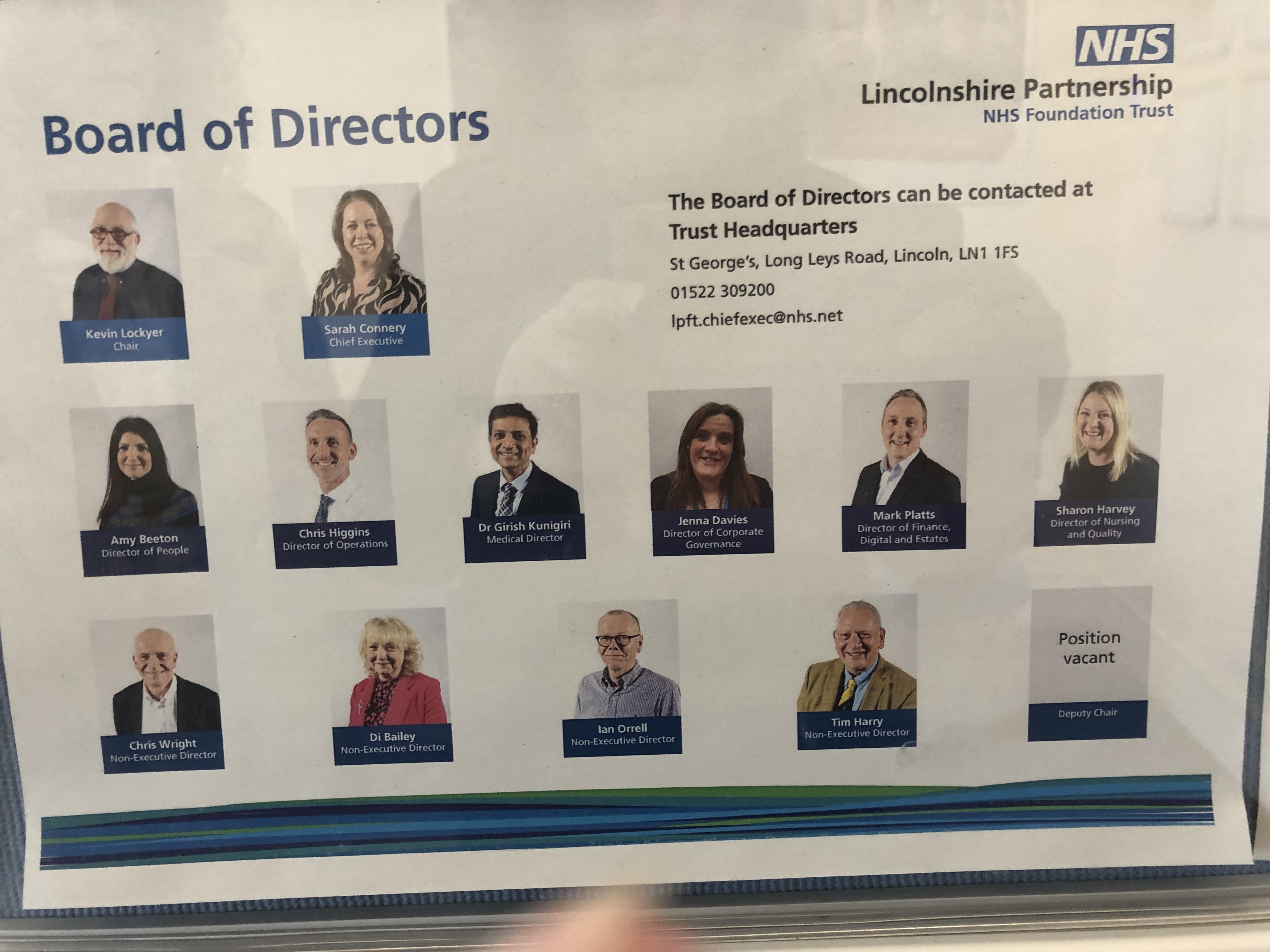
CEO (Sarah Connery) on the Trust’s Executive Board also works/worked as a Specialist Advisor for CQC or The Director of Operations (Chris Higgins) who works/has worked as an Executive Reviewer for CQC

Thank you for your letter of 4 April.   

When you mention “The Care Quality Commission”  asked you to respond.  Who might that be?   Could that be either of two LPFT Board Executives mentioned above by any chance?  To think, all this time so it would appear LPFT have been answering on behalf of the Care Quality Commission in a defensive, almost threatening manner.    What a conflict of interest!   No wonder why none of my complaints have been dealt with satisfactorily and with Mr Higgins as Executive Reviewer for CQC it is also no wonder why you are rated “good”.

How can you have a CEO (Sarah Connery) on the Trust’s Executive Board who also works/worked as a Specialist Advisor for CQC or The Director of Operations (Chris Higgins) who works/has worked as an Executive Reviewer for CQC however I am talking about LINCOLNSHIRE PARTNERSHIP TRUST WHO APPEAR TO HAVE THEIR OWN LAW TO SUIT THEMSELVES.  

I would like your opinion on this conflict of interest, Ms Munro.

Regarding your third paragraph I would point out this was the third time Police were called unnecessarily, all done for the purpose of threatening and intimidation however Section 9 statements were done to back the truthfulness of events on Xmas Day to cover our backs.  What a waste of Police time.  It is obvious that the restrictions are still ongoing with HCA’s/nurses writing notes during visits (no doubt of an adverse nature).  This is bullying to the extreme to stop visits and threaten to do so indefinitely but still continue with restrictions.  You might like to write a statement t explaining exactly what you mean by “suspension in line with the MHA Code of Practice”:   Please also explain why I am being treated differently to everyone else which is discrimination.

Here is the MHA Code of Practice relevant points which were not even quoted in full as a reason to ban my visits.

MHA CODE OF PRACTICE

Restrictions or Exclusion on Clinical Grounds

11.14

From time to time, a patient’s Responsible Clinician may decide, after assessment and discussion with the MDT, that some visits could be detrimental to the safety or wellbeing of the patient, the visitor, other patients or staff on the ward.

In these circumstances, the Responsible Clinician may make special arrangements for the visit, impose reasonable conditions or, if necessary, exclude the visitor.   In any of these cases, the reasons for the restriction should be recorded and explained to the patient and the visitor, both orally and in writing  (subject to the normal considerations of patient confidentiality). Wherever possible 24 hour notice should be given of this decision.

Restriction Or Exclusion on Security Grounds

11.15

The behaviour of a particular visitor may be disruptive in the past, to the degree that exclusion from the hospital is necessary as a last resort.  Examples of such behaviour include:

  • Incitement to abscond
  • Smuggling of illicit drugs or alcohol into the hospital or unit
  • Transfer of potential weapons
  • Unacceptable aggression
  • Attempts by members of the media to gain unauthorised access

11.16

A decision to exclude a visitor on the grounds of their behaviour should be fully documented and explained to the patient orally and in writing. 

Where possible and appropriate the reason for the decision should be communicated to the person being excluded (subject to the normal considerations of patient confidentiality and any overriding security concerns.

LPFT ARE IN BREACH OF THE MHA CODE OF CONDUCT RE: THE FOLLOWING POINTS:        

“may make special arrangements for the visit” :    No special arrangements were ever made and contact severely restricted by taking the phone away that affected the entire family and was detrimental to Elizabeth – depriving her of her phone deprived her of contact with everyone else in the family and was done primarily to punish me and deprived Elizabeth of listening to her music.  This is in breach of human rights and totally degrading and undignified to Elizabeth.. 

“the reasons for the restriction should be recorded and explained to the patient and the visitor, both orally and in writing”.:  None of this was done properly explaining the grounds mentioned below for banning visitors.  No Impact assessment carried out as should have been.

“subject to the normal considerations of patient confidentiality). Wherever possible 24 hour notice should be given of this decision”  This was not done.  The pre-arranged visit was cancelled on the spot whilst Elizabeth stood the other side of the door –  absolutely degrading and totally cruelty to do this without any notice.   Nursing staff acting ultra vires upon orders at Executive level and against their own code of conduct.

None of the above was done properly and also LPFT failed to carry out an Impact Assessment which LPFT is supposed to do under NHS Guidelines and this should have been done on myself, on Elizabeth and a copy sent to the Nearest Relative.  LPFT are therefore in breach of NHS Guidelines.  Here below in bold are the justified reasons to completely ban visitors according to MHA Code of Conduct.

  • Incitement to abscond
  • smuggling of illicit dugs or alcohol into the hospital or unit
  • Transfer of potential weapons
  • Unacceptable aggression
  • Attempts by members of the media to gain unauthorised access

None of the above apply in my case.

Dr K cannot very well deny threatening me with an indefinite ban as this was witnessed.   Having such a ban has had a detrimental affect on my health.  Elizabeth’s face is covered in marks where she is distressed and has been self harming and has said on more than one occasion she no longer wishes to live which in turn affects my health. The missing of meals has continued beyond the last safeguarding and had happened constantly at Ash Villa in the past yet nothing was done.   It is bullying to the extreme to ban visitors and that is the tactic that LPFT adopted.    My visits were suspended on none of the grounds above.  Elizabeth’s care and treatment has been atrocious.    She has been missing meals, isolating in her room because she cannot stand the noise.  She has been deprived of proper pathological tests and nothing has been arranged as regards Sheffield as I have checked.    There is no way a MH team can do proper pathological observations and have been filming my daughter when she is having fits against her wishes.  This is an absolute disgrace.   The way the MCA has been abused is another disgrace on the part of LPFT who enlisted the assistance of the council in this respect at County Court that lasted months and months on end.   Human rights are non existent under LPFT and have never taken into account of. My daughter’s human rights are being dreadfully abused.    It is not true when you state visiting restrictions were lifted from 5 February 2024.   Restrictions are very much ongoing and visits are not of quality time but intrusive and degrading due to constant supervision.  I am being discriminated against because other family members do not have 2-1 restrictive visiting with members of staff writing notes. The restrictions still very much in place clearly have a detrimental affect on my daughter who is treated like a prisoner.  She reacted on Xmas Day to staff taking notes constantly.  Even on Xmas Day, human rights were ignored by LPFT.  How would any of you like this kind of treatment?  It is breach of Art 8,  Art 5 and Art 3 HRA.   Police time was wasted on Xmas Day and Elizabeth was thrown into seclusion and rapidly tranquilised when she became upset by a crowd of “professionals” waiting outside the visitor’s room who grabbed hold of her because she had shouted at the lady writing notes because it was totally distressing to her.    

There have been two accidents apparently according to Elizabeth, one at Ash Villa and another on Castle Ward where she lost balance or hit her head badly.   Why wasn’t anyone in the family notified?  

Because we pay a phone bill each month and Elizabeth hardly gets any use of the phone it is only fair that LPFT compensates for this.  The bill now stands at £60 for your information and I request settlement of this amount to Elizabeth as already advised.    Every month she is restricted with her phone I am adding on to that bill.  Also under Ash Villa the phone was taken away for weeks on end making it difficult for the entire family to get through and for Elizabeth to be able to speak to family members.    The reason for this was because Elizabeth kept calling the Police in distress.  It says so in file papers.

“Elizabeth’s phone continues to be kept securely by ward staff and Elizabeth is able to request use of her phone at any time.”  That is in breach of human rights.   Totally degrading treatment –  shame on you LPFT!    Is this care?   or rather is it abuse of a vulnerable person and their rights –  it should be the least restrictive care under the MH  LPFT are abusing patient’s rights and if this is just my daughter then this would also come under the Equality Act 2010.   No other patient is being treated in such a degrading manner as my daughter.  It is not the point that she is encouraged to use her phone.  She is not at risk from anyone in her family and therefore the restrictions are excessive and the kind of thing that would apply to a restricted prisoner not a patient under the MHA.

LPFT haven’t got a clue when it comes to human rights and this is why I am copying in the British Institute of Human Rights.   To keep the phone locked away constantly is a disgrace and still ongoing to date.   Elizabeth does not like the phone being monitored and she expressly said she did not want to be filmed so why has this just gone ahead?

You clearly do not know the meaning of “fair and reasonable” .  Elizabeth is a grown adult of 37 years of age and does not need support to use her phone.   

The Birthday cake was not given to Elizabeth on her Birthday and should have been given to her immediately as I specially came back to the ward.     It was her Birthday and no respect was given to this special occasion.   Elizabeth did not even know I had brought her the Birthday cake so once again there was no communication.   At Ash Villa all her presents were just dumped in a storage room.  She did not know they existed.   I brought another cake to make up for this and again Elizabeth was not given it.   The second time it was not fresh cream and I assume thrown away.

Yes, the visitors room is cramped when 2 people are listening to every word and crammed into the room.  It is undignified and unpleasant to say the least.   How can you possibly say the visitor’s room affords privacy in the circumstances.  You just have no insight into the situation.   The rooms are all small in nature – not much difference in size but because of the restricted visiting and note taking going on (no doubt adversely against me), it is an unpleasant degrading experience that even a prisoner does not have to endure.   In a prison, warders walk up and down but give respect to prisoners at visiting times to have privacy to see their families.   The ward is worse than prison and the treatment is degrading, abusive and aimed no doubt as punishment towards me, but inflicting upon my vulnerable daughter.

Subject Access Requests.

I know LPFT do not want me to see any records especially not the copy of the CP11 rapid tranquilisation log.  All the files and notes being taken will be requested through ICO.  You have no right to refuse such request from both of us.

Your capacity assessments are totally flawed.    I want full safeguarding done externally because in the past safeguarding under LPFT resulted in “I am satisfied” response.  The safeguarding should be especially looking into the flawed capacity assessments.   I am now a BI assessor – everything LPFT has done is wrong.  Your capacity assessments are not fit for purpose.   LPFT have abused the MCA.   It is most certainly of public interest that everything is addressed openly and transparently.

Finally, please ensure that my daughter gets all the pathological tests she needs under Sheffield as soon as possible as this is another area of safeguarding that needs to be thoroughly looked into.    I believe safeguarding should be done on the deprival of medical referrals to my daughter for her physical health and referrals need to be made to spend a full week under Sheffield for everything she needs, including Endocrinology

I have to say, I have never encountered such bullying in all my life and such dishonesty.   You have been rating yourselves as good yet there are tremendous conflicts of interest I have witnessed at Executive level.

The capacity assessments are useless without referral to Sheffield and according to Professor Keith Brown everyone should be included (including myself) with the capacity assessments undertaken.  My daughter most certainly has capacity and she is being abused and no-one cares otherwise this situation would not have been left to continue for so very long.

Here are the guidelines to filming patients against their wishes:

https://www.gmc-uk.org/professional-standards/professional-standards-for-doctors/making-and-using-visual-and-audio-recordings-of-patients/principles

Here below is the book you read on Mental Capacity that LPFT have chosen to ignore. 

Demystifying Mental Capacity: A guide for health and …

Amazon UKhttps://www.amazon.co.uk › Demystifying-Mental-Cap…

Keith Brown. Editor. Demystifying Mental Capacity: A guide for health and social care professionals (Post-Qualifying Social Work Practice Series). First …

Mental Capacity Act 2005 :

(Section 4):  Requires that patient to be regarded as having capacity until evidence ascertained as to how that capacity is impaired.

(Section 4) (1) (a) and (b): “The Prohibited Step” Decision maker should not draw conclusion on capacity from patient’s age, appearance or on a condition of his/hers or an aspect of behaviour which might lead others to make unjustified assumptions on what might be in his/her best interests.

(Section 4) (2): Decision maker should try to identify all issues most relevant to the individual relating to particular decision (para 3, Main Code of Practice).

(Section D): inconsistencies of witness statements on capacity.  Capacity assessments not conducted as required by S1 MCA 2005

Masterman-Lister v Brutton & Co [2003] 1WLR 151 

“a party to legal proceedings is capable of understanding, with the assistance of such proper explanation (in broad terms and simple language) from legal advisers and other experts as the case may require, the matters on which their consent or decision was likely to be necessary in the course of those proceedings.”

Dont bother providing a copy to the CQC as LPFT are the CQC defending yourselves and rating yourselves as good when in actual fact you should be rated as “Requires improvement” or “inadequate” and you can’t even offer an apology for the shocking abuse of my daughter and her family in terms of human rights which you clearly have no insight of.

My final question to you is have LPFT applied for DoLs and in the meantime waiting to hear from the court because your intention is to dump her into a care home out of area in say Yorkshire and restrict contact forever?    Why is she still held without leave under the MHA for over 2.5 years deprived of family contact and proper physical healthcare?   I would like to hear from any of you in this respect as this is absolute abuse and breach of the law and the question needs to be asked about the validity of the entire section that is ongoing and the dishonesty in arriving at such decisions to hold her a prisoner indefinitely.    My daughter is one of thousands trapped under the MHA by appalling Trusts such as LPFT and dishonesty too on the part of Councils who do not wish to provide any support whatsoever in the community.  In fact I was not asking for anything of this area which brings me to the question of residency status and whether that responsibility still remains the responsibility of Enfield?

Yours sincerely

Susan A Bevis

Making and using
visual and audio
recordings of patients

https://www.gmc-uk.org/professional-standards/professional-standards-for-doctors/making-and-using-visual-and-audio-recordings-of-patients/principles

The above link may be of interest to those who like myself am not happy at hearing from Elizabeth that her thoughts and wishes have been ignored as regards being filmed. LPFT have assessed Elizabeth as having no capacity in capacity assessments that are highly contested, just like the MRI scans they did (United Lincolnshire Hospital Trust that came out normal) under their 1.5 Tesla Scanner that failed to pick up on details shown in the private scans I had done by S G Radiology. The Neurology department suggested the filming by the MH team but after all these years and neglect for the past 2.5 years under Lincolnshire I now want proper assessments on a properly equipped Neurological Ward carried out, particularly since Elizabeth is suffering from life threatening fits that end with her being rapidly tranquilised on every occasion. I have also questioned why it is necessary to inject her every time following a fit. Is this what is done for everyone that has epilepsy? What I would like to see is that she is sent to Sheffield not just for the Tesla 3 MRI scans but under THEIR observation for at least a week to undergo extensive tests. I am going to suggest this to my MP as I have not yet had a reply by the Neurology department I have just written to. I am far from happy at the filming as the MH do not have correct monitoring equipment, unlike a specialist neurological ward would in Sheffield. I also would like the cancer scans re-done, having seen an article where a woman died because nothing was picked up under a Tesla 1.5 scanner. I have been asking over and over again for Elizabeth to be referred to an Endocrinologist as again, I have proven by way of private tests there is Endocrine dysfunction. I have suggested patch tests which I explain later in this blog.

On the subject of filming patients there is disturbing technology to do this which is very controversial and I am not in favour of this as it infringes on a patient’s privacy. Elizabeth clearly said no to filming by the MH team and this was not respected by LPFT. She has capacity to decide. The disturbing technology to film patients is provided by https://www.oxehealth.com/ – It should be up to the patient to decide surely on whether this is OK with them. Not everyone will be in favour of such technology being used but once again unfortunately if someone like Elizabeth is deemed not to have capacity and everything decided upon as Best Interest once again a vulnerable person’s human rights are being abused. I believe only as a last resort should the new technology be used.

Turning to Mental Capacity and the flawed assessments – I totally dispute the these three capacity assessments done for Elizabeth to try to coerce her into my displacement as the nearest relative but Elizabeth did not wish to engage and said things like “no comment” – “it is nice weather today” and “my mother is the nearest relative”. For anyone also questioning their son’s/daughter’s capacity, a very good book to read is none other than what the Trusts’ currently use as their Guidance, especially when it would appear that Trusts and councils are abusing their powers in a dishonest manner. That Guidance comes in the form of “Demystifying Mental Capaity Guide for Health and Social Care Professionals which I have just ordered a copy of. What is so very wrong is that some Trusts, when carrying out capacity assessments deliberately to exclude everyone, especially mothers who happen to be the nearest relative who should have been invited to the capacity assessment and not excluded. I am now a BI assessor myself so I know that things have been done wrongly. Elizabeth’s Neurologist should also have been included. Details of these facts are contained in this guide which I intend to read indepth.

Demystifying Mental Capacity: A guide for health and …

Amazon UKhttps://www.amazon.co.uk › Demystifying-Mental-Cap…

Keith Brown. Editor. Demystifying Mental Capacity: A guide for health and social care professionals (Post-Qualifying Social Work Practice Series). First …

 Rating: 4.1 · ‎ 7 reviews · ‎ £26.99 · ‎ In stock  

I am Professor Keith Brown, the Founding Director of The National Centre for Post-Qualifying Social Work and Professional Practice at Bournemouth University (NCPQSW). Currently I am an Emeritus Professor at Bournemouth University 

The National Centre for Post Qualifying Social Work was awarded the Chartered Institute for Personnel and Development prize for the Best Example of a Continuous Professional Development programme in the UK. In 2010, the Centre was winner of the National Training Award for the Best Provider of Education/Training in the UK. In 2017, we received the first ever Chartered Trading Standards Institute (CTSI) ‘Institutional Hero Award’ for service and research into preventing financial scams. In 2020 the social work department at Bournemouth University was the Number 1 department in the Guardian League Table for the UK. 

I have been a recipient of the Linda Ammon Memorial Prize, which was awarded to the individual making the greatest contribution to Learning and Education in the UK, by the former department of education and science.

Currently I am the Chair of the NHS Safeguarding Adults National Network and a member of the National Mental Capacity Leadership Forum. I am also the chair of the Worcestershire and West of Berkshire Safeguarding Adults Boards 

I am the series editor for the Sage post qualifying social work series and have published over 35 texts in the social work field 

I continue to work with the National Trading Standards Scams Team in the area of fraud research and development and I am a member of the Financial Vulnerability Taskforce 

I am the series editor for the Sage/Learning Matters ‘Post-Qualifying Social Work’ series of text books, which has sales of over 75,000 copies in the past 5 years. I have written over 35 text books and published numerous research reports in the field of Social Work. I regularly speak at national and international conferences and am currently leading the national research into financial scamming on behalf of The National Scams team and CTSI. We are working together to not only reduce the risk of financial scamming but to raise awareness to organisations and the public so that they too can join the fight against scamming.

Perhaps he can be invited to LPFT to speak in light of their flawed capacity assessments. I have today tried to contact Professor Keith Brown as I am keen to discuss further the 3 flawed capacity assessments with such a renowned leading expert. Just like human rights being ignored, I am astonished at the lack of knowledge under Lincolnshire Partnership Trust and feel that wrong capacity assessments could also affect all the patients, not just Elizabeth. The book above is the Guidance that the Professionals concerned with assessing capacity should be using in any case and I will advice Lincolnshire County Council too of this fact. Anyway as a BI assessor myself I cannot possibly accept Elizabeth’s capacity assessments for two reasons:

  1. In the context of mental capacity, causative nexus looks at whether an individual’s mental incapacity was a direct and significant cause for a particular action or decision. The aim is to determine whether the mental incapacity had a material influence on the outcome in question. Once you have identified an impairment or disturbance in the functioning of the mind or brain, it is important to decide whether the inability to make the decision is because of this impairment. This is known as the “causative nexus” (PC and NC v City of York Council [2013] EWCA Civ 478).

2.Mental Capacity Act 2005 :

(Section 4):  Requires that patient to be regarded as having capacity until evidence ascertained as to how that capacity is impaired.

(Section 4) (1) (a) and (b): “The Prohibited Step” Decision maker should not draw conclusion on capacity from patient’s age, appearance or on a condition of his/hers or an aspect of behaviour which might lead others to make unjustified assumptions on what might be in his/her best interests.

(Section 4) (2): Decision maker should try to identify all issues most relevant to the individual relating to particular decision (para 3, Main Code of Practice).

(Section D): inconsistencies of witness statements on capacity.  Capacity assessments not conducted as required by S1 MCA 2005

Masterman-Lister v Brutton & Co [2003] 1WLR 151 

“a party to legal proceedings is capable of understanding, with the assistance of such proper explanation (in broad terms and simple language) from legal advisers and other experts as the case may require, the matters on which their consent or decision was likely to be necessary in the course of those proceedings.”

The flawed capacity assessments all three of them (2 done by doctors, another by a social worker) were simply done to get rid of me as Nearest Relative but not just that, but to take complete control of everything, taking away Elizabeth’s autonomy and I do not like that one bit. I am having no other choice but to challenge all this right now and everyone should be aware of this which is why I am sharing all this information as it is important that vulnerable people and their families are treated with the utmost integrity and fairly which is surely what the MCA and MHA was intended for but unfortunately, some professionals are abusing this. Therefore everyone should look into matters thoroughly as regards capacity as I have done and get a copy of the wonderful guidance by Professor Keith Brown to show to their Trusts and Councils who will not be able to argue with their own guidance they are supposed to follow.

EASTER WITHOUT ELIZABETH:

Easter was once a joyous occasion, just like Xmas in the past but not any more thanks to Lincolnshire Partnership Trust who have stolen Elizabeth holding her a virtual prisoner without leave. I therefore cannot celebrate any of these occasions any more and even feel guilty going out places. I constantly think of Elizabeth held a virtual prisoner on a never ending section and deprived of a life of her own in what is supposed to be “appropriate care”. It is NOT appropriate as she is going downhill through lack of exercise and fresh air and contact with her family especially with the uncertainty of what will happen to her and threat of being sent a very long distance away from home and family to for example W Sussex and Yorkshire. I have written to Mr John Turner of the ICB about this.

I did not visit Elizabeth over Easter. I had hoped that others in the family would as I knew they were being treated differently to myself. Elizabeth’s Sister had asked to take her out to the Carlton Centre where Elizabeth thoroughly enjoyed herself during the only bit of leave ever given under Dr Waqqas Khokhar before be banned all leave and visits and imposed restrictions on phone calls which are still ongoing because you cannot just get through and this is affecting the entire family and a contract is paid on the mobile phone by the family. Elizabeth’s request to take her sister out was refused.

Elizabeth’s sister was disappointed she could not take her to the Carlton Centre which is just around the corner from the hospital. Elizabeth sister was staying with me over Easter but it was not a family occasion without Elizabeth. It is the ultimate punishment to take her away and imprison her, when it is entirely unnecessary. Plus she has a home of her own now which I provided.

LPFT should have carried out an impact assessment on myself, Elizabeth and copy given to the Nearest Relative, her sister who was found to be more suitable under NHS Guidelines but nothing was ever done about this.

Elizabeth was not well when her sister visited and it was described to me her appearance which was not good and the fact that she could barely keep her eyes open. She has started to miss meals again and will not leave her room just like at Ash Villa. They do not seem to understand she hates noise, she cant stand bright lights and does not like crowds either. The alarms are constantly going off on the ward and this is supposed to be “appropriate” care. It is most certainly not the appropriate environment to get well but I think they are deliberately letting her go downhill physically and mentally so she becomes a ‘vegetable’ because they want to put her into a care home out of area under DoLs for the rest of her life, restricting contact forever to her family for convenience purposes because the ICB is doing nothing about providing anything at all in the local community – not that they would have to provide much. She has a lovely home – a bungalow and where it would be much cheaper and she could make a recovery in the correct environment. It is not my local area (voted one of the best nationwide to live in) that is the problem it is LINCOLNSHIRE PARTNERSHIP TRUST AND THE ICB AND LINCOLNSHIRE COUNTY COUNCIL. It was never my intention to not want to work with professionals but it is the professionals who have behaved in such a way that they have abused the law and human rights. There is no accountability as the Executives on the Board have conflicts of interest that extend to the CQC.

I later found out that the reason Elizabeth was so tired was because she had been injected following an episode on the ward yet again. I dont know why staff feel the need to inject her after ‘an episode’ as I see this as being totally unnecessary and Elizabeth has said this is not what she wants.

My visit to see Elizabeth took place Wednesday. Elizabeth said she had missed my visit over the past week and that it was a long time since she saw me but I told her that I thought it would be nice for her to see her sister alone and had hoped that she could take her out as the punishment is not extended to other family members, just me.

I usually get a list of things that Elizabeth wants me to bring her. I had a dentist appointment that day so fitted in shopping in the Sleaford area before driving to Lincoln.

Elizabeth has started to scratch and rub her face like once before. This she was not doing before we moved to this area. I assume she does this out of sheer stress and she told me that Dr Khokhar was trying to encourage her to come out of her room but she did not want to and explained her reasons. I then turned to the young HCA making notes. I mentioned that it was very bad that Elizabeth had no breakfast, no lunch and that this problem was reoccurring. All I heard was that she had tried to encourage her to get up for meals. It would appear frequent injections are being given which I feel is the reason she cannot get up for any meals and just stays isolating in her room just like at Ash Villa to avoid people, noise, bright lights. I notified Adults Safeguarding again out of concern. It is after all risky for her to miss meals which makes her susceptible to infection, strain on her heart and liver when she restarts eating. Monocytes responsible for fighting off infectious pathogens retreat back into bone marrow if too many meals are missed. Just like the lack of oxygen during sleep this will combine to make her ill. Monocytes protect against cancer and heart disease by stopping pathogens getting access to the heart. When I asked if they put aside meals that she missed to re-heat I was told this was not done.

I have just written the following emails about this and included the CEO of the Integrated Care Board, John Turner.

It is a bad the way Lincolnshire Partnership Trust cancelled all physical health tests upon moving as being unnecessary, despite the discharge note pointing to “abnormal findings on scans”. It is even worse that they have also refused Endocrinology referrals as the skin irritation and sebaceous cyst reveal there could be Endocrine problems and besides I already proved this in private tests years ago.

 Dermatologic manifestations of endocrine disorders – PMC

National Institutes of Health (NIH) (.gov)
https://www.ncbi.nlm.nih.gov › articles › PMC5682371
by M Lause · 2017 · Cited by 160 — The first diagnostic step includes measurement of serum thyroid-stimulating hormone (TSH) and free thyroxine (FT4). If laboratory

I am going to write to my MP Victoria Atkins about this and also no sign of the Sheffield appointment – I feel this should be at least a week on a Neurological ward and also to carry out Endocrinology tests – all could be done at Sheffield who have the up to date scanners and equipment, unlike Lincolnshire. I have heard of some patch tests that can be done as I am concerned regarding the state of Elizabeth’s face which in parts is red raw due to scratching. There is obviously either allergy or related to the Endocrine system just as the sebaceous cyst and I am keen now for her to see an Endocrinologist – how many times do I have to request for this referral. I cannot even trust the cancer tests done last year as they do not have the right scanners.

Anyway I am now going to see what is going on by contacting Sheffield.

Royal Hallamshire Hospital

Endocrinology and Metabolic Medicine

0114 226 8680

I wrote to my MP only yesterday but definitely more than just the scans are required here in light of the neglect of essential appointments over the past 2.5 years.

I will let you all know how I get on with this.

FIRST, THE POST OFFICE SCANDAL, THEN WASPI BUT THE GREATEST SCANDAL STILL TO BE EXPOSED ARE THE THOUSANDS OF VULNERABLE PEOPLE TRAPPED MH FOR MANY YEARS ON END IN UNSUITABLE SETTINGS, DEPRIVED OF MEANINGFUL CONTACT WITH THEIR FAMILIES , DENIAL OF PHYSICAL HEALTHCARE REFERRALS, HELD WITHOUT LEAVE ON NEVER-ENDING SECTIONS.  

There is also the matter of conflict of interest at Board level with those at the top working for CQC which is conflict of interest.

Christopher Reid

<Chris.Reid@parliament.uk>;

victoria@victoriaatkins.org.uk victoria@victoriaatkins.org.uk

Dear Mr Reid

It is a disgrace that senior people within the ICB and LPFT and even ULHT are working for Care Quality Commission. It is no wonder why no complaints are dealt with properly.

I am most concerned about this and something should be done about it.

Yours sincerely

Susan A Bevis   POA and Litigation Friend.

It is now 2.5 years since the imprisonment of my 37 year old daughter under Lincolnshire Partnership Trust.  When I first moved in 2021, I cared about what they thought and was keen to get on with professionals, working together and to have a fresh start in the right environment – this is what I hoped for but that was never Lincolnshire Partnership’s Trust intention or that of Lincolnshire County Council.   The area where I live has just been voted one of the best areas in the Country to reside. There is a blue flag beach status with nature reserves surrounding my home.  Such natural environment had proved beneficial to Elizabeth before when she had wonderful care privately provided on the Isle of Lewis.  Elizabeth adores animals particularly birds (pigeons). She has a home of her own which was my first priority to provide. I moved because Elizabeth was just left to go downhill under Barnet Enfield and Haringey MH Trust, another dreadful area whose CEO is Jinjer Kandola.   

However moving was disastrous. I could not get her treatment continued in the community then came the bullying from certain professionals under “safeguarding”, whose priority was to get rid of me as the Nearest Relative. I was falsely accused of buying too many takeaways, when Elizabeth had turned to others; I was accused of being neglectful towards her physical health and being incapable of caring for her when in fact I had been her only carer in the community for six months prior to moving to the new area without any support in place.

The Team that had failed to provide anything in the community was (Enfield Community Rehab Team). We had a meeting with them prior to moving but could not give a definite decision as Elizabeth had not seen the new area. She was not on a section prior to moving but when we did move and confirmed she wanted to stay, they were advised she was not coming back and was immediately registered with a new GP.

It was someone called Hannah (former area)  from Enfield Community Rehab Team who spoke with the new area and recommended a MHA assessment. The followed all the files full of nasty comments and inaccuracy from Enfield who unfortunately remained responsible for s117 aftercare when they never provided any care within an independent council flat despite promises.   I had tried unsuccessfully to get adaptions done in that flat because Elizabeth could utilise her bath but this proved impossible.   All that was supplied was the fortnightly depot but they were reducing it every six weeks.

It was upon trying to get treatment continued then followed interaction with a new new social services team and we found ourselves in an even worse position. All sorts of allegations were levied mainly regarding the medication, then towards taking the POA putting me under investigation for months on end and then worse was to following with assumptions on “no capacity”, Elizabeth assessed for one section after another, then court papers produced. With no services up and running and boxes everywhere having just moved, the last thing we wanted was yet more challenges but having acquired former files, where all sorts of nasty things had been written, these file papers were simply taken on board and we had two areas to deal with. Despite registering with a new GP they failed to refer her correctly to MH services within the new area. Again little did we know that most of the services were the other side of the County. Despite being given details of everything the treatment was not continued despite all efforts and I was advised to take Elizabeth to urgent care where I thought she would see a doctor and could come home with the treatment arranged but it was not that simple. There followed months leading to years of the most restrictive incarceration ever experienced.  

I was accused of avoiding social services who apparently wanted to extend the section and assumed I would object. I had commented previously that the stress of going through court yet again, having suffered a stroke but this was mocked by more than one of these social workers.   Our treatment previously was ruthless and we are not alone in experiencing what amounts to bullying and blame culture that can effectively destroy families. That is out experience of social services apart from two who worked with the family when I was a carer for my father with Alzheimers. I have come across dishonesty in file papers and that presented to court even. There was mentioned that an attempt on her Elizabeth’s life was made whilst Elizabeth was in my company upon moving. In fact we were staying in a guest house whilst I had to sort out problems left by former tenants as the house was once two flats.  Elizabeth commented more about her distress on a dormitory ward where she could not stand the noise and tried to gouge her eyes out.  She had to be moved into a side room so she explained.

There was safeguarding instigated by various nursing staff against me followed by an investigation from Public Guardian Office for psychological abuse so I was blamed but the Public Guardian office found in our favour, an investigation which took months on end to conclude.

At the same time there was ongoing litigation for displacement of NR ongoing for months on end and all it took was disagreement regarding treatment to be found “unsuitable” but for months on end noone was safeguarding the wellbeing of Elizabeth on a ward where other patients had reported she was being picked on and constantly injected during the night. She would isolate in her room during the day and be awake all night, there came all sorts of allegations against me when heavy restrictions were put in place and threats to displace me as the NR and such allegations were put in letters following two occasions when I have turned up to visit and the visit was refused. The hospital had no end of CCTV yet no evidence could be produced to back up all sorts of nasty comments and when one member of staff yelled out “you have just assaulted a member of staff” whilst standing outside alone under CCTV I had asked for the footage which showed nothing.    Elizabeth had no leave granted for months on end, with visiting supervised 2-1 and phone taken away because she kept calling Police and Emergency Services.    The only people safeguarding Elizabeth were the patients themselves, one of whom said she slept with her door open. Collectively a group of patients reported their concerns to a HCA. that  “night staff were picking on her”.  When asked who I was told “the vast majority”   I was also told “what they are doing is institutionalising her”.   “She is being overdrugged and goes into the seclusion room with a tray full of needles”    “they are picking on  her for the slightest thing such as when she threw some clothes out of her room in the corridor.”   During this time all physical health appointments (to see a Neurologist previously arranged before moving) were cancelled by Dr Shahpasandy and Dr Afolabi as unnecessary.  The new GP recommended I took her back to London for the Neurologist appointments as the waiting list would be very long but I was not allowed to. Three capacity assessments were carried out by two doctors and one social worker that were seriously flawed and failed to take into account Principle 4.   Elizabeth contracted covid twice and family not immediately advised.  Elizabeth was not at all well when put under pressure by management, nursing staff and Mr M to participate in such assessments and the line of questioning was quite shocking all geared to succeed in their goal of displacement and trying to get a vulnerable patient to say negative comments but this tactic backfired in the end.   Eventually another family member was appointed Shame on the doctors who carried out these assessments and noone was ensuring that appropriate care was being provided when conditions were described as squalid.   The doctors under this hospital were reliant on so called “normal scans” going back to 2015 but when it came to my attention her doctor did some brilliant research into the Limbic system I had asked if Elizabeth could have the tests done due to what was written on the discharge note from Enfield but nothing was done about this. Elizabeth was treated like a virtual prisoner and I was in receipt of intimidating letters from the Ward Manager accusing me of being aggressive, intimidating but there is nothing more threatening than calling Police which occurred more than once.   Elizabeth’s treatment was dreadful under this hospital. Denied exercise and meaningful family contact and not treated the same as other patients.   The drugs were raised to double I assume this was whilst the capacity assessments were taking place.    There seemed to be huge conflict of interest at Board Level in regard to their association with CQC.

There followed a succession of other doctors, last of all being Dr TG who did allow some leave which went very well. Elizabeth was then transferred to Cygnet, Durham, then onto Ward 12, which time she was having regular seizures which originated from Ash Villa. There was also a cancer scare and appointment made, the outcome of which was “normal”  –  It is disturbing that people’s lives are put at risk when 1.5 Tesla scanner do not detect everything clearly and Tesla 3 scanners are only within teaching hospitals.

Because Elizabeth could not stand the noise on wards she spent much of her time isolating in her room and lying in bed during the day.  Apparently her room was next to the seclusion room which must have been incredibly noisy and she was clearly being treated very differently to other patients who were allowed more freedom. Other patients described H/C assistants snatching water away when drinking, food away when eating, constant injections and screaming in the seclusion room.

Elizabeth reported she had muscle weakness to entire body due to lack of exercise.  

During a very short period of time unrestricted leave was granted within local area surrounding the hospital then extended to 6 hours which was lovely.   Wherever Elizabeth has been in these dreadful institutions, the surrounding areas have been beautiful and what is so sad is nothing is right about the treatment of my daughter and so many others held as virtual prisoners, deprived of leave and isolated from their families.   During 6 hours I was able to take Elizabeth out to show her the local area and there was never any trouble.    Dr G began to give a bit of leave to come home but the awful thing was it was restricting by having to see the Crisis Team and whenever this was arranged Elizabeth would get worked up and anxious, her fears stemming from previous experience of former area. It was wonderful to be able to spend time with Elizabeth and to have her home.  We would go shopping, she would cook meals at home, we would go out to some nice places and on one occasion I had taken Elizabeth to have a private MRI scan because I was concerned that all her appointments had been cancelled as “unnecessary”. The private scans revealed what looked like a cavernoma and lesions and it was only then that LPFT felt obliged to have more scans done, Finally a referral was apparently been made to see a Neurologist.

Now a prisoner for months on end under Dr W K ,  Elizabeth appears to be really going downhill.  Her face is full of marks where she is self-harming once again, she is denied leave,  she is denied meaningful family contact, she has had her phone taken away, put in the locker and when she does phone she is only allowed supervised calls with 2-1 supervision and the carer’s champion is often called upon to supervise the visits.   She is denied exercise, fresh air on a daily basis. There is not always staff available to take her to the shop or allow her to have the phone in order to supervise. She is missing home, she is missing her cat, she has seen nothing of the beautiful City of Lincoln. It has been like going backwards the way she has been treated.

Elizabeth is of no risk to others and although her face is red raw with marks and what follows seizures is always rapid tranquilisation.

At Ash Villa, she was constantly missing meals going without all day isolating in her room.  Here on Castle Ward same, with at one time virtually daily injections and a new drug introduced namely Procyclidine (for Parkinsons) and then they tried to give Aripiprazole orally to counteract the high prolactin levels but I have found out that Aripiprazole does not counteract high prolactin levels. This is also a drug I previously reported for adverse reaction.

The only hope now is that my daughter will go to Sheffield where they have all the up to date machinery such as Tesla 3 scanner.  I have told the Mental Capacity Lead that until the underlying causes are investigated they could not possibly go down the route of capacity without finding out about the underlying causes that impair capacity because impaired capacity is not the same as having zero capacity and the reasons for the impaired capacity need to be thoroughly documented.    Not once under this hospital or any others provided by Lincolnshire has there been any psychological input.

Going to Sheffield is also my only hope as it has been dreadful watching my daughter going downhill.  . For many years now since 2007 and a report by UCL stating “Anterior Region Medial Temporal Compromise” I have been looking for answers as I have always felt her condition was neurological rather than MH.

Out of sight out of Mind:   

The intentional isolation, degrading treatment like you would expect for a restricted prison has led to Elizabeth going downhill both physically and mentally which has been done deliberately so as to take ultimate control over that person.  Going back to our initial move –  the intention seemed to be to place Elizabeth into care against her wishes and that of her family.

LPFT have left her to go downhill to such an extent she needs assistance in showering, in going out places – unlike other patients not even allowed to the hospital shop.  They are not protecting my daughter by taking the phone away.  Staff are no doubt writing negatively and it is very intrusive to listen to every word of conversation. 

In care plans I have seen no mention of discharge only that she is too unwell to be discharged into the community but the home area is rated as one of the best in the country where she could make recovery but there appear to be other plans for out of area placements restricting contact with family.   There have been assessments taking place for a care home in West Sussex and another hospital. I feel this detention is all about convenience due to non provision of care in the community.

I would like to see a replica of the successful Linden Farm in Surrey  (Simon Trust) in Lincolnshire to allow disabled people to remain within the area close to their families and inclusion rather than exclusion.

More choice is needed such as care farms, more places like Camphill Community Trusts and involving parents/carers like the Simon Trust (Linden Farm).   

Featuring LPFT, ICB, ULHT

COMMUNICATIONS (LINCOLNSHIRE PARTNERSHIP NHS FOUNDATION TRUST) <lpft.communications@nhs.net>

Wed 13/03/2024 02:19

Good morning,

Thank you for your email. We apologise that this information was not showing on the website, there appeared to be a technical issue that we have now resolved. You can now find the register of interests for our Board of Directors using the following link –

How can you have the CEO on the Board plus work as a specialist advisor for CQC or  The Director of Operations (Chris Higgins) for LPFT also work as an Executive Reviewer for CQC???

BOARD OF DIRECTORS’ REGISTER OF INTERESTS AS AT 29 FEBRUARY 2024 NO. DATE OF ENTRY NAME NATURE OF DECLARATION DISCLOSED DATE OF DECLARATION 1 04/02/19 21/09/22

Sarah Connery 1) Specialist Advisor for the Care Quality Commission (CQC) 2) Partner member of the Lincolnshire Integrated Care Board (ICB) for mental health (wef 01/07/22) 31/01/19 21/09/22 2 21/09/22 04/12/23

Chris Higgins 1) Member of the Lincolnshire Integrated Care Board Finance Committee 2) Executive Reviewer for the Care Quality Commission (CQC) 20/09/22 29/11/23

Dear Ms Ellis

Of course they are conflicts.

Please see attached regarding the CQC 

If the NHS purchase from Nemaura is a conflict.

From: ELLIS-FENWICK, Julie (NHS LINCOLNSHIRE ICB – 71E) <julieellis1@nhs.net>

Sent: 12 March 2024 08:54

To: susan bevis <susanb255@outlook.com>

Cc: BATES, Sarah (NHS LINCOLNSHIRE ICB – 71E) <s.bates@nhs.net>

Subject: RE: Conflict of Interest – ICB Board

 Good morning

 Thank you for your recent email.

 As required by section 14Z30 of the NHS Act 2006 (as amended by the Health and Social Care Act 2022), the ICB has made arrangements to manage any actual and potential conflicts of interest to ensure that decisions made by the ICB will be taken and seen to be taken without being unduly influenced by external or private interest and do not (and do not risk appearing to) affect the integrity of the ICB’s decision-making processes.

The ICB has established a Standards of Business Conduct and Conflicts of Interest Policy, which was approved by the ICB Board at its first meeting held on the 1st July 2022. This policy sets out clear procedures to deal with situations where an officer/member has a conflict of interest and is included in the ICB Governance Handbook available here: http://www.lincolnshire.icb.nhs.uk

In accordance with section 14Z30(2) of the NHS Act 2006 registers of interest are recorded in the ICB Registers of Interests which is published on the ICB website. The Registers are regularly reviewed by the ICB’s Audit and Risk Committee for assurance purposes. They are also subject to a thorough review by the ICB appointed external auditors as part of the year-end audit process.

Further to the above, in accordance with section 14Z25(5) of, and paragraph 1 of Schedule 1B to, the 2006 Act the ICB must have a Constitution, which must comply with the requirements set out in that Schedule. The ICB is required to publish its Constitution (section 14Z29). The ICB Board adopted its Constitution at its first meeting held on the 1st July 2022 and this is published on the ICB website. This includes information on the Eligibility Criteria for Board Membership and the Disqualification Criteria. Neither of the interests declared by Dr Gerry McSorley and Mrs Julie Pomeroy preclude them from being an ICB Board Member.

I trust this responds to your queries but if you have any further concerns to raise, please do contact me.

Jules Ellis-Fenwick

NHS Lincolnshire ICB Board Secretary and

Head of Corporate Governance

Email: julieellis1@nhs.net

Please see below:

Current CQC advisors on trust boards may create conflicts of interest, making it difficult for the CQC to conduct fair and unbiased inspections and reviews. This raises questions about regulatory accuracy and fairness. Dual roles in healthcare regulatory bodies and provider organizations may also raise ethical concerns. People may lose trust in the healthcare system if conflicts of interest arise. It is important to determine if there are rules or guidelines to prevent conflicts of interest in different healthcare organizations.

 Sources

 According to NHS Providers (2023, 1), the Health and Care Act 2022 has introduced a new NHS landscape, allowing directors of NHS Foundation Trusts (FT) and Trusts (Trust) to have multiple roles. For instance, a director of an FT or Trust may also be a partner member of an Integrated Care Board (ICB). In most cases, the director’s duties to the FT or Trust align with those owed to the ICB, but in theory, these duties may conflict.

 The CQC’s Declaration of Interest and Resolution of Conflicts policy, ratified in April 2015, requires all staff members to recognise and disclose activities that may lead to conflicts of interest or perceptions of conflicts and ensure proper management or avoidance to protect the credibility of the CQC’s work and its individuals. The policy applies to all levels of CQC staff, including employees, specialist advisors, contractors, temporary workers, experts by experience, second-opinion appointed doctors, and Mental Health Act reviewers. A parallel policy applies to CQC commissioners and independent members of CQC committees (CQC Board, 2015, 1).

 Reference list

 1.      CQC Board (2015). Declaration of Interest and Resolution of Conflicts policy. [online] Available at: https://www.cqc.org.uk/sites/default/files/20180305_spa_declaration_of_interest.pdf %5BAccessed 8 Mar. 2024].

2.      NHS Providers (2023). Commentary for NHS providers:conflicts of Interests for Foundation Trust and Nhs Trust Directors on Integrated Care Boards. [online] Available at: https://nhsproviders.org/media/695915/conflicts-of-interest-nhsp-advice-from-mwe-jun23.pdf %5BAccessed 8 Mar. 2024].

https://lincolnshire.icb.nhs.uk/documents/declaration-of-interests-register/nhs-lincolnshire-icb-declaration-of-interests-register/?layout=default

 McSorley, Gerry (Board Member)     Non-Executive Member and Deputy ICB Chair     CQC                                          

Julie Pomeroy also has connections to Nemaura Pharma Ltd.

Trust Board Members :: Lincolnshire Community Health Services NHS Trust 

Sam Wilde – director of finance and business intelligence

Astra Zeneca.

Jim Connolly

Jim has a had a varied career in the NHS as a nurse, working in a range of clinical, managerial and executive roles. He worked as a Director of Nursing and was the National Director for Continuing Healthcare with NHS England. In addition he works with the Care Quality Commission as a specialist advisor on governance. Prior to joining LCHS he was a Non Executive Director at Lincolnshire Clinical Commissioning Group and is supporting the vaccination programme as a vaccinator at the Meres Clinic in Grantham.

I visited Elizabeth on Wednesday 6 March. There was a capacity lead (Tony Mansfield) there together with Dr Khokhar who was questioning Elizabeth’s capacity. There is no doubt she has capacity but does not want to go in a van to Sheffield where they have the Tesla 3 scanner but said she did not want to be filmed on the ward. I said that it would be best for everything necessary to be done under the Neurology Department. I had written to my MP (Victoria Atkin) questioning why ULHT did not have a Tesla 3 scanner but anyway it is most promising she can go to Sheffield and this was promised would definitely be happening hopefully soon. Once and for all finally after all this time Elizabeth will get proper pathological tests but no way should this have been made so difficult. Elizabeth’s visit was late, following this meeting and again she showed massive capacity by knowing what the date was and checking what the time was. She presented me with some sweets for Mothers Day and as usual asked questions about her cat. She had telephoned me prior to my visit saying how much she missed the sunshine and her cat.

Elizabeth has capacity, there is no doubt of that but when faced with meetings that have over 9 people it is no wonder she is put under pressure. Here is something useful to remember if anyone is put under duress to sign documents for instance:

“agreements signed under duress are voidable and not enforceable. Forcing a relative to sign an agreement on the consequences of not being able to visit loved ones is not only being obtained under duress but is simultaneously the exercise of undue influence:

Williams v Bailey (1866) LR 1 hl 200, Dent v Bennett (1839 4 My & CR 269 (Doctor patient undue influence).

This goes to anyone put under pressure to sign schedules: NO SCHEDULE SHOULD BE SIGNED WITHOUT INDEPENDENT LEGAL ADVICE EVER.

It is wrong when certain professionals do this in order to get decisions and this can amount to bullying. I attach an interesting article on research into brain injury below:

A New Biomarker of Brain Injury?

Pauline Anderson

March 05, 2024

Posttraumatic headache (PTH) is associated with an increase in iron accumulation in certain brain regions , notably those involved in the pain network, early research shows.

Investigators found positive correlations between iron accumulation and headache frequency, number of lifetime mild traumatic brain injuries (mTBIs), and time since last mTBI.

The findings come on the heels of previous research showing patients with iron accumulation in certain brain regions don’t respond as well to treatment, study investigator, Simona Nikolova, PhD, assistant professor of neurology, Mayo Clinic, Phoenix, Arizona, told Medscape Medical News.

“This is really important, and doctors need to be aware of it. If you have a patient who is not responding to treatment, then you know what to look at,” she said. 

The findings (Abstract #3379) will be presented on April 15 at the American Academy of Neurology (AAN) 2024 Annual Meeting. 

Dose Effect
The study included 60 people with acute PTH due to mTBI. Most were White, and almost half had sustained a concussion due to a fall, with about 30% injured in a vehicle accident and a smaller number injured during a fight.

The mean number of lifetime mTBIs was 2.4, although participants had sustained as many as five or six and as few as one. The mean time from the most recent mTBI was 25 days, and the mean score on the Sport Concussion Assessment Tool (SCAT), which measures postconcussion symptom severity, was 29.

Most in the mTBI group (43) had migraine or probable migraine, and 14 had tension-type headaches. Mean headache frequency was 81%.

Researchers matched these patients with 60 controls without concussion or headache. Because iron accumulation is age-related, they tried to eliminate this covariant by pairing each participant with mTBI with an age- and sex-matched control.

All participants underwent a type of brain MRI known as T2* weighted sequence that can identify brain iron accumulation, a marker of neural injury. 

Investigators found that the PTH group had significantly higher levels of iron accumulation in several areas of the brain, most of which are part of a “pain network” that includes about 63 areas of the brain, Nikolova said.

The study wasn’t designed to determine how much more iron accumulation mTBI patients had vs controls. 

“We can’t say it was twice as much or three times as much; we can only say it was significant. Measuring concentrations in PTH patients and comparing that with controls is something we haven’t don’t yet,” said Nikolova

Areas of the brain with increased iron accumulation, included the periaqueductal gray (PAG), anterior cingulated cortex, and supramarginal gyrus. 

Research suggests patients with migraine who have elevated levels of iron in the PAG have a poorer response to botulinum toxin treatment. An earlier study by the same team showed a poorer response to the calcitonin gene-related peptide inhibitor erenumab in migraine patients with elevated iron in the PAG.

Researchers discovered that those with more lifetime TBIs had higher iron accumulation in the right gyrus rectus and right putamen vs those with fewer injuries and that headache frequency was associated with iron accumulation in the posterior corona radiata, bilateral temporal, right frontal, bilateral supplemental motor area, left fusiform, right hippocampus, sagittal striatum, and left cerebellum.

Surprising Result
The investigators also found a link between time since the most recent mTBI and iron accumulation in the bilateral temporal, right hippocampus, posterior and superior corona radiata, bilateral thalamus, right precuneus and cuneus, right lingual, and right cerebellum. 

“The more time that passed since the concussion occurred, the more likely that people had higher iron levels,” said Nikolova.

It’s perhaps to be expected that the length of time since injury is linked to iron accumulation in the brain as iron accumulates over time. But even those whose injury was relatively recent had higher amounts of iron, which Nikolova said was “surprising.”

“We thought iron accumulates over time so we were thinking maybe we should be doing a longitudinal study to see what happens, but we see definite iron accumulation due to injury shortly after the injury,” she said.

There was no association between iron accumulation and symptom severity as measured by SCAT scores.

Questions Remain
It’s unclear why iron accumulates after an injury or what the ramifications are of this accumulation, Nikolova noted. 

The imaging used in the study doesn’t distinguish between “bound” iron found after a hemorrhage and “free” iron in the brain. The free iron type has been shown to be increased after TBI and is “the stuff you should be afraid of,” Nikolova said.

Iron’s role in the metabolic process is important, but must be closely regulated, she said. Even a small accumulation can lead to oxidative stress.

Researchers are investigating whether the findings would be similar in mTBI but no headache and want to increase the number of study participants. A larger, more diverse sample would allow them to probe other questions, including whether iron accumulation is different in men and women. More data could also eventually lead to iron accumulation becoming a biomarker for concussion and PTH, Nikolova said.

“If you know a certain person has that biomarker, you might be able to administer a drug or some therapeutic procedure to prevent that iron from continuing to accumulate in the brain.”

Chelation drugs and other therapies may clear iron from the body but not necessarily from the brain. 

Commenting on the study for Medscape Medical News, Frank Conidi, MD, director, Florida Center for Headache and Sports Neurology, Port St. Lucie , said that the study supports the hypothesis that concussion “is not a benign process for the brain, and the cumulative effect of repetitive head injury can result in permanent brain injury.”

He said that he found the accumulation of iron in cortical structures particularly interesting. This, he said, differs from most current research that suggests head trauma mainly results in damage to white matter tracts.

He prefers the term “concussion” over “mild traumatic brain injury” which was used in the study. “Recent guidelines, including some that I’ve been involved with, have defined mild traumatic brain injury as a more permanent process,” he said.

The study was supported by the US Department of Defence and National Institutes of Health. No relevant conflicts of interest were disclosed. 

Talking of conflicts of interest, this is something else I am looking into with the Trust Board of Executives as I have discovered with UHLT that there are two conflicts on interest on their Board. I then turned to the Board of Executives for the ICB and found the same. I am yet to thoroughly go through the Board of LPFT and have instead written to Care Concerns to speed matters up. I will let you know when I get a response.

Meanwhile I am waiting for the date for Sheffield for the once in a lifetime tests I have been trying to get for years and years.

It is very bad there is such a battle to get such tests that are needed in order to determine anything.

I told the capacity lead that nothing had been done properly and now I was a BI assessor myself and I pointed out that the cause of the “impairment” needs to be ascertained before any assumptions are made and also Principle 4 of the MCA 2005 had not been applied correctly – therefore the three capacity assessments were completely flawed so until Sheffield looks at everything properly under their Tesla 3 scanner no further assumptions could be made. I pointed out that it was quite shocking the way the MCA had been manipulated by LPFT in order to get a decision they wanted ie to get rid of me as the nearest relative. Everything they have done has been done incorrectly and needs to be rectified. I will keep you informed how everything goes.

Overview

It has long been recognised that the Deprivation of Liberty Safeguards (DoLS) are not ‘fit for purpose’ and, despite the law introducing the Liberty Protection Safeguards (LPS) being passed in 2019 (The Mental Capacity Amendment Act 2019), after a number of ‘false starts’, it was announced in April 2023 that LPS would not be progressed during the current Parliament. So where does that leave us?

In this briefing, we highlight the implications of the delay and what health and social care providers can do next.

Where are we now?

Unfortunately, it appears that we have become accustomed to unlawful deprivations of liberty, which in some circumstances seem to have become almost routine. Key gaps with the current process were highlighted by the CQC’s 2022/23 State of Care report.

Current issues include:

Only 19% of DoLS authorisations are obtained within the 21 day period (average national time for completing authorisations is 156 days)
Major delays for processing of ‘community DoLS’ authorisations by the Court of Protection
Ongoing issues where 16/17 year olds require deprivations which can only be authorised by the Court of Protection
It is important to remember the impact of unauthorised deprivations of liberty, as highlighted in the CQC report, including:

People being unnecessarily deprived of their liberty or with excessively restrictive care plans

Challenges for care providers in keeping people safe without authorisations in place
Limited ability to challenge any care plan without an authorisation being in place (so a funded s.21A challenge can be brought)

Increased delays in emergency departments leading to more unauthorised deprivations of liberty
Of course, the challenges in authorising deprivations of liberty are no defence to any claim for unlawful deprivation nor an answer to complaints and challenges from the regulators or the Ombudsman.

Next steps

Ultimately, fundamental resource/legislative changes are required. However, there are still steps that providers can now take to minimise the impact:

  1. Knowledge and application of MCA back-to-basics

The CQC report highlights a number of basic failings in the understanding/application of the Mental Capacity Act, which could be addressed now, putting organisations in a much stronger position pending any future changes.

  1. MCA/MHA interface

Whilst the interface between the Mental Capacity Act and the Mental Health Act can be very complex, the majority of the time the legal position is (or should be) clear. There should again be a focus on improving staff knowledge and confidence in dealing with the ‘basics’.

In hospital settings, there needs to be a reconsideration of how to choose between the Mental Health Act and DoLS, when in reality DoLS is simply not available.

3. Deprivation of Liberty Safeguards basics

Where a DoLS authorisation is in place, organisations need to ensure that staff understand the legal effect of this. In particular, it is important to understand that a DoLS authorisation does not provide legal authority for any care/treatment and staff need to ensure that any conditions are met, reviews are triggered when required and further authorisations are requested as necessary.

  1. Discussions with the supervisory bodies

Pending legal change, organisations should consider discussions with the relevant supervisory body/bodies in order to formulate a plan to address any backlog or other particular organisational issues.

  1. Community deprivation of liberty issues

Care needs to be taken not to be pressured into ‘misusing’ community Mental Health Act provisions.

D A C Beachcroft

*************************************************************************************************

Use of conditions in deprivation of liberty safeguard authorisations

06 April 2023

Richard Griffith

The deprivation of liberty safeguards were introduced into the Mental Capacity Act 2005 schedule A1 following the decision of the European Court of Human Rights in HL v United Kingdom (45508/99) (2005). The safeguards can be used to authorise the deprivation of liberty of an adult in a care home or hospital where this is necessary to protect the person from harm and is proportionate to the risk and seriousness of that harm, as set out in the Mental Capacity Act 2005, schedule A1 paragraph 16.

Protecting dignity and autonomy

To protect the dignity of patients by ensuring that restrictions imposed to protect that person and not overly intrusive, best interests assessors are commissioned to review the restrictions and satisfy themselves that the protective measures in place are necessary and proportionate. Restrictions that disproportionately interfere with the autonomy of the person will be unlawful. In Re MK[2014] the Court of Protection held that the removal of a woman with severe learning disabilities from her family was a deprivation of liberty that was disproportionate and unnecessary. The woman was not at risk, her wishes and feeling were to be at home with her family and the standard of her day-to-day care had been good. The woman had been unlawfully deprived of her liberty and unlawfully denied contact with her family. Both were unjustifiable interferences with her human rights under article 5 and 8 of the European Convention on Human Rights (ECHR) (Council of Europe, 1950).

Using conditions to ensure necessary and proportionate restrictions

Local authorities and health boards, in their role as supervisory bodies, are tasked with sanctioning a deprivation of liberty standard authorisation under the safeguards (Mental Capacity Act 2005, schedule A1 paragraph 50). To ensure that hospitals only impose proportionate restriction that are necessary to protect the person from harm, the supervisory body can make the authorisation subject to conditions that are legally binding on the hospital. The supervisory body will consider the recommendations of the best interests assessor when deciding if an authorisation should be subject to conditions (Mental Capacity Act 2005, schedule A1 paragraph 53).

In Re G [2016] the court considered the case of a woman, aged 92, who had dementia and lacked capacity. Her care plan involved the administration of medication covertly. No conditions had been placed on the authorisation of her deprivation of liberty. The court found that the use of covert medication had not been subject to proper safeguards; the decision to administer medication covertly did not appear to have been communicated to the supervisory body. The court issued guidance that best interests assessors and supervisory bodies should place conditions on the authorisation to ensure that covert administration was regularly kept under review and that it continued to be a necessary and proportionate response to the needs of the person.

Recommending conditions

The code of practice for the deprivation of liberty safeguards (Ministry of Justice, 2008) highlights that attaching conditions to a deprivation of liberty standard authorisation should relate to the restrictions and should not be used as a substitute for a properly constructed care plan. As the conditions in a deprivation of liberty authorisation are binding on the hospital it is good practice for the best interests assessor to discuss proposals for conditions with the staff caring for the protected person (Ministry of Justice, 2008: paragraph 4.75).

To ensure that conditions are appropriate to the protected person they must (Welsh Assembly Government, 2009):

  • Be relevant to the role of the managing authority
  • Relate directly and specifically to the deprivation of liberty, and
  • Should not be general in nature, or
  • Be a lever to improve the overall care plan.

To ensure that those requirements are met best interests assessors and supervisory bodies are required to subject any proposed conditions to a ‘but for’ test. That is, would the conditions be needed ‘but for’ the protected person being deprived of their liberty. A valid condition would be one that meets that test, it is needed only because the person is being deprived of their liberty.

Purpose of conditions

The code of practice to the deprivation of liberty safeguards (Ministry of Justice, 2008) suggest that conditions might be used to:

  • Ensure the deprivation of liberty is secured
  • Limit the restrictions that amount to a deprivation of liberty
  • Work towards ending the deprivation of liberty.

Ensuring the deprivation of liberty is secured

The code of practice (Ministry of Justice, 2008) suggests that conditions could be imposed on a deprivation of liberty authorisation to ensure that the deprivation of liberty is secured. This might arise where it is necessary to ensure that the person will not leave the hospital. In A local authority v D [2013] a woman with Huntington’s disease was prevented from returning home to her husband following a period of respite care. The husband was also denied access to his wife to secure the deprivation of liberty by preventing him from taking his wife home.

Although conditions can be used to immediately secure a deprivation of liberty, the use of conditions for such purposes must only be for a short period. A deprivation of liberty safeguard authorisation cannot generally be used to authorise limited or no contact with the protected person. ‘No contact’ issues can only be authorised by the Court of Protection. The code of practice to the deprivation of liberty safeguards stresses that it must be for the Court of Protection to make decisions when contact between family members or close friends is being restricted. The deprivation of liberty safeguards cannot be relied on to manage no-contact cases.

In A local authority v D [2013] the Court of Protection held that the delay of some 3 months between the initial authorisation of the deprivation of liberty and bringing the case before the court was a breach of the couple’s right to respect for a family life under article 8 of the ECHR (Council of Europe, 1950) and an unlawful deprivation of liberty contrary to article 5 of the ECHR. Damages were awarded to both the husband and wife for these breaches.

Limiting the deprivation as much as possible

This purpose allows best interests assessors and supervisory bodies to impose conditions where they are satisfied that the restrictions being imposed are disproportionate to the risk of harm. The conditions can be used to ensure that the protected person continues to enjoy access to fresh air or meaningful activities, or to maintain social contacts.

Working towards or bringing about an end to the deprivation

Supervisory bodies can use conditions for this purpose to ensure the person’s timely and appropriate discharge from hospital. The conditions might require assessment to facilitate discharge to be completed within a given time frame. This might include obtaining a occupational therapy home visit assessment report or a physiotherapy report.

Conditions are binding on managing authorities

The Mental Capacity Act 2005, schedule A1 paragraph 53(3) states that:

‘The managing authority of the relevant hospital must ensure that any conditions are complied with.’

The Mental Capacity Act 2005 schedule A1 paragraph 4(3) also states that:

‘In a case where an authorisation is in force, a person is not authorised to do anything which does not comply with the conditions (if any) included in the authorisation.’

The Local Government and Social Care Ombudsman found that Barchester Healthcare had failed to fulfil the conditions attached to a man’s deprivation of liberty authorisation that related to the provision of meaningful activities and his interaction with a fellow resident. The man’s wife felt compelled to find her husband a different care provider due to these failures. Barchester Healthcare offered a £5000 payment in recognition of their shortcomings relating to the authorisation conditions, which the ombudsman found to be appropriate in the circumstances (Peart, 2020).

Changing or removing conditions

The only lawful way for a hospital to vary a condition attached to a deprivation of liberty authorisation is to seek a review of the best interests requirement under part 8 of schedule A1 of the Mental Capacity Act 2005. Varying in this context includes amending, adding to or omitting conditions. Where a request for a review is received then the supervisory body will commission a best interests assessor to reassess the protected person’s best interests and make recommendations as to whether the supervisory body should vary the conditions.

Enforcement of conditions

In Re W [2016] the Court of Protection held that it was for the supervisory authority that had granted a standard authorisation, under the Mental Capacity Act 2005, to deprive a person of their liberty that was responsible for monitoring compliance with the conditions it had imposed. The frequency of such monitoring depended upon the circumstances of the case rather than there being any need to fix a period that would be applicable to all authorisation cases.

Conclusion

Under the deprivation of liberty safeguards, local authorities and health boards, in their role as supervisory bodies, can attach conditions to a deprivation of liberty authorisation to ensure that the restrictions imposed on the protected person are necessary and proportionate to the risk of harm the person faces. Conditions are binding on the hospital where the person is being deprived of their liberty and it would be unlawful not to implement the conditions attached to an authorisation of a deprivation of liberty. It is the duty of supervisory bodies to ensure the conditions they attach to authorisation are implemented by the hospital through regular review and monitoring.

Key points

  • A supervisory body can make the authorisation of a deprivation of liberty subject to conditions that are legally binding on the hospital
  • Conditions attached to a deprivation of liberty standard authorisation must relate to the restrictions and should not be used as a substitute for a properly constructed care plan
  • Conditions must meet the ‘but for’ test to be valid
  • Conditions are binding on the hospital where the person is deprived of their liberty

Elizabeth has been held for 2.5 years now in the most restrictive manner by two hospitals namely Ash Villa and Castle Ward run by Lincolnshire Partnership Trust. She is held under the MHA just like a restricted prisoner. Phone held in the locker – only supervised calls and restricted visiting.

I do not think it is at all lawful what Lincolnshire Partnership Trust are doing.

Also they cancelled all her physical health appointments when I moved as being “unnecessary” when the former area had started to take her health seriously.

Apparently Elizabeth has been told “you wont be here much longer as you will be going into supported housing”.

Nobody in the family has been told anything about this but i have heard directly from Elizabeth so the fact she was able to relay this conversation to me and an assessment carried out a while back she did not wish to join in for a care home in West Sussex is most disturbing.

Elizabeth was told to pick on a map where she wanted to live. Well my question to LPFT is how on earth do you expect my daughter to choose where she wants to live according to your disgraceful plans when she has been held a prisoner for so long and has not even seen anything of this area.

The area itself is very nice however I cannot say that for the NHS or the way we have been treated in a new area by the Council.

This below is my latest email I have received via Care Concerns inviting me to a meeting by LPFT to discuss capacity which is something LPFT have totally abused when 3 flawed in-house capacity assessments were done a year ago to achieve their ends. I am featuring my response how the MCA has been abused. I am now a BI assessor myself and I am quite appalled by this abuse. People have a right to know what is going on.

MY RESPONSE TO “CAPACITY” MEETING ON 6.03.2024 WITH DR WAQQAS KHOKHAR AND MENTAL CAPACITY LEAD TONY MANSFIELD

From: susan bevis
To: CARECONCERNS (LINCOLNSHIRE PARTNERSHIP NHS FOUNDATION TRUST) <lpft.careconcerns@nhs.net>
Subject: Fw: Wednesday 6th March 2024

Dear Ms Munro

Thank you for your email below.

I spoke to my daughter today and she told me about another accident that happened on the ward.  Under Reg 14 HSCA The family should be informed of any accidents, especially ones where she hit her head in light of the fits she is suffering.

I am now a Best Interest assessor myself so I would know that the assessments done on my daughter are completely flawed and that goes for the Tesla 1.5.   I am waiting to  hear as regards Sharon Harvey’s promise to get done a completely independent capacity assessment as promised in our meeting on 2 October 2023. (HOWEVER HOW ANYTHING BE INDEPENDENT WHEN LPFT ARRANGE IT)

There is no doubt my daughter has capacity as she is able to relay to me exactly what is happening including the assessments/suggestions of her going into supported living against her wishes and that of the family out of area.  Perhaps you can inform the family and nearest relative who I am copying in herewith.

Elizabeth does not agree to being filmed by the MH team on the ward re her fits.   

Elizabeth did not have an advocate present at ward round today but was able to relay everything and the only reason she mentioned she did not wish to go to Sheffield was because of the transport.   Elizabeth did not want to go in a van and she still remembers and is traumatised by the previous caged vehicle used to transport her from Lincoln Hospital to Ash Villa to this day.   Elizabeth said she will be happy if family were present at Sheffield and I have written to Dame Pamela Shaw at Sheffield.  

As regards Elizabeth’s Capacity she told me personally she did not wish to engage and that was because AM (AMHP) and certain shameful doctors were deliberately trying to coerce her into displacing myself as Nearest Relative.   That has been the main objective focussed on and not the wellbeing and care of my vulnerable daughter.   

LPFT’s abuse on capacity:

Case study: The diagnostic step and the causative nexus · 12 June 2023 Case Study, Mental Capacity in Practice

The diagnostic step is a simple but often misunderstood part of the Mental Capacity Assessment. One of the most common errors is to simply list a medical diagnosis without any explanation of how the diagnosis impacts upon decision-making. However, this link – also known as the causative nexus – is the vital point on which the rest of the assessment is based. It is therefore important to understand exactly why the diagnostic step is important and how to document it properly.

LPFT have ‘determined’ via faulty processes that Elizabeth lacks capacity.  She frequently missed meals at Ash Villa and spent much of the day isolating in her room situated right next to the Seclusion Room knowing full well she had sensory issues.  Her treatment was befitting of Panorama and Dispatches and several patients approached me in the grounds outside asking if I was Elizabeth’s Mum and stating they were doing the safeguarding and sleeping with their doors open at night.  This is where the fits started and where the cancer scare originated but the tests for cancer will need re-doing as you do not have a decent scanner in Lincolnshire and this is about to be headline news hopefully and totally inadequate response below.  The 1.5 scanner did not pick up what the Tesla 3 did that I paid for privately and a cancer patient has died in this area.  I now want all the scans done properly under a Tesla 3 in Sheffield.

Julie Frake-Harris, Chief Operating Officer at United Lincolnshire Hospitals NHS Trust, said:

“Our hospitals offer the correct and appropriate equipment for medical imaging, including 1.5 Tesla MRI scanners, which allow our experienced clinical teams to scan all our patients to a high diagnostic quality. 3 Tesla MRI scanners would usually only be in place at specialist tertiary centres, where they have a specific need for neurosurgery or research. ULHT does not provide this type of specialist service. 
“We are commissioning four new state-of-the-art 1.5 Tesla MRI scanners in Lincolnshire this year, which is more appropriate for the wide variety of patients we care for, is safer for their clinical needs and offers a more comfortable experience during a scan. The new software allows comparative image quality and speed to a 3T without the additional risk.

“If any patients or carers have any questions about their care, we would encourage them to discuss them with us so we can address any concerns they may have.”

That is totally wrong!

The acuity and resolution of the scanner is determined by the strength of the magnets measured in Teslas not by imaging software.  

No amount of software can resolve an image that has not been picked up in the first place.

The analogy is the James Webb telescope.  Its acuity and resolution come from it mirrors.  They ‘find’ the image the software only cleans it up.

If you use sophisticated software with a low resolution image it will not allow you to see something the ‘lens, mirror or magnet did not see in the first place. 

This is why Elizabeth was being referred by Dr S to Sheffield because my private scans showed much more detail and as my daughter’s “episodes” have ended up in A&E on more than one occasion with low blood oxygen levels and enormously high blood pressure – this could be life threatening ad someone has died as a result which makes this whole matter public interest.

Getting back to Capacity ………...  

Why has a vulnerable patient such as Elizabeth, who by LPFT’s assessment lacks capacity being left unfed for large parts of the day?  It was certainly negligent to leave anyone who lacked capacity to be not properly nourished.

Why was Elizabeth only fed when I called, in emergency to ensure that she was properly nourished?

Why was/is a patient  judged as lacking capacity not properly monitored in respect of her sleep, especially as it is clear she suffers from sleep apnoea, most likely as a result of the overuse of neuroleptic medications administered via depot and prn?

Why was Elizabeth, who by LPFT’s evaluation (faulty) lacking capacity not given appropriate tests to determine what might be causing this lack of capacity?

If Elizabeth lacks capacity, as LPFT suggests, LPFT’s duty of care/standard of care in medical negligence is at a higher level.  Why has/had she been neglected on the ward and prior to this Ash Villa to the extent that no one checked that she was being properly nourished?

The LPFT and LCC have abused the capacity assessment process to restrict/deny Elizabeth’s fundamental rights to patient autonomy to facilitate their own interests or convenience. This includes/ has included denying her rights to privacy and a family life by subjecting her to oppressive supervised visits.

The LPFT have/are abusing their powers under the Mental Health Act 1983 to deny Elizabeth and her family fundamental human rights, not in order to prevent or control risk but simply to benefit themselves and to obtain control to abrogate their actual responsibilities.

These are matters that will be referred to judicial review as ultra vires.  The MHA 1983 was designed to protect the interest of the mentally ill, not provide a convenient set of excuses for clinicians, nurses and social workers.   

Elizabeth was judged to lack capacity but the common law test as determined in Masterman-Lister v Brutton & Co [2003] 1WLR 1511 was not applied.

“whether the party to legal proceedings is capable of understanding, with the assistance of proper explanation from legal advisers and experts in other disciplines as the case may require, the issues on which his consent or decision is likely to be necessary in the course of those proceedings… the threshold for capacity to provide instructions is not high, and people severely affected by a mental disorder may still be able to provide instructions if you explain matters simply and clearly.”

I contacted Dr Bob Johnson (former Expert Witness) regarding the capacity assessment and he said:

“I tend to agree with you about issues of capacity centring on the doc!”

Bob informed me that the ‘no comment’ interview makes no sense in terms of determining capacity.

“Either you don’t understand the question, in which case you say so, and your “micro-expressions” confirm it, or you do, and you’re dodging. The latter is rather too clever for no capacity”.

Bob of course has had enormous experience dealing with this kind of interview. 

The decision that Elizabeth lacks capacity is contrived in the face of obviously conflicting evidence. In criminal law a ‘no comment’ interview can be put to the jury as an inference of guilt, i.e. that the suspect is evading the question while knowing the answer.

Elizabeth is using it as a defence mechanism against people she considers hostile. She is carefully calculating when it is in her interest to ‘cooperate with them and when it is not. That is not indicative of those who lack capacity.

What does happen with those who lack capacity is that they either confabulate or talk nonsense or that they are ‘interview suggestible’*, meaning that they say what they perceive the interviewer to want them to. That is why in police station interviews that need a responsible adult present.

Elizabeth was/is being evasive and dodging questions she is uncomfortable with. A classic evasion strategy that is quite the opposite of what would be expected from someone who really lacked capacity.

A proper examination applying the proper methods and following the Code of Practice correctly, instead of manipulating it would show that Elizabeth has capacity, albeit impaired. That is why they want to get me as far away from the treatment regimen as possible.

Research indicates that attitudes assuming guilt (or lack of capacity) actually reduces the effectiveness of interviews1

Interrogative Suggestibility. Gudjonnson (1984)

1. Baldwin (1993); Moston (1995), Pearse and Gudjonsson (1996), Shepherd (1993)

If it was/has been really concluded that Elizabeth lacks capacity then LPFT must have radically altered her care plan and her detention must now be under the deprivation of liberty criteria from the MCA 2005 rather than the MHA 1983.  My suspicions are that no such variation has been made.   This was possibly designed to do an end run around the section 3 review system just as much as it was to displace me as  the NR.  

Elizabeth used evasive answers that are logically selected and timed. She even used distraction techniques to what she perceived as her advantage. Refusal to engage and interrogation evasion techniques indicate complex insight, even if the patient is in other ways cognitively impaired. Elizabeth perceived the interrogator as a threat or even as an oppressor. No comment and noncommittal answers are exactly what one would expect in that situation. I would not expect a patient who truly lacked capacity to use ‘no comment’ answers. 

She was being defensive and that is not a sign of lacking capacity.

The doctors describe choosing an interrogation technique that assumes in advance that Elizabeth lacks capacity in spite of that being contrary to section 4(1) MCA 2005 and the Code of Practice. Elizabeth is assumed to be educationally sub-normal and of low IQ (another discredited system of evaluating capacity) but Huntercombe – an entire team assessed her properly as being “High Spectrum Aspergers”.

The doctors talked of asking short simple questions but her answers indicate she is fully cognisant of what they are saying. They even interpreted her desire to go home as being delusional instead of a perfectly understandable aspiration.

This process was totally flawed and designed with a ‘no capacity’ outcome built in. It even assumed, again contrary to section 4 that she was not capable of regaining capacity. That, combined with the retractions was designed as an obstacle to any form of appeal or genuine objective second opinion.

The MCA2005 is used to take control from patients and their families. In most cases this really is in the best interest of the patient but is open to abuse as is everything else. The best interest of the institution are often ‘factored in’ even though that is entirely contradictory to the spirit of the legislation and code of practice.

Inadmissibility of Capacity Assessments

The capacity assessments carried out at Ash Villa are inadmissible as evidence.

Applicable Principles and Requirements

The capacity assessments are all seriously flawed in terms of the requirements and principles of the Mental Capacity Act 2005, the Code of Practice, and indeed in the very philosophy underpinning the legislation.

The concept of best interests is founded on the most fundamental principles of human rights. Those principles are centred entirely around the welfare of the patient and never in the interests or expediency of ward management or those carrying out assessments.

The Mental Capacity Act 2005 at Section 4 requires that the patient is to be regarded as having capacity until evidence is ascertained as to how that capacity is impaired.  

No Proper Capacity Evidence

It is evident from the statements regarding Elizabeth’s capacity that:

(a)  No proper, full, objective and admissible evaluation of capacity has been made at Ash Villa; and/or

(b)  there was an over-emphasis of the goal of displacing myself as NR, which created a bias in  assessment so materially affecting validity that none of the evidence on capacity is admissible.  

Capacity Evidence Has No Relevance

There is in any event no relevance of any evidence, on capacity of the Elizabeth, to any aspect of the Claim, which is that her mother is unsuitable to continue to act as Nearest Relative.

It was not asserted why capacity evidence has been produced, nor shown – anywhere –  any relevance of such evidence.

The very slight admissible evidence in the capacity assessments is not on capacity itself, but is only that which reinforces the evidence of the her mother that the position of the Elizabeth is very simple: she wishes to go home to live next to her mother, and that her mother is her Nearest Relative.

The Context for Elizabeth’s Responses

What is startling is that no account is taken of Elizabeth’s reaction to being, as she sees it, in an oppressive institutionalised situation in which she has virtually no right to privacy, family life or psychological and spiritual enrichment.  

It is hardly surprising that any person so deprived of the most fundamental of human aspirations is not so much lacking capacity but is self evidently being deprived of it.   

All of this is in breach of the letter and spirit of section 4, MCA 2005.  

The Prohibited Step

It is never allowed that the decision maker on best interest draws conclusions on capacity from a patient’s age or appearance on a condition of his/hers or an aspect of his behaviour which might lead others to make unjustified assumptions about what might be in his/her best interests by section 4(1)(a) & (b).  This is known generically as The Prohibited Step.     

Failures: Identification of Issues

Section 4(2) MCA 2005 requires that the decision maker should try to identify all the issues that would be most relevant to the individual who is asserted to lack capacity relating to the particular decision (para 3, Main Code of Practice)

Failures: Framing of questions/suggestions

The framing of questions/suggestions in closed form gave Elizabeth no opportunity to explain or include detail in her answers.  

It is a disturbing oversight on the part of those carrying out those interviews that the nature and framing of questions and suggestions, and their leading nature, made it impossible for her to express herself.  

Failures: Elizabeth’s Clear Responses

There is no evidence from the interviews that there was any attempt to determine the actual meaning of Elizabeth’s clear responses to questions/suggestions made by the interviewer.  

Failures to comply with Requirements

The content of the Section D witness statements on capacity is riddled with inconsistencies. The capacity assessments were not conducted as required by section 1 of the Mental Capacity Act 2005.  

It is submitted that the capacity evidence is inadmissible as evidence of lack of capacity not only because of logical and factual inaccuracies in the statements, but also for failure to apply the meaning of the statute, and the failures to follow the required steps:

Submissions on the Required s.4 Steps

The required steps, in summary, in s.4 of the Mental Capacity Act 2005, and appropriate related submissions, are:

To consider the likelihood of the person gaining capacity. There is no evidence that this was even considered by either first or 2nd opinion assessor or in the ‘off record’ intervention by KS, and thus never taken into account at all.

To promote and encourage the participation of the patient so far as possible.  There is no evidence that Elizabeth’s participation via appropriate dialogue was encouraged or ever taken into account at all. Indeed the first and second assessor treated her as someone with a severe learning disability rather than an educated woman with a chronic mental health condition.  They make reference to talking to her in “little chunks of three sentences”.  Nothing in Elizabeth’s diagnosis suggests that she is mentally retarded or incompetent and this approach is in clear violation of  The ‘Prohibited Step’ described in section 4(1) of the Act. 

To consider the persons wishes, beliefs and other factors the person would be likely to consider were they able to do so.  Once again this is not taken into account at all by either of the first and second opinion assessors.  None of Elizabeth’s wishes were considered in those interviews or were simply disregarded with scant attention.  This is evident in the perfunctory treatment of her observations regarding the litigation.  No attempt was made to understand why she may have taken those positions, including of course that the oppressive nature of the interview with no independent observer present may have seriously deprived of any ability to explain in detail.  All contrary to section 4(2) and the main Code.

To take account of the views of named others.  This is perhaps the most obvious complete failing of all the assessment interviews and is a cause for serious concern.  The views of neither Susan Bevis, Elizabeth’s mother, or her sister, or her father were taken into consideration or even sought.  

Conclusion:

The individual and accumulative effects of all of these failings make the statements by the assessors incapable of being relied upon at all.  

Comments on the Section D Assessments of the 1st assessor and second opinion assessor in red. 

Question 1. UNDERSTANDING: Does the person understand the information relevant to the decision?

Answer: No

She was happy to see me, and we (along with S/N GJ) used family rooms in order to promote her privacy. I explained that I would like to talk with her so that I can complete an assessment on her mental capacity to make decision in order to displace her mother as her NR. She asked me what that meant. I explained in simple language the rights and duties of the NR as summarised above in the salient information section, using slow and steady speech. I ensured I gave her the information in little chunks of three sentences and would go over it, if it seemed that she was not following. I explained that her mum is her NR and that there are steps to identifying a NR. I explained that her mum (NR) will be expected to fulfil those roles as above and also to act in her best interests – such as supporting her in staying well and making services aware should she start relapsing or stop taking her medications. I explained that there are times either the patient can ask to displace their NR or professionals can apply to do so. I added that usually it is when professionals do not believe that the NR is acting in the patient’s interest. In this case, that her mum is not acting in her best interest. Elizabeth frowned and stared at me. I added that according to her records,

Her mum does not believe that she suffers from the diagnoses listed. I explained that she believed that she had ‘autism’. She asked me what was going to happen about that diagnosis and I explained that she has been (or is going to be soon as we have agreed in last ward round) to be referred for a diagnostic interview but unfortunately, there was a long waiting time and when her turn comes up she would be assessed for it.  I mentioned the pros and cons of not having her mum as her NR. I recapped my explanation above regarding the issue at hand of her capacity to displace the NR. I am of the reasonable belief that Elizabeth did not demonstrate understanding of the functions of the NR, pros and cons of the decision and the implications of displacing her mum as her NR.

She did not seem interested in NR displacement issue. Although, she said that she understood, she was not able to relay it back to me as if she did not want to discuss this issue anymore.

‘as if’ is entirely speculative and inconclusive of Elizabeth’s lack of capacity.  It is also contradicted by Elizabeth’s response to the suggestion that her mother is displaced.  “Elizabeth frowned and stared at me”.  Such a response is self-evidently disapproval and indicates the capacity to make decision on this.  If indeed Elizabeth was expressing a refusal to discuss the matter further that cannot be ‘reasonably’ regarded as a lack of understanding of the issues and would just as likely show an objection to the suggestion her mother was displaced as NR.

The erroneous beliefs of Elizabeth’s mother regarding the diagnosis is irrelevant to a capacity assessment.  Elizabeth’s mother’s beliefs are not evidence of Elizabeth’s capacity or lack of it.  

“I am of the reasonable belief that Elizabeth did not demonstrate understanding of the functions of the NR, pros and cons of the decision and the implications of displacing her mum as her NR”.  This is indeed not a reasonable belief in the light of Elizabeth’s obvious disapproval of her mother being displaced.  

“I mentioned the pros and cons of not having her mum as her NR. I recapped my explanation above regarding the issue at hand of her capacity to displace the NR”.  This is a logical fallacy. It is effectively asking Elizabeth to acknowledge her lack of capacity.  Logic clearly dictates that if she does not understand the information ‘given in little chunks’ she is not going to be able to determine her own lack of capacity. 

Question 2. RETENTION: Can the person retain the relevant information long enough for the decision to be made?

Answer: No

I asked her if she had any questions to ask and she said “no questions”. It is my reasonable belief that Elizabeth was not able to recall the salient points given to her to enable her to make a decision on whether to displace her mum as her NR or not. It seems like she was able to retain the information for some time but she was not able to relay it back to me as if she did not want to discuss this issue anymore.

“I asked her if she had any questions to ask and she said “no questions”.”

“she was not able to relay it back to me as if she did not want to discuss this issue anymore”.

It is not a reasonable basis of belief that this indicates a lack of capacity and could just as easily represent defiance or resistance to a suggestion that Elizabeth found threatening or disagreeable.   It is also logically inconsistent.  If Elizabeth says “no questions” there is no reason at all why she would wish to relay back the discussion.   

2nd Opinion Comments

1. UNDERSTANDING: Does the person understand the information relevant to the decision?

Answer: No

When I asked Elizabeth if she was aware that there was an ongoing court case she said “yes” but when I asked her if she knew what it was about, she said “not sure”. I explained to Elizabeth the purpose of court proceedings, stating that this was because LPFT were asking a judge to decide if her mum should be her nearest relative or whether someone else should act in this role. Elizabeth stated that she could not be involved in court proceedings because “my back is broken and I have got autism”. I did challenge Elizabeth on this stating that just because a person has autism (noting this is not a formal diagnosis for Elizabeth) does not mean that they do not have opinions or views about what they want to happen, and this includes who they want to be nearest relative or represent them in court. Elizabeth was still adamant that she could not be involved. I asked Elizabeth if she knew who her litigation friend is currently and she said no. When I told her it is her sister, she said “she can’t help me” but was unable to expand on why she felt this was the case, when I asked her why she thinks that, she said “not sure”. I have checked with the care team and have been informed that although there is a likelihood that Elizabeth had injured her back when in periods of high distress and volatility, this has not been to a significant degree beyond strain or sprain and she is not known to have ever broken her back or sustained a similar level of injury.

On the balance of probabilities, I consider that Elizabeth does not understand all the salient information needed to be able to make this decision. When I tried to explain to Elizabeth that she could instruct a solicitor or tell the judge what she wants, she was fixed in her view that she could not do this because of having autism. This evidences that Elizabeth does not understand all the options available to allow her to participate in the legal process regarding displacement of her nearest relative.

Elizabeth stated that she could not be involved in court proceedings because “my back is broken and I have got autism”.  However Elizabeth asked to attend court but this was denied through a phone call from Solicitors to the Ward.

That is not conclusive or even persuasive evidence of a lack of capacity.  Elizabeth’s erroneous belief in her condition is not indicative of an inability to choose her mother as NR or a failure to understand the questions put to her.  As for the injury to her back, she has been subjected to numerous physical restraints including pinning her face down on the floor according to witnesses .  It is entirely understandable that she may use hyperbole to describe her pain from injuries sustained by this restraint. That is not evidence of a lack of capacity.

2. RETENTION: Can the person retain the relevant information long enough for the decision to be made?

Answer: No

Elizabeth has demonstrated that she does retain some information relating to the court proceedings to displace her nearest relative. Having reviewed her notes, I can see there have been occasions when she has been emotionally distressed that she has expressed anger about the application to displace her mother as nearest relative without prompting and has stated that LFPT does not have a right to stop her mother being her nearest relative. She was also able to recall today that her mother is her nearest relative.

Although there is clearly a level of retention regarding this decision, I do not consider that Elizabeth is able to retain all the pertinent information required to be able to litigate in these proceedings. For example, after explaining to Elizabeth that her sister is her litigation friend and that she is representing her in the current proceedings, when I revisited this later in the conversation and asked Elizabeth if she could remember who I said was acting as her litigation friend, she was unable to recall that it is her sister.

After I finished my discussion with Elizabeth, deputy ward manager KS went to speak to her independently in her bedspace to see if she was willing to discuss this decision in more detail without me being present. Elizabeth asked K if I was going to be going to court. Elizabeth had asked me the same question approx. 10 mins earlier when I was talking to her and I explained to her that I was not a solicitor and was not going to be in the court hearing, but that I would be writing about our discussion today and the court would see it. As Elizabeth had asked K the same question 10 minutes after I had given her this information, this evidences difficulties with retaining all relevant information relating to the court proceedings.

“I can see there have been occasions when she has been emotionally distressed that she has expressed anger about the application to displace her mother as nearest relative without prompting and has stated that LFPT does not have a right to stop her mother being her nearest relative. She was also able to recall today that her mother is her nearest relative”.

All of that is indicative of a functioning capacity to understand the issues, not only at that point but on reflection of earlier events.  This is fully supportive of her ability not only to recall but to maintain a position on the NR.  In the light of this is cannot be stated that “on the balance of probabilities” Elizabeth lacks capacity.  The MCA 2005 principles found at are at section 1  quite explicit that the capacity assessor should work on the basis that a patient has capacity ‘on the balance of probabilities”  Those principles are as follows:

·         Principle 1: A presumption of capacity. … 

·         Principle 2: Individuals being supported to make their own decisions. … 

·         Principle 3: Unwise decisions. … 

·         Principle 4: Best interests. … 

·         Principle 5: Less restrictive option.

Violations of principle 1: Elizabeth is presumed in the negative contrary to the principle of presumed capacity.  Clear evidence in Elizabeth’s answers and  attitude to the capacity assessment indicates a presumption of capacity and not the contrary.

Violation of Principle 2: Elizabeth has received no support to make her own decisions and was not supported at this capacity interview by an independent advocate.  The clinical staff are seen by Elizabeth as intimidatory.  Her responses to these capacity interviews show clear evidence of resistance to the questions and objections to the purposes of it.

Violations of Principle 3:  Section 1 of the MCA 2005 and the Code of Practice are quite explicit that unwise decisions cannot be used as evidence of lack of capacity.  Emphasis is placed in the interviews on irrelevant interpretations of Elizabeth’s mistaken beliefs in her diagnosis.  It is very often that case, probably more often than not that a psychiatric patient will deny their illness.  This is not evidence in itself of either delusion or lack of capacity.  Elizabeth’s complaints about the back injury are quite explainable since she has been subjected to maximum physical restraint on several occasions.  The use of restraint has been described as a method of dealing with “distressed” patients at Ash Villa and that is quite disturbing.

Violation of Principle 4:  It was in Elizabeth’s best interest that this interview was conducted in the presence of an independent advocate or her NR.  Neither was present and Elizabeth had no support.  Elizabeth is used to being physically restrained and in the light of that far better safeguarding of her best interest should have been applied at these interviews.    

Violation of Principle 5. Elizabeth is currently being held under a regime of restraint and it is difficult to see how she could be subjected to a more restrictive option.  The two on one surveillance that has been employed at Ash Villa and the intrusive surveillance of family visits is more severe than many s.37/41 patients would encounter.  There is every reason to believe that should Elizabeth be given a less institutionalised and restraint based treatment regime that she would display a much better degree of capacity than the current regime allows.   

“I do not consider that Elizabeth is able to retain all the pertinent information required to be able to litigate in these proceedings”

Elizabeth is not required to litigate these proceedings she is represented by a litigation friend and has a right to a solicitor.

“As Elizabeth had asked K the same question 10 minutes after I had given her this information, this evidences difficulties with retaining all relevant information relating to the court proceedings”.

That presumption is fallacious.  Elizabeth could just as likely have been seeking verification from someone she was more familiar with and it does not necessarily indicate she did not understand or retain the information.  It is also indicative of a lack of trust, especially in the light of the stated reason for K S wanting to speak to Elizabeth independently.    The suggestion that the capacity assessor was being mistaken for a solicitor is not made out.  Elizabeth’s question regarding whether the capacity assessor was going to be in court is perfectly sensible since this person was discussing the litigation with her.  

“Elizabeth demonstrates an ability to communicate her views to the extent that she chooses and is able to do so. She did offer a view regarding her involvement in the current legal application, stating “I don’t want any part in it”. Further to this, she has at times of distress spontaneously expressed her unhappiness that LPFT have instigated these court proceedings. Additionally, when deputy ward manager K S went to speak to Elizabeth alone 10 minutes after my assessment with her, she was able to express to K that she did not want me (meaning K F) to have anything to do with the court case”.

Although Elizabeth is guarded and refused to discuss her capacity to litigate in any great detail with me, I do not consider that a refusal to communicate a decision equates to an inability to do so and therefore on the balance of probabilities, I consider that L does have the ability to communicate in relation to this aspect of the capacity assessment”.

This element of the statement is riddled with contradictions when considered against the principles defined in section 1 of the MCA 2005. Elizabeth appears to have a full appreciation of the nature and purpose of the litigation and expresses strong and clear views on it and the NR process as currently conducted by LCC Adult Social Care.  As stated a refusal to communicate is hardly any evidence of an ability to do so and is in realty much more likely to indicate a good range of capacity.  Once again concluding otherwise falls foul of principle one of the Mental Capacity Act 2005.  The entire process seems faulty and as such should not be admissible as evidence in these proceedings.   

 Subject: End runs and abuses of process

“The capacity red herring is being used solely to facilitate the LCC (acting as proxy) for the health trust being effectively unopposed in their application and represents a violation of article 6. ECHR.

The county court is unlikely to be able to deal with an argument on this level due to their perfunctory approach to this case to date. They have so far accepted evidence of questionable provenance and accuracy and failed to see the procedural errors and self-evident abuses of process.

So far no human rights issues have been put before the court for consideration and they are operating on process alone.  This is giving them the advantage.  The human rights matters will put a spanner in that works.

Unless a truly independent capacity report is presented Ash Villa is being allowed to act as a judge in their own cause and that is contrary to natural justice.  The capacity report is obstructing everything here and while the county court is accepting it as justification for displacement in the most absurd and contradictory manner possible no progress will be made there.

It is utterly preposterous to suggest on the one hand that Elizabeth wants her mother to be displaced and on the other that she cannot decide where she might want to live.  It is nonsense to suggest that capacity could be that selective.  If Elizabeth wants to go to home that is an entirely separate issue to the NR case.  

It strikes me the council are deliberately conflating these two separate issues to achieve a single aim.  It is obviously not based on any fear of Susan applying for discharge.  That is no threat in any case.  This procedure is being used to ensure that discharge is to sheltered accommodation (out of area).  What is ridiculous about this is that once discharged Elizabeth can leave any such accommodation unless a separate injunction is applied preventing it.  There has been a case where the mother was injuncted from taking her son home for more than two days a week.  Note that even in those extreme circumstances the son was still allowed to stay with his mother for part of the week.

The LCC and LPFT are trying to do an end run around the MHA 1983, the MCA 2005 and the very recent common law cases is order to have it all their own way. They should not be allowed to do an end run around the ECHR and Human Rights Act provisions on privacy and the family, the right to a fair hearing and the right to freedom expression.  This is a blatant and quite startling disregard for human rights and the law right down to the most fundamental maxims of English law. Everyone knows that final decisions of any court cannot be made in secret or ex-parte and at the very best only interim orders can be made. 

Once again these abuses of process are trying to do an end run even around that principle. 

Two court of protection assessors visited Elizabeth at Ash Villa.  According to the court papers she had fluctuating capacity.  Her medication was increased from 400mg fortnightly to 400mg weekly plus 10 mg table form.    This huge increase in “medication” was the cause of fluctuating capacity but still she was not deemed to have NO CAPACITY which was the result LPFT and Council were looking for.

All the time Elizabeth had to listen to “professionals” running down her mother (myself) using gaslighting and coercion to achieve their ends.  At first it was working because she was approached so she told me during a time she had Covid and was very unwell.  Then she changed her mind.

She has been treated appallingly and left to go downhill – how would anyone like to be treated this way?   We did not ask for anything other than the depot to be provided and my former area are responsible for providing the care in any case.  The former area (Enfield) have neglected my daughter in the community previously which was subjected to Judicial Review and solicitors were successfully appointed but then they sectioned her unlawfully in haste to avoid Judicial Review.

From the minute we moved was the time bullying commenced first with the POA which Public Guardian saw in our favour and then followed months and months on end.

There is no way I would wish to challenge the NR through the court for the role of NR back that is my younger daughter. However to do what they did is most certainly not out of kindness or care in any way. It is pure abuse of power.

All physical health appointments cancelled as unnecessary where former area were taking health very seriously.   

“abnormal findings on scan” mentioned twice was why I had the private scans done under a Tesla 3.

As regards capacity you involved the Court of Protection to take away the POA which there followed months and months of investigation into us as parents for malicious allegations on “psychological abuse” and the Public Guardian Office found in our favour.

If LPFT wanted a decision on forcing my daughter into supported living and housing out of area LPFT chose not to go down the correct route ie Court of Protection –  could this have been because the last Court of Protection case went in my daughter’s favour?

LPFT have cut me out consistently as a mother, treated me like a criminal, threatened me via the doctor in charge stating “I am banning you indefinitely for inciting your daughter to attack members of staff”  –  you have now concluded your investigation but we (myself and witness completed a section 9 statement even though we did not have to because of these serious threats which once again involved Police.  This is bullying tactics.

Now LPFT wish to talk about capacity and my daughter’s capacity which she has had all along.   LPFT had no advocate at this ward meeting and Elizabeth was able to relay everything in front of the supervising member of staff during my supervised phone call which is an infringement of human rights for a start.   

The issue is:   Does Elizabeth allow for staff on castle ward to film her and I understand she said “no” to that.

However, in the absence of an advocate:   Does Elizabeth want to go to Sheffield?   This question was unfairly sprung on her in the absence of any advocate present to support her.   When Elizabeth told me she did not wish to go it was because she was concerned at the transport.  She still is traumatised by being taken in a van – a caged van from Lincoln County Hospital to Ash Villa.      That was her explanation.  Secondly Elizabeth has made it clear that she wishes a member of her family to be present.  Section 17 leave will therefore need to be facilitated.    I see you are involving a MCA lead namely Tony Mansfield.   It is a conflict of interest to carry out a capacity assessment by staff employed by LPFT as has been done at County Court. 

Why hasn’t any fresh capacity assessment been done as promised by Sharon Harvey?   (Then again if arranged by LPFT how can you trust anything they do. Elizabeth herself phoned to try to arrange this before LPFT took away her phone and locked it away in her locker making it impossible for her to make calls, receive text messages, listen to her music, see pictures of her cat.  Anyway hopefully matters will eventually be resolved as this is all about human rights which LPFT have discounted all along.

The last thing I wanted was to challenge and be in this position of having to defend myself and my daughter.  In the former area she was compliant with medication in the community and the former area were taking her physical health extremely seriously unlike here.

Clearly any capacity assessment needs to be done completely independently and Elizabeth called Mental Capacity Consult  to arrange this herself privately and has tried to appoint solicitors before the phone was taken from her by staff acting against human rights and this is still going on currently when it is stated in Ms Munro’s letter that restrictions had ended which is NOT TRUE.  That shows tremendous capacity for her to phone and try to arrange things herself that was before her phone was taken away.

I was supposed to visit on Tuesday but rather than go two days running I shall have to look to changing this to fit in with them because it is a long distance for me to travel there and back  Instead it is suggested 3.30 pm on Wednesday.

Elizabeth has said she would go to Sheffield as long as she does not have to go in a van and she has asked if I can be present to support her or even her sister although she is working right now.

Yours sincerely

Susan A Bevis   Mother and POA

Going to Sheffield is to be under specialist observation and we are keen for this to go ahead because of the frequent fits Elizabeth now suffers but our concerns are what Elizabeth has relayed a few days ago “I will not be here much longer”. So this meeting is to discuss what exactly??? as the correct procedure would have been for LPFT to seek a capacity assessment completely independently through the CoP or let her family arrange it. The issue at stake now is discharge to supported living once again when Elizabeth wants to be near to her family and come home. They want her to have no capacity so they can control and restrict contact for a lifetime no doubt placing her far away from home and family. There is no way anything can be classed as independent, true and honest if LPFT arrange or carry this out themselves as you can see from the above example of sheer dishonesty. This time, the decision will not be about getting rid of me but where THEY want to send her and so far a care home has visited situated far from home and family in W Sussex and even if it is Yorkshire or another area it will not make family relationships easy to maintain and under Art 8 Elizabeth is entitled to a family life. It is an absolute disgrace what LPFT and Lincolnshire County Council have done/are doing to the Elizabeth and this is affecting the family who have provided a nice independent home for her. There are other cases where sons/daughters have been sent far out of area which makes it difficult for them to see one another. I am in touch with such cases in this area and can see what damage this does to everyone. A total disgrace on the part of LPFT and the Council. It would be my former area of Enfield who would be paying for s117 aftercare and they have always wanted Elizabeth to be institutionalised for the rest of her life. We tried to provide a fresh start only to find even worse here in Lincolnshire. Supported living and housing has been tried and failed before and – this is just lining the pockets of wealthy business people who set up homes that are like an extension of hospital and their rigid prison style rules and restrictions just for the convenience of Lincolnshire Partnership Trust and Council combined so they can wash their hands of all responsibility.

This is going on all over the country and as a family. It is total abuse to send a vulnerable patient away from home and family in this way. This is all done to take control of everything and wash their hands. It has nothing to do with the wellbeing of the vulnerable patient.

From: CARECONCERNS (LINCOLNSHIRE PARTNERSHIP NHS FOUNDATION TRUST) <lpft.careconcerns@nhs.net>
Sent: 01 March 2024 14:51
To: susanb255
Subject: Wednesday 6th March 2024

Dear Mrs Bevis,

A meeting has been organised for you to meet with the Trust Mental Capacity Lead, Tony Mansfield, and Dr Khokhar on Wednesday 6th March at 3:30pm to discuss Elizabeth’s ongoing care and treatment, and Elizabeth’s capacity for decision making in relation to this.

This meeting will take place face-to-face at Peter Hodgkinson Centre and will last for a duration of 45 minutes.

Kind regards,

The Mental Health Act Team.

HERE ARE ELIZABETH’S WISHES:

FRIDAY 10TH NOVEMBER 2023 IN FRONT OF A HCA SUPERVISING:

“I WANT TO EVENTUALLY COME HOME TO LIVE WITH MY MUM IN THE ANNEX THROUGH COURT OF PROTECTION” “I MISS MY MUM GREATLY AND WANT TO GO HOME TO HER.”

MESSAGE TO LPFT: I WILL NEVER GIVE UP THROUGH THE LEGAL SYSTEM IN FIGHTING FOR MY DAUGHTER TO COME HOME. SHE HAS HAD NOTHING BUT ABUSE SINCE COMING TO THIS AREA AND WE HAVE ENCOUNTERED BULLYING FROM SOCIAL WORKERS. WHILST THE SYSTEM IS ROTTEN TO THE CORE AND YOU BOTH SHOW THIS BY EXAMPLE, THIS DOES NOT GIVE EXCUSE FOR DISHONESTY AND BULLYING. HERE IS WHAT I THINK:

“YOU ARE A DISGRACE AND NEED EDUCATING IN HUMAN RIGHTS”. YOU TREAT VULNERABLE PEOPLE LIKE DIRT AND YOU DO NOT RESPECT CARERS WHO QUITE RIGHTLY HAVE GOOD CAUSE TO CHALLENGE. THAT GOES TO MY FORMER AREA OF ENFIELD TOO BECAUSE WE WOULD NOT HAVE MOVED IF THERE WAS A GLIMMER OF THE BASIC NECESSITY OF CONTINUATION OF THE SO CALLED MEDICATION IN THE COMMUNITY. WE DID NOT EXPECT ANYTHING MORE THAN THAT.

YOU ARE IN BREACH OF THE LAW AND THIS NEEDS TO BE CHALLENGED BECAUSE IT IS OF PUBLIC INTEREST AS IT IS PUBLIC MONEY THAT HAS BEEN WASTED BY TRUST AND COUNCILS IN BOTH AREAS. I AM HAPPY TO FEATURE ALL OF THIS PLUS OTHER AREAS TOO.

MORE THAN THAT THE ISSUE OF THE TESLA SCANNERS NEEDS TO BE ADDRESSED IN EVERY TRUST NATIONWIDE BEFORE MORE LIVES ARE LOST.

REGISTER OF GOVERNORS’ DECLARATION OF INTERESTS 2023-2024 08.01.2024
Date of Disclosure
Constituency/Stakeholder
Organisation Name Political Party
Interests Other Interests
01.10.2023 Staff: Adult Inpatient Services (1) Debbie Judge TBC TBC
01.10.2020 Staff: Adult Inpatient Services (2) Helen Smith Nil Nil
01.10.2023 Staff: Adult Community Services (1) Dan Fleshbourne Nil • Nicola Fleshbourne works as a Peer Support Worker for the LPFT in the Community

Rehabilitation team.

  • Currently working with @RAMOSGOMEZ,Carmen around Carers Rights Day ‘23
  • Bank HCA (LPFT)
  • Member of UNISON
  • Co-opted at Unison Lincolnshire BEC as Joint EDI Officer, no affiliation to the funding of any
    specific party.
  • 01.09.2022 Staff: Adult Community Services (2) Andrew Leaston Member of the
    Labour party
    Nil
    01.10.2020 Staff: Corporate Services Laura Suffield Nil Nil
  • Staff: Specialist Services (1) VACANT – AWAITING NOMINATION
    15.09.2017 Staff: Specialist Services (2) Lisa Norris Nil
    Updated:
    05.06.2020
    Nil
    Updated: 05.06.2020
    1.3
    2
    Staff: Older Adult Services (1) VACANT – AWAITING
    NOMINATION
    10.10.2016 Staff: Older Adult Services (2) Jacky Tyson Nil Nil
    Updated: 19.01.2022
    01.10.2021 Public: Borough of Boston Marlene Fullwood Nil Nil
    01.10.2023 Public: City of Lincoln Alexandra Chambers Nil • I work for Development and Community
    Development charity and I am founder of project neurotopia. A new neurodivergent support hub.
    01.10.2021 Public: East Lindsey Emma Slack Nil • Ongoing complaint against another NHS
    Trust (outside of Lincolnshire) in relation to the care of a close relative and involving the Health Service Ombudsman.
    Updated: 17.11.2021
  • Current complaint with local GP regarding waiting times for medication, advanced through Healthwatch and referred to CCG.
    Updated: 23.05.2022
  • Current volunteer at RAF Association
    Connections for Life
    Updated: 19.07.2022
    07.10.2021 Public: North Kesteven Carole Hagan Nil Nil
    01.10.2023 Public: South Holland Reverend Jonathan Sibley
    Nil Nil
  • 01.10.2021 Public: South Kesteven Debbie Abrams Nil • Trustee Restless Legs Syndrome UK
    (charity)
    Updated: 15.10.2021
  • Husband is a volunteer with Healthwatch
    Steering Group 3
    Updated: 21.09.2022
  • Virtual ULHT patient improvement panel
  • Member of local surgery patient
    participation group and as a representative
    of this group attends Lincolnshire Patient
    Participation group 4 times a year.
    Updated: 24.10.2023
    Public: Rest of England VACANT AWAITING –
    NOMINATION
    01.10.2021 Public: West Lindsey David Docherty Nil • Currently employed with East Midlands
    Ambulance Service to provide NHS Estates advice and assurance. Attends ICS property
    boards for Nottinghamshire, Derbyshire, Leicestershire and Northamptonshire.
    Updated: 01.12.2022
    06.08.2020 Service User (1) Rebecca Mezzo Nil • Suicide Intervention trained by Asist
  • Sleaford Dementia Support Trustee
  • CEOP Ambassador
  • Girlguiding leader- age group 10-14 years
  • Dementia Friends Champion
  • Sister works Peterborough City Hospital.
    01.02.2020 Service User (2) Michael Regan Nil • Service veterans’ clubs in Sleaford and Lincoln
    Service User (3) VACANT AWAITING –
    NOMINATION
    Service User (4) Alice Barton Nil Nil
    Service User (5) VACANT AWAITING –
    NOMINATION
    4
    Service User (6) VACANT AWAITING –
    NOMINATION
    Service User (7) VACANT AWAITING –
    NOMINATION
    28.09.2022 Carer: General (1) Amanda Whitehead Nil • Owner/ Health and Nutrition Coach –
    Purposefully Nourished
  • Health & Wellbeing Director – The Wellness
    Network CIC
    Updated: 07.12.2022
    01.10.2022 Carer: General (2) Sally Spencer Nil • Works in the Business Support department
    at Lincolnshire County Council
  • Member of the LPFT Carers Council
  • Member of the Carers Education Group
    Updated: 21.12.2022
    28.09.2022 Carer: General (3) Diane Fox Nil • Bank Midwife at Northern Lincolnshire and
    Goole NHS Foundation Trust
  • Trainee Neuordevelopment Practitioner for Healios as of 17.10.2022
  • Vice Chair of Maternity Autism Research
    Group (MARG) – bringing researchers and health professionals together to improve care for autistic people in Maternity Care
    Carer: Younger People VACANT – AWAITING NOMINATION
    31.05.2023 Stakeholder: Lincolnshire
    Integrated Care Board
    Pete Burnett Nil • Wife is Director of Midwifery and Deputy Chief
    Nurse at University Hospitals Leicester
  • Mother-in-law is a Primary Care Commissioning
    Manager in Nottinghamshire ICB
  • Sister-in-law employed in a Project Management role for the East Midlands Academic Health Science Network 5
  • Sister-in-law’s partner is a Finance Manager for NEMS Nottingham
  • Brother-in-law’s partner is a technician in the Nottingham division of East Midlands Ambulance Services (EMAS)
    Stakeholder: Healthwatch VACANT – AWAITING
    NOMINATION
    15.02.2021 Stakeholder: Lincolnshire County Council (LCC) (1)
    Cllr Colin Matthews Member of the Conservative Party
    (Conservative Party Councillor)
  • Poplar Farm Caravan site, shop, craft room
    and tea room, Owner and operator.
  • Executive Support Councillor for NHS Liaison, Community Engagement,
    Registration and Coroners
  • Member of Children and Young People Scrutiny Group
  • Member of Corporate Parenting Panel
    Member of Definitive Map and Statement
    of Public Rights of Way sub-committee
  • Member of Gibraltar Point National Reserve Joint Advisory Committee.
  • Member of Local Government Association – Coastal Special Interest Group.
  • Member of Snipe Dales Joint Advisory Committee
    Updated 26.05.2022
    22.07.2022 Stakeholder: Lincolnshire County Council (LCC) (2)
    Cllr Robert Kendrick Member of the Conservative Party
    (Conservative Party Councillor)
  • Former employee of LPFT – Voluntary
    Services Manager
    Updated 22.07.2022
    6
    Stakeholder: Lincolnshire
    Partnership NHS Foundation Trust
    Volunteers
    VACANT –
    AWAITING
    NOMINATION
    10.03.2022 Stakeholder: Shine Lincolnshire Rachel Wright Nil • CEO of Shine Lincolnshire who hold a
    contract with LPFT.
    01.10.2023 Stakeholder: University of Lincoln Lesley Gratrix Nil Nil
    31.05.2023 Stakeholder: Lincolnshire Police Chris Davison Nil • Assistant Chief Constable at Lincolnshire Police
    19.07.2022 Director of Corporate Governance Jenna Davies Nil Ni