
Held at:County Offices, Newland, Lincoln, LN1 1YL Extract from Minutes of the Adults and Community Wellbeing Scrutiny Committee Lincolnshire County Council
A meeting of the Adults and Community Wellbeing Scrutiny Committee took place on Wednesday, 4 September 2024 at 10.00 am in the Council Chamber, County Offices, Newland, Lincoln LN1 1YL.
Debbie Barnes OBE Chief Executive.
The Minutes stated:
“Many older adults may have been misdiagnosed with mental health issues for decades, often leading to a misunderstanding of their true cognitive and emotional needs. Data was being gathered on these individuals, especially those with learning disabilities, who tend to be identified earlier in their lives, allowing for potentially more effective interventions. However, despite this positive trend, there were significant challenges in the system???? The Integrated Care Board (ICB) recognized the need for immediate action and funded various services for 16-18 year olds, aiming to create a streamlined pathway for young individuals needing support. Unfortunately, there is a national issue with excessively long waiting lists for neurodevelopmental services, which further complicated access to necessary care. Waiting times for diagnosis were reported to be up to a year (4 IN ELIZABETH’S CASE) locally for those seeking help; in some regions, it could extend to an alarming seven years elsewhere, exacerbating the situation and leaving many individuals without the support (AND CORRECT TREATMENT) they desperately needed. This stark discrepancy highlights not only the urgent need for improvements in service delivery but also the importance of re-evaluating how mental health and developmental disorders are diagnosed across different age groups.”
In Elizabeth’s case, Developmental was mentioned in the first instance and as far back as 2007 scans were not normal. Being denied pathological tests goes well beyond a year – over a lifetime combined with former area, well before moving but now detention under the MHA is in its fourth year and there should therefore be no excuses for any further delays for essential neurological tests. What is the point in a CTR that does not review treatment effectively, excluding physical health and family for a vulnerable person held long term under MH for following reasons:
When is Referral for Neurological Testing Necessary?
Referral for neurological testing may be clinically indicated in several situations, including but not limited to:
Neurological symptoms such as persistent headaches, dizziness, weakness, visual disturbances, or cognitive changes.
Manifestations of seizures or fits or neurological reactions to stimuli or potential allergens.
Red flag symptoms indicating serious underlying conditions like a brain tumour, stroke, or multiple sclerosis.
Unexplained neurological signs after an injury or trauma, particularly head injuries, where a clinician might suspect a neurological disorder.
If a responsible clinician fails to refer a patient when such symptoms or red flags are present, and that failure leads to harm (e.g., delayed diagnosis of a serious neurological condition), there may be grounds for a negligence claim.
A clinician might be at risk of a negligence claim if they fail to refer a patient for neurological testing when clinically indicated, especially if such a failure leads to harm that could have been avoided with appropriate testing and treatment.
It is every bit possible that Elizabeth has been subjected to many years of inappropriate treatment due to faulty diagnosis and huge amounts of endocrine disrupting drugs, not to mention many years deprivation of liberty that could have been avoided with a more thorough medical examination.
Case law, such as A v East of England Ambulance Service NHS Trust, emphasizes that clinical decisions must align with accepted medical practices. If a clinician’s actions are within the range of what a responsible body of medical professionals would consider reasonable, they are less likely to be found negligent. However, if their failure to refer deviates from such standards and causes harm, they could be held liable.
A v East of England Ambulance Service NHS Trust [2017] UKSC 19:
This case concerned whether a medical professional breached their duty by failing to appropriately investigate or respond to a patient’s symptoms. Although it was about a failure in emergency care, it emphasizes the importance of considering the duty to investigate symptoms properly and the risks of failing to do so. A clinician failing to refer a patient for neurological testing might be considered negligent if it can be shown that such an investigation was warranted by the patient’s presentation.
The Bolitho v City and Hackney Health Authority[1997] 3 WLR 1151 case is a key ruling in clinical negligence law, refining the Bolam test (from Bolam v Friern Hospital Management Committee [1957]).
Ruling in Bolitho:
In this case, the House of Lords considered whether a doctor was negligent for failing to attend a child in respiratory distress, despite being called to do so by nursing staff. The doctor’s absence allegedly led to the child’s death.
The central issue was whether the doctor’s decision not to attend could be justified by the standard of practice accepted by a responsible body of medical opinion (the Bolam test). In other words, was the failure to attend a reasonable decision, according to the practices of a responsible group of doctors?
The House of Lords held that the Bolam test is not an absolute shield for professionals. Although medical practice is determined by the opinion of a responsible body of medical professionals, this does not mean that any opinion, however unreasonable, will be accepted. Courts have a role in ensuring that the medical opinion is “logical and defensible”. In essence, the court can reject a medical opinion if it is deemed illogical or irrational.
Summary of the Key Points:
The Bolitho ruling clarifies that medical professionals’ practices must be reasonable and defensible. Courts will scrutinize the validity of medical opinions in negligence cases.
It made clear that even if a practice is accepted by a body of medical professionals, if that practice is not supported by a logical or reasonable explanation, it cannot be relied upon to defend against a negligence claim.
The decision to not attend the patient in Bolitho was deemed negligent because the medical practice relied upon did not have a logical basis.
So what is the ‘logical basis’ for not sending Elizabeth for tests when they are clearly needed?
The Bolitho decision thus refined the Bolam test, adding an element of judicial oversight to ensure medical opinions are reasonable and coherent, not merely accepted by a group of professionals.
Diagnostic error in mental health: a review Bradford A, et al. BMJ Qual Saf 2024;33:663–672. doi:10.1136/bmjqs-2023-016996
There is sufficient evidence here already to link the lesions and resultant inflammation with what they misdiagnose as schizophrenia and this is even evident in Elizabeth’s former doctor’ s work: Dr Shahpesandy.
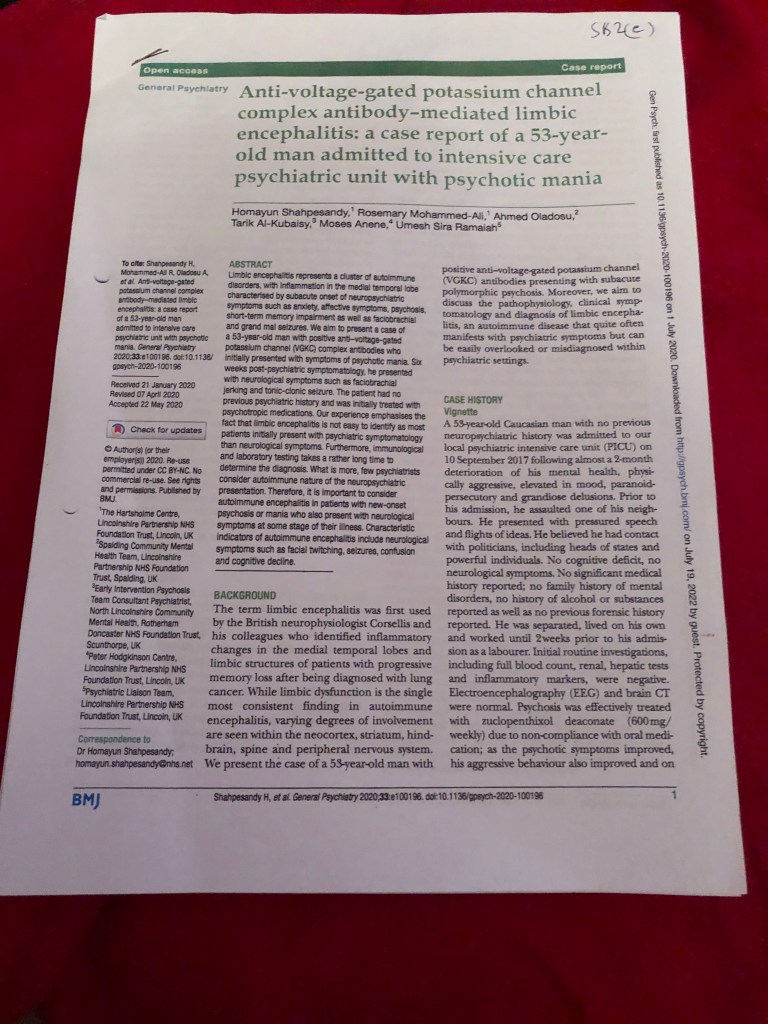
It is scandalous that with the number of patients known to be misdiagnosed that there is not a root and branch re-examining of mental health assessments. It is not psychiatrists and AMPHs who should have exclusive domaine here. The examination is nowhere near complete without a thorough neurological and immunological/endocrinological examination. Our national mental health policy is entirely in the sway of psychiatrists and drug companies.
A failure in pathophysiological testing for organic contributions can significantly contribute to the prevalence of misdiagnosis in schizophrenia. Reports and studies have indicated that the prevalence of misdiagnosis in schizophrenia can be significant, with estimates often cited in the range of 10% to 40%, depending on the specific context, population, and research methodology.
Given the complexities of diagnosing schizophrenia, it is crucial for mental health professionals to use comprehensive assessment approaches to enhance diagnostic accuracy and reduce the likelihood of misdiagnosis.
Lack of Comprehensive Assessment:
Many clinicians do not conduct thorough pathophysiological assessments, such as neurological evaluations and laboratory tests, which can lead to missing underlying medical conditions that mimic or contribute to psychiatric symptoms. Some clinicians over emphasise the subjective nature of psychotic disorders and actively discourage proper pathophysiological assessments.
Overlapping Symptoms:
Certain medical conditions (e.g., infections, autoimmune disorders, endocrine abnormalities) can present symptoms similar to those of schizophrenia. Without appropriate testing, these conditions may be misidentified as primary psychiatric disorders.
Neuroimaging and Biomarkers:
Advances in neuroimaging (like MRI or CT scans) and the discovery of potential biomarkers for various conditions are important for identifying organic contributions to psychosis. If these tools are not utilized, it can result in misdiagnosis.
Co-Occurring Disorders:
When an underlying medical condition is present alongside schizophrenia, it may complicate the clinical picture and lead to misunderstanding or misattribution of symptoms, resulting in a misdiagnosis.
Education and Awareness:
Clinicians may not always consider organic causes when diagnosing schizophrenia, especially if they lack training or awareness about how medical issues can manifest as psychiatric symptoms.
Stigma and Assumptions:
There may be an inclination to diagnose psychiatric conditions like schizophrenia without sufficiently exploring organic causes, particularly in patients with risk factors for mental illness, leading to overlooking potential medical diagnoses.
Case Reports:
Numerous case studies and reports highlight instances where patients initially diagnosed with schizophrenia were later found to have organic pathologies, emphasizing the necessity of pathophysiological testing in uncertain cases.
Inadequate pathophysiological testing increases the likelihood that clinicians may overlook organic contributions to a patient’s symptoms, leading to a higher prevalence of misdiagnosis of schizophrenia. Comprehensive evaluation approaches that integrate both psychiatric and medical assessments are essential for accurate diagnosis and effective treatment.
The misdiagnosis of schizophrenia can occur for several reasons, but the following are some of the main contributing factors:
Symptom Overlap:
Schizophrenia shares symptoms with various other mental health disorders, such as bipolar disorder, major depressive disorder, and personality disorders. This overlap can lead to confusion and misdiagnosis.
Incomplete Clinical History:
A thorough assessment requires a detailed clinical history, including past medical and psychiatric treatments. When this information is lacking or overlooked, it frequently leads to inaccuracies in diagnosis.
Subjective Assessment:
Psychiatric diagnoses often rely on subjective assessments of symptoms and behaviours. Variability in how clinicians interpret and diagnose these symptoms can result in inconsistencies and misdiagnosis.
Lack of Awareness or Training:
Some clinicians may not be adequately trained to recognize the nuances of schizophrenia or the range of conditions that can mimic its symptoms, leading to incorrect diagnoses.
Stigma and Assumptions:
Societal stigma surrounding mental illness may lead to hasty or biased conclusions, particularly in emergency settings where rapid assessments are made under stress.
Co-occurring Disorders:
Many individuals with schizophrenia may have co-occurring disorders (e.g., substance use disorders, anxiety disorders), complicating the clinical picture and leading to misdiagnosis.
Cultural Factors:
Cultural differences in the expression and interpretation of symptoms can affect diagnosis. Clinicians may misinterpret culturally specific symptoms as pathological.
Insufficient Diagnostic Tools:
While there are diagnostic criteria (like DSM-5 or ICD-10), there are no objective tests (e.g., blood tests or imaging) to confirm a schizophrenia diagnosis, leading to a over-reliance on observed behaviours and self-reported symptoms.
These factors highlight the need for comprehensive assessments and clinical awareness to reduce the rates of misdiagnosis in schizophrenia.
Failing to conduct thorough pathophysiological tests when diagnosing schizophrenia can have several significant serious consequences:
Misdiagnosis:
Schizophrenia shares symptoms with other mental health disorders such as bipolar disorder, depression, and schizoaffective disorder. Without comprehensive testing, there’s a risk of misdiagnosing the condition, leading to inappropriate treatment plans.
Inappropriate Treatment:
Inaccurate diagnosis can result in prescribing incorrect medications, which might not alleviate symptoms and could cause adverse side effects. Patients might also miss out on the benefits of effective therapeutic interventions tailored to their actual needs.
Delayed Treatment:
Insufficient testing might delay the correct diagnosis, postponing necessary interventions. Early and accurate diagnosis is crucial for effective treatment, and any delay can worsen prognosis and lead to more significant deterioration in quality of life.
Poor Prognosis:
Without targeted interventions, patients may experience worsened symptoms and a decline in functioning. More comprehensive evaluations can help identify specific needs and comorbid conditions, which are integral in planning effective management strategies.
Increased Healthcare Costs:
Misdiagnosis or delayed diagnosis can lead to increased healthcare costs due to unnecessary treatments, potential hospitalizations, and more extensive long-term care due to unmanaged symptoms.
Impact on Quality of Life:
The individual may suffer from ongoing symptoms that could affect their daily life, social relationships, and occupational functioning. Effective treatment hinges on an accurate diagnosis, allowing patients to manage symptoms and improve their overall quality of life.
CAVERNOMAS
A thorough diagnostic process, including pathophysiological tests are necessary and help ensure that patients receive the right diagnosis and appropriate treatment, improving outcomes and reducing the burden of the disease.
A cavernoma, which is a type of vascular malformation in the brain, can potentially interfere with neurotransmission and lead to symptoms that might be misinterpreted as psychosis. Cavernomas are clusters of abnormally formed blood vessels that can disrupt normal brain function by causing bleeding, inflammation, or other structural changes.
Cavernomas, especially in areas like the temporal lobe, can cause seizures. Seizures can sometimes present with confusion, disorientation, or altered perceptions, which could be mistaken for psychotic symptoms. For example, if the cavernoma causes focal seizures, these could manifest as hallucinations, paranoia, or delusions, which are all features of psychosis.
Cavernomas, depending on their location, can affect areas of the brain responsible for cognition and emotion regulation. If a cavernoma leads to functional changes in these regions, it could cause alterations in behaviour or mood, potentially resembling symptoms of a psychiatric disorder.
A cavernoma can disrupt the normal flow of neurotransmitters in the brain, especially if it causes local damage to nerve cells or interferes with blood supply. Neurotransmitter imbalances can contribute to mood swings, hallucinations, or altered perceptions, which may be mistaken for psychotic episodes.
In some cases, the physical stress and changes caused by a cavernoma, such as chronic headaches, seizures, or neurological deficits, can also lead to psychiatric symptoms, such as anxiety, depression, or even psychotic-like symptoms. These may be misdiagnosed as primary mental health issues.
Given these possibilities, a thorough neurological evaluation, including imaging studies like an MRI, is crucial for distinguishing between a primary psychiatric disorder and a neurological condition like a cavernoma. If psychosis-like symptoms are present, a neurologist or psychiatrist should look at a range of factors to rule out any underlying brain pathology, including vascular malformations like cavernomas.
The misdiagnosis of schizophrenia due to underlying brain lesions or cerebral inflammation is a known but relatively underreported phenomenon. Although schizophrenia is primarily considered a psychiatric disorder, its symptoms can overlap with neurological conditions that cause similar cognitive and behavioural disturbances, like brain lesions, inflammation, or other structural abnormalities.
Cerebral inflammation and brain lesions, such as those caused by vascular malformations (like cavernomas), brain tumours, endocrine disorders and autoimmune diseases, can lead to cognitive impairments, mood disturbances, hallucinations, or delusions, which are also hallmark symptoms of schizophrenia. When these neurological issues are undiagnosed, individuals may be misdiagnosed with a primary psychiatric condition like schizophrenia, especially if there’s a lack of awareness about the neurological possibility.
As for the estimated incidence of misdiagnosis, studies suggest that it’s not uncommon for neurological disorders to be misdiagnosed as psychiatric conditions. A few estimates suggest that about 15-25% of individuals initially diagnosed with schizophrenia may actually have an underlying neurological condition, though this figure can vary widely depending on the specifics of the study and the healthcare setting. In some cases, lesions or inflammation are only discovered after further neurological and pathophysiological testing (e.g., brain imaging, MEG, EEG and inflammatory marker evaluation), which can shift the diagnosis.
However, it’s worth noting that schizophrenia has a distinctive clinical picture, and misdiagnosis tends to occur more often in cases where symptoms are atypical or the neurological signs are subtle. When there is clear evidence of brain lesions, seizures, or other neurological symptoms, a more comprehensive diagnostic approach (including imaging) usually helps differentiate between psychiatric disorders and neurological conditions.
Cerebral inflammation can indeed cause symptoms that may be misdiagnosed for psychotic disorders, especially when the inflammation affects areas of the brain responsible for cognition, mood, or perception.
Conditions that cause inflammation in the brain—such as autoimmune disorders, infections (e.g., encephalitis), neurodegenerative diseases, endocrine disorders or even conditions like multiple sclerosis—can lead to psychiatric symptoms such as delusions, hallucinations, mood swings, and confusion. These symptoms can overlap with those seen in psychotic disorders like schizophrenia or bipolar disorder with psychotic features.
Misdiagnosis and how it can be avoided:
Overlap of Symptoms
Inflammation in the brain can cause hallucinations, delusions, agitation, and paranoia, which are core symptoms of psychotic disorders.
Disorders like autoimmune encephalitis can cause severe mood swings, depression, or mania, which can sometimes be mistaken for mood disorders with psychotic features.
Problems with memory, concentration, and thinking (often seen in inflammation-related brain conditions) can be confused with cognitive symptoms seen in psychotic disorders.
Differentiating Between the Two
To avoid a misdiagnosis, it’s crucial to conduct a comprehensive medical evaluation. This should include a detailed history (e.g., recent infections, autoimmune history, or neurological symptoms), a physical exam, and neuroimaging (like MRI, MEG, EEG or CT scans) to look for signs of brain inflammation or structural abnormalities.
Certain blood tests or cerebrospinal fluid (CSF) tests may help identify markers of inflammation or infection in the brain. Elevated levels of certain proteins or antibodies can be suggestive of neuroinflammatory conditions. In some cases, cognitive testing can help distinguish between psychosis due to a psychiatric disorder versus cognitive dysfunction related to brain inflammation.
Sometimes, clinicians will assess how the patient responds to treatments. If psychosis is related to inflammation, it may improve with steroids, immunotherapy, or antiviral medications, which are typically ineffective for primary psychiatric disorders.
Specific Conditions to Consider
One condition that commonly mimics psychiatric disorders is autoimmune encephalitis, which can cause rapid onset psychosis, mood disturbances, and confusion. Testing for autoantibodies (like anti-NMDA receptor antibodies) can help in diagnosing this condition.
Infections such as encephalitis, meningitis, or even HIV/AIDS-related encephalopathy can cause psychiatric symptoms and should be ruled out.
MS can sometimes cause psychiatric symptoms like depression, anxiety, and psychosis due to demyelination in certain brain areas. This can be distinguished from primary psychotic disorders through MRI scans showing characteristic lesions.
Minimizing Misdiagnosis
A team approach involving both neurologists and psychiatrists can help ensure a more accurate diagnosis when symptoms overlap.
A careful review of a patient’s medical history, including autoimmune conditions, infections, or a history of trauma, can help guide clinicians toward the right diagnosis.
If symptoms of psychosis arise suddenly or change in an unusual manner, it can raise suspicion for a medical cause rather than a primary psychiatric disorder. The timeline of symptom onset, course, and any precipitating factors (like infections or medications) should be taken into account.
Ultimately, a comprehensive diagnostic workup is essential to distinguish between cerebral inflammation and psychotic disorders. Early recognition and treatment of conditions causing brain inflammation can prevent further complications and ensure that patients receive the most appropriate care.
Link to Endocrine Disorders:
If a cavernoma is located near or within areas of the brain involved in endocrine regulation, it could theoretically contribute to endocrine dysfunction. These areas include:
- Hypothalamus: The hypothalamus plays a central role in regulating the endocrine system via its control over the pituitary gland. A cavernoma in this region could disrupt hormone regulation and lead to a variety of endocrine disorders, such as:
- Hypothalamic dysfunction (e.g., issues with temperature regulation, hunger, or thirst).
- Dysregulation of pituitary hormone release (e.g., corticotropin, growth hormone, gonadotropins).
- Pituitary Gland: Cavernomas affecting or compressing the pituitary gland could lead to:
- Hypopituitarism (reduced secretion of pituitary hormones).
- Hyperprolactinemia (if pressure disrupts the inhibition of prolactin secretion).
- Other imbalances depending on the specific hormones affected.
- Other Brain Regions with Secondary Effects:
- Cavernomas causing significant intracranial pressure, hemorrhage, or secondary damage might indirectly affect endocrine function by impairing brain structures or pathways.
Rare but Documented Cases:
Although cavernomas are not commonly associated with endocrine disorders, there are reported cases of cavernomas near the hypothalamic-pituitary axis causing endocrine dysfunction. These cases emphasize the importance of the cavernoma’s size, location, and potential for bleeding or compression.
Symptoms to Monitor:
If an individual with a cavernoma develops symptoms suggestive of endocrine dysfunction, such as fatigue, unexplained weight changes, menstrual irregularities, or growth abnormalities, a detailed evaluation is warranted. This may include:
- Hormonal blood tests.
- High resolution imaging studies like MRI to assess the cavernoma’s location and size.
Conclusion:
While cavernomas do not inherently cause endocrine disorders, those located in or near endocrine-regulating brain regions (like the hypothalamus or pituitary gland) have the potential to disrupt hormonal function. It’s essential to work with a neurologist and endocrinologist to address these concerns.
Elizabeth has a recognised endocrine disorder which can lead to the effects below. The two hormones (neurosteroids) allopregnanolone and pregnenolone may be affected by the disrupted endocrine function and the levels of these should be tested. I consider it unlikely they have even considered this just like they have ignored the inflammatory markers that can cause limbic encephalitis.
They ignore all of these studies even when they are written by their own people like Dr Shahpesandy. Lots of people are detained on wards who would be able to be discharged if they were given hormonal supplements and anti-inflammatories. Even Shahpesandy acknowledges that.
Idiotic prescribing of anti-psychotics will in some cases make endocrine dysfunctions worse and benzos given as prnrapid tranquillisation can cause limbic inflammation.
Low levels of allopregnanolone and pregnenolone can contribute to psychiatric symptoms, including mood disturbances and, in some cases, psychotic symptoms. These neurosteroids play essential roles in stabilizing mood, reducing anxiety, and modulating stress responses, and they can be impacted by certain endocrine disorders. Here’s a closer look at how these neurosteroids interact with mental health and endocrine function:
Allopregnanolone and Pregnenolone in Mental Health
Allopregnanolone is a potent positive modulator of GABA-A receptors, which are central to calming neural activity and reducing anxiety. It helps create a sense of stability in brain signaling, counteracting overstimulation and stress. Low allopregnanolone levels have been associated with anxiety disorders, depression, and increased stress sensitivity.
Pregnenolone serves as a precursor to other neurosteroids, including allopregnanolone, and has its own neuroprotective effects, including modulating NMDA receptors and potentially balancing dopamine and GABA neurotransmission. It has been studied in relation to schizophrenia and other psychotic disorders, as low pregnenolone levels may contribute to cognitive impairment and psychosis.
Potential for Psychotic Symptoms
While low allopregnanolone and pregnenolone levels alone aren’t generally thought to cause psychosis directly, a deficiency in these neurosteroids can create vulnerability to psychotic symptoms, especially in those with predispositions or other stressors.
Neurosteroids like pregnenolone have been linked to dopamine modulation. Dopamine dysregulation is a hallmark of psychosis, particularly in conditions like schizophrenia. Reduced pregnenolone levels may therefore impact dopamine balance and contribute to hallucinations, delusions, and thought disorders.
Some research also suggests that allopregnanolone may have a stabilizing effect on mood and perception; reduced levels might leave individuals more susceptible to stress, which in extreme cases could precipitate psychotic-like symptoms in vulnerable individuals.
Low Neurosteroid Levels and Endocrine Disorders
Adrenal insufficiency (e.g., Addison’s disease) and other endocrine disorders affecting adrenal or gonadal hormones can reduce the availability of precursors needed for neurosteroid synthesis. This can lead to low levels of allopregnanolone and pregnenolone.
Disorders of the hypothalamic-pituitary-adrenal (HPA) axis, including chronic stress and HPA axis dysregulation, can also result in altered neurosteroid production. Chronic stress suppresses the production of pregnenolone and can shift steroid synthesis toward stress hormones like cortisol rather than neurosteroids.
Polycystic Ovary Syndrome (PCOS) and other hormonal imbalances involving estrogen progesterone may disrupt neurosteroid synthesis, as these hormones are involved in the pathways that produce pregnenolone and allopregnanolone. Individuals with PCOS, for example, have an increased risk of mood disorders, which may be partly related to altered neurosteroid levels.
Clinical Implications and Potential Treatments
Understanding low neurosteroid levels as part of a broader endocrine issue can help target treatments more effectively. Hormone replacement therapy (HRT) or neurosteroid analogs are sometimes used to restore balance in individuals with chronic deficiencies.
Pregnenolone supplementation has shown potential as an adjunctive treatment for schizophrenia and mood disorders, with some studies suggesting it can help reduce symptoms of anxiety, cognitive deficits, and even mild psychosis.
Similarly, allopregnanolone analogs, like brexanolone (approved for postpartum depression), are being explored for their potential to help with other mood and anxiety disorders, offering a novel approach to neurosteroid-based therapy.
Summary
In conclusion, low levels of allopregnanolone and pregnenolone can contribute to psychiatric symptoms, including psychosis, especially in individuals with underlying vulnerability. These deficiencies are indeed symptomatic of certain endocrine disorders, especially those affecting adrenal or sex hormones. Addressing neurosteroid imbalances through hormone therapy, neurosteroid analogs, or other supportive measures can be beneficial in managing symptoms linked to these deficits.
It is appalling that when you as a carer ask for pathological tests you are up against huge bullying and then safeguarding against you. There is no safeguarding towards the vulnerable person who needs the extensive pathological tests or for anyone whose diagnosis is in doubt denied such tests for many years. I know I am not alone in this matter and in the Scrutiny Meeting Minutes it actually highlights a national problem that needs urgent changes as if ignoring the necessity for such tests as so many lives are put at risk.
 Psychiatric Abuse UK
